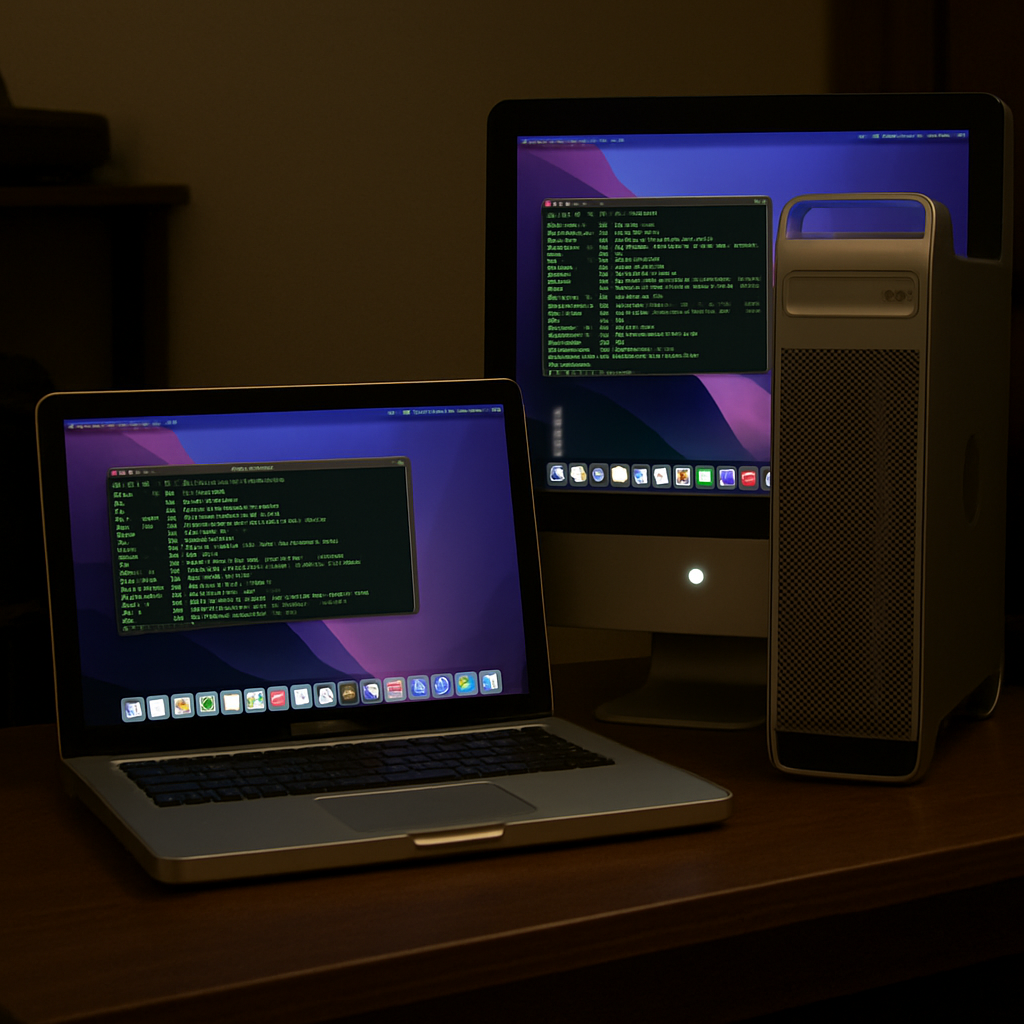
Owners of older Intel-based Macs facing diminishing software compatibility have a new tool to help them stay on macOS Monterey (version 12) even as developers drop support. A community-driven effort is reworking key software components like the Brave browser and the Electron runtime so they can run on Monterey without upgrades to newer OS versions. These changes were tested on a 2010 MacBook Pro and a Mac Pro 5,1.
Why Support Is Fading — and Where This Project Fits
Electron, the framework underpinning many cross-platform apps, recently released version 44, which officially raises the minimum macOS version to Ventura (13). That leaves macOS Monterey users with older Intel Macs—especially those without support for Apple’s newer system APIs—locked out of updates. Apps built on Electron 43 will lose support by January 2027.
The community initiative—found at stayonmonterey.fyi—offers patches, build scripts, and sample binaries that tweak Brave and Electron so they launch successfully under Monterey. The work involves changing deployment targets from macOS 13 down to 12, adding compatibility layers (“shims”) for newer macOS-only APIs, and re-signing applications after substituting or rebuilding helper binaries.
How It Works on Real Macs
On a Mac Pro 5,1 equipped with dual X5690 CPUs, 96 GB RAM, and an RX 6800 XT GPU, developers built and deployed Brave (Chromium 155) and Electron-based apps natively under Monterey 12.7.6—complete with full Metal GPU acceleration.
On a 2010 MacBook Pro lacking full Metal support, the patched builds fall back to OpenGL where needed. While CPU usage increases significantly under OpenGL and overall efficiency drops, it restores functionality to apps that otherwise wouldn’t launch.
What Users Should Know Before Trying It
- It’s not a simple installer—users must manage manual steps like editing Info.plist files, re-signing helper binaries, and applying patches.
- Auto-updates from official sources may override patched versions, breaking compatibility. Turning off auto-update or using ad hoc signing may be needed.
- Apps that use native modules or rely heavily on newer APIs may require extra work or may not work even with patches. Not all apps will behave identically.
As developers drop support for Monterey in their frameworks, this initiative gives those with aging Intel Macs a way to extend usefulness. It’s especially relevant for machines that perform well with added RAM or GPU but are held back by OS version requirements.
What this means going forward:The project signals growing community pushback against OS obsolescence driven by software vendors, not hardware limits. It underscores how many older Macs remain powerful and capable—even without the latest macOS release. Going ahead, watch for whether this approach sparks broader support, inspires other compatibility projects, or nudges Electron and browser teams to reconsider their OS minimums. For anyone hanging onto their Intel Mac, this could make the difference between forced obsolescence and continued utility.