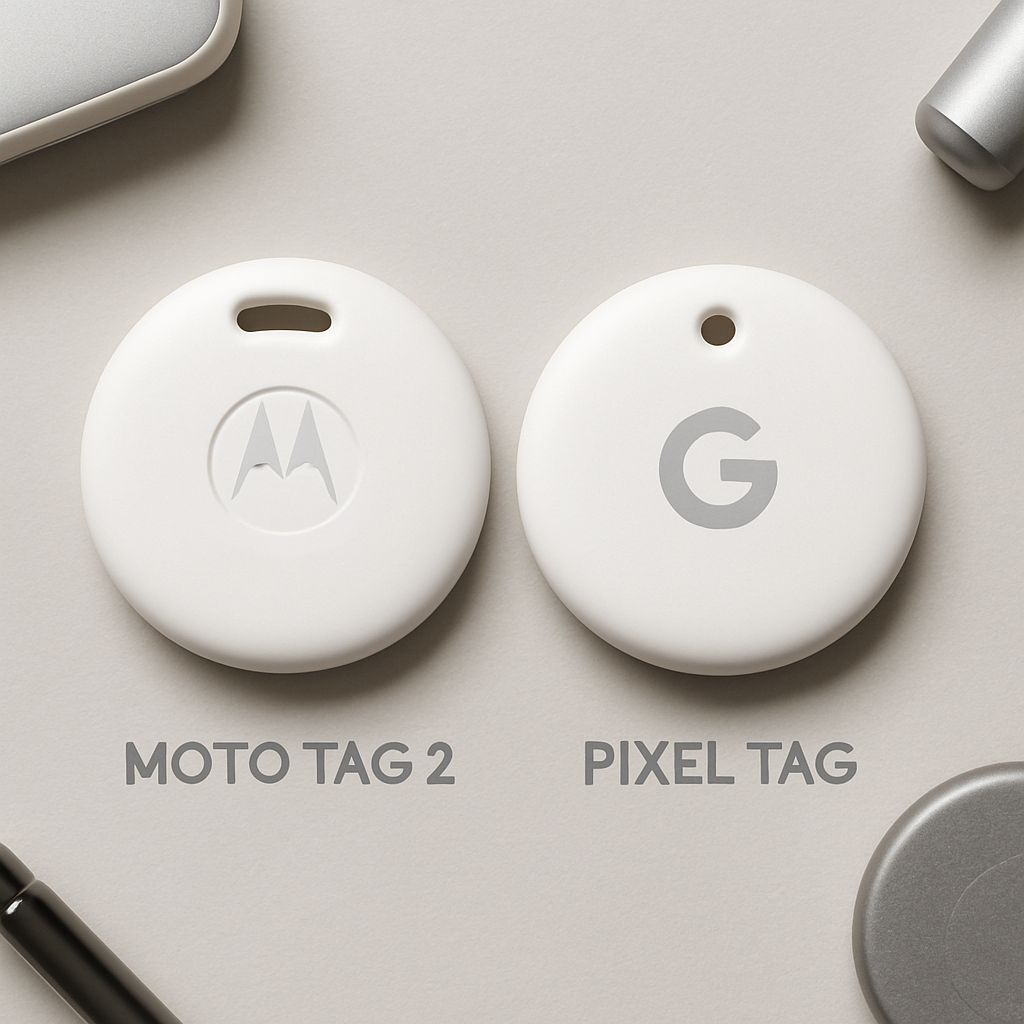
Motorola’s Moto Tag 2 tracker has shed its $19.99 introductory price, now listed at $29.99 on Motorola’s site and Amazon. The price change reflects the end of the launch discount that previously made the UWB-enabled tracker an especially compelling choice for users of Android’s Find Hub tracking ecosystem. A four-pack bundle is currently available for around $100 on Amazon, offering modest savings.
What the Moto Tag 2 Offers
The Tag 2 stands out from many Bluetooth-only Find Hub trackers by including ultra-wideband (UWB) support. That allows for fine-grained proximity tracking in addition to standard Bluetooth location pings. Until now, its $19.99 introductory price undercut competing trackers that also lacked UWB.
The form factor mimics that of Apple’s AirTag, with no built-in keyring or mounting loop. Buyers still need to use third-party accessories to attach it to backpacks, keys, or other items.
Why the Price Bump—and Competition Heating Up
The $10 increase brings the Tag 2 in line with its originally planned $29.99 price, one that Motorola set before the discount period began. At that rate, it still undercuts rival trackers by Pebblebee and Chipolo, which are priced between $35 and $40—and don’t include UWB hardware.
Google’s Pixel Tag, officially revealed in August, has entered or will enter the UWB tracker space and is set to launch at $29.99—the same price as Tag 2 now. This sets up a direct price-based rivalry between Motorola and Google’s Find Hub offerings.
The competition suggests that Motorola may have used its discount period strategically—either to drive early adoption or to preempt Google’s entry—with awareness that it would have to meet market expectations eventually.
The inclusion of UWB in these trackers is part of a broader trend toward more precise, secure tracking technologies—something consumers have been asking for as find-my-type ecosystems evolve beyond pure Bluetooth solutions. Hardware boundaries are shifting as Android brands try to match or exceed what rivals have done in Apple’s ecosystem.
For buyers who waited, the pricier Tag 2 still offers good value relative to the competition—especially given its hardware capabilities. But for now, those who were hoping to grab it at the $19.99 rate will have to adjust expectations.
Analysis: The shift in price for the Moto Tag 2 signals two forces at work. First, it highlights Motorola’s confidence in its UWB-enabled tracker as a lead contender in tracking ecosystems. Second, with Google’s Pixel Tag looming at the same price, consumers benefit from competition but face tighter margins. What to watch: whether future promos will bring the price back down, how Pixel Tag performs on hardware versus software, and whether these rivalry dynamics push Find Hub trackers toward better features, tighter integration, or even new pricing models going forward.