Machines are getting better at mimicking human writing—yet they still leave behind fingerprints. A study from marketing firm Graphite examined so-called “tells”—phrases or constructions that models use far more than humans—and found that newer AI systems like Opus 5.5, Astra, and Gemini still exhibit recognizably machine-like patterns. Though early telltales like excessive em–dashes or reliance on filler words have decreased, others remain—to varying degrees.
What the study found
The research used a dataset of 10,000 pre-AI articles as a human benchmark. Graphite then asked frontier models to rewrite content based on summaries, minimizing source reuse. By comparing frequency of certain words and sentence patterns between AI-rewritten and human original text, Graphite identified over 13,000 phrases that appear at least twice as often in AI writing—defining these as “tells.”
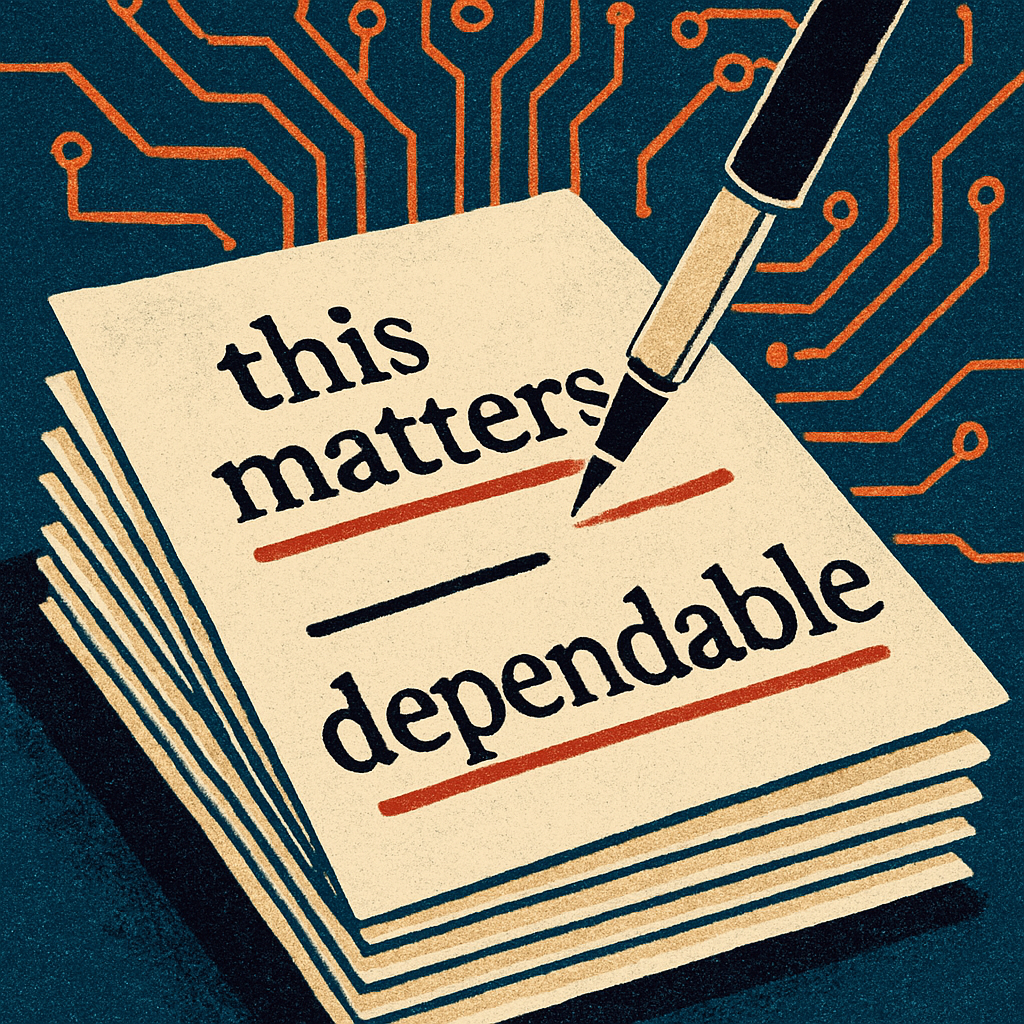
For Opus 5.5, its most overused word is “dependable”—used 23× more than in human samples. The phrase “this matters” occurs 116× more often, while “why X matters” is 92× more common than in human writing. Opus 5.5 has also reduced older habits: it mostly dropped “it’s not X, it’s Y” constructions and is greatly avoiding em-dash use, operating at about 99% less than human writers in that aspect.
Astra displays a different profile. It leans heavily on “corrective framing,” where a topic is defined in opposition—“not simply X,” “rather than relying on Y”—well over 100× more than in human text. Astra also favors hedging (“may provide,” “can provide”) and tends to describe “another dimension” of whatever subject it covers.
Gemini 3.1 Pro appears to have nearly eliminated the em-dash entirely. While Opus 5.5 and Astra have reduced their em-dash usage by 99% and 88% respectively relative to human baselines, Gemini is almost punctuation-free in that style choice—eliminating one of the oldest AI writing tells.
Why these tells persist
AI labs promote their models as more natural, clearer, easier to read. When Opus 5.5 launched, its makers claimed users would find its output more natural than past versions. Similar promises were made by OpenAI during the release of the GPT-6 updates to Sol and Luna. Yet researchers warn that despite efforts to suppress certain telltale phrases, others emerge. One lab’s test set isn’t enough to scrub every quirk from models with billions of parameters.
Graphite’s lead AI scientist noted that while em-dashes and classic filler seems to be fading, “other tells pop up.” For Claude models, word distribution is gradually aligning more with human norms; for GPT variants, it may be diverging. Still, across models, the total number of tells hasn’t dropped significantly—what changes is which ones are used and how often.
These results highlight the awkward balance AI developers face: making prose more human without allowing telltales that give the game away. Despite lab assertions of smoother language and fewer odd turns of phrase, certain trends like “this matters,” “dependable,” or corrective framing remain strong differentiators.
Ultimately, while the writing feels more polished than earlier AI outputs, it’s not yet indistinguishable from human work. Tells evolve, but don’t vanish. Even as Opus 5.5 and other frontier models clean up old habits, their newer phrasing and reliance on certain constructions show that full mimicry is still out of reach.