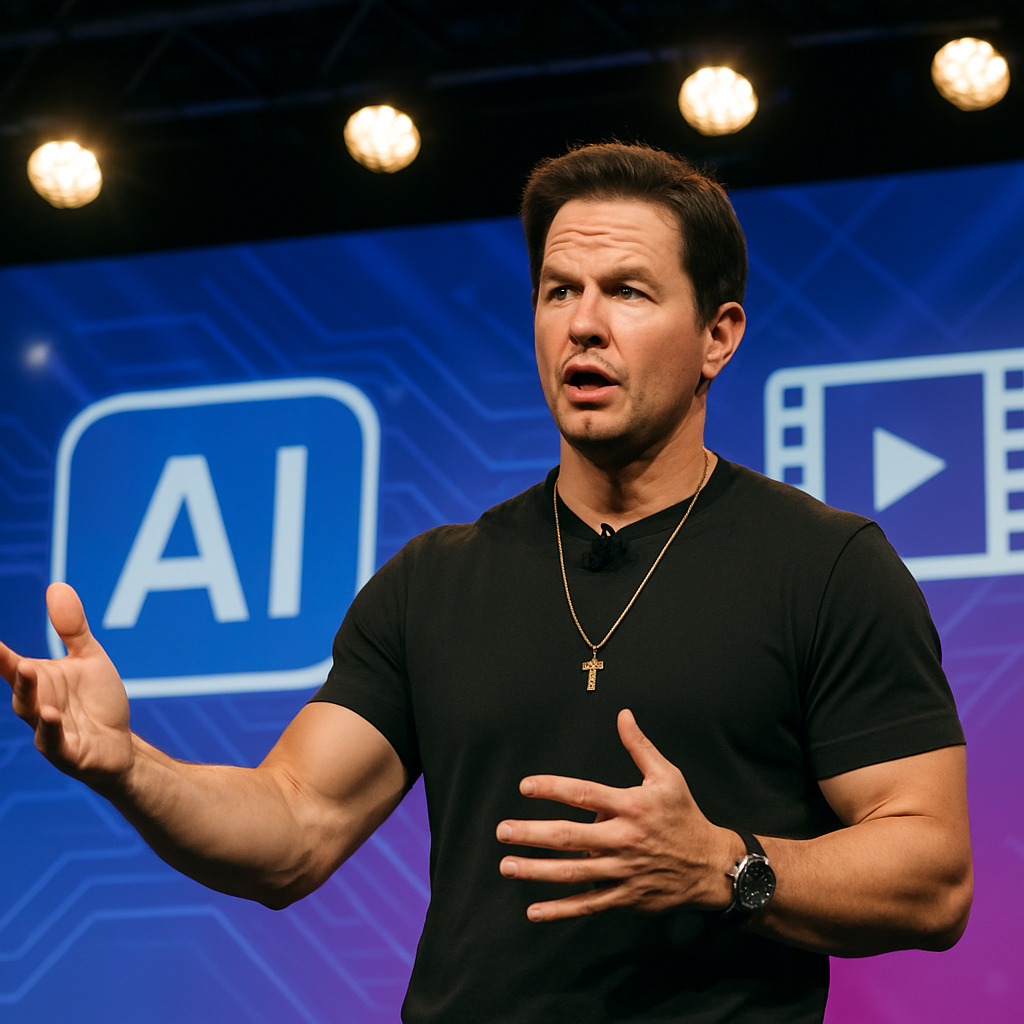
Mark Wahlberg sees potential in AI as a tool for film—so long as it’s wielded with care and rooted in strong storytelling. At TechCrunch Disrupt on October 16, 2026, the actor/director explored how AI can enhance filmmaking rather than replace its core human elements.
How AI Fits into Big Budget Movies
Wahlberg is involved with an upcoming biopic about Pete Rose. He’s considering using AI for set enhancements—stadium atmospheres and similar scale elements—rather than relying on generative AI to write scripts or portray characters without human actors. He emphasized that such tools should amplify rather than supplant traditional methods. Action, emotion, and characters should always come first, with technology serving the storytelling, not the reverse.
He reflected on early effects breakthroughs, pointing back to films like Jurassic Park and The Perfect Storm where CGI pushed boundaries. That technology felt fresh then; now, with visual effects more commonplace, Wahlberg’s focus is less on spectacle and more on narrative impact.
AI Clones, Legacy, and Ethics
Wahlberg also addressed the idea of a “digital twin”—a scanned, AI-powered version of himself that preserves his voice, face, and body for future use. Although he hasn’t undergone any formal process like the ones offered by some talent agencies—ones that archive likenesses—he said he’d consider it. His thought: allowing his likeness to live on could benefit his children or grandchildren, letting them “direct” his legacy and perhaps cast him posthumously.
The actor also revealed he’d be open to long-term projects where his animated or AI character continued even if he’s no longer able to perform. He pointed out that certain cultural figures and characters from his own childhood remain alive through ongoing media, and that there’s value in giving audiences what they want, provided there’s genuine demand. If people want to keep engaging with a character of his beyond his physical involvement, he feels there’s space to explore that responsibly.
Wahlberg stressed storytelling must remain central. He has experience with large-scale effects-driven films, but believes those must be balanced. The danger lies in letting spectacle overpower substance—story, emotion, nuance—which he insists should always lead.
As Hollywood debates AI’s role, Wahlberg’s stance is notable: using AI as augmentation, not substitution. He models a possible future where AI enhances environments and preserves legacy, but not at cost of human creativity. What to watch: how contracts, ethics, and fans respond when actor likenesses outlive the individuals.