The United States aims to triple its nuclear power capacity by 2050, but rising costs for uranium pose a serious obstacle. In the past five years, prices for yellowcake—the raw form of uranium—have surged by 75%. Meanwhile, domestic uranium deposits remain scarce, placing the country at risk of supply and price vulnerabilities. Scientists estimate the ocean holds over 4 billion metric tons of dissolved uranium, enough to fuel nuclear reactors for roughly 50,000 years. Clean-tech startup Fluxnium believes it has a way to tap into that vast resource.
Extracting Uranium from Seawater
Fluxnium’s core innovation is a polymer fiber system licensed from U.S. Department of Energy labs. These fibers are engineered to attract uranium dissolved in seawater. Key to the startup’s approach is maximizing the fibers’ surface area—allowing more uranium to adhere—while reducing the cost of producing and deploying them.
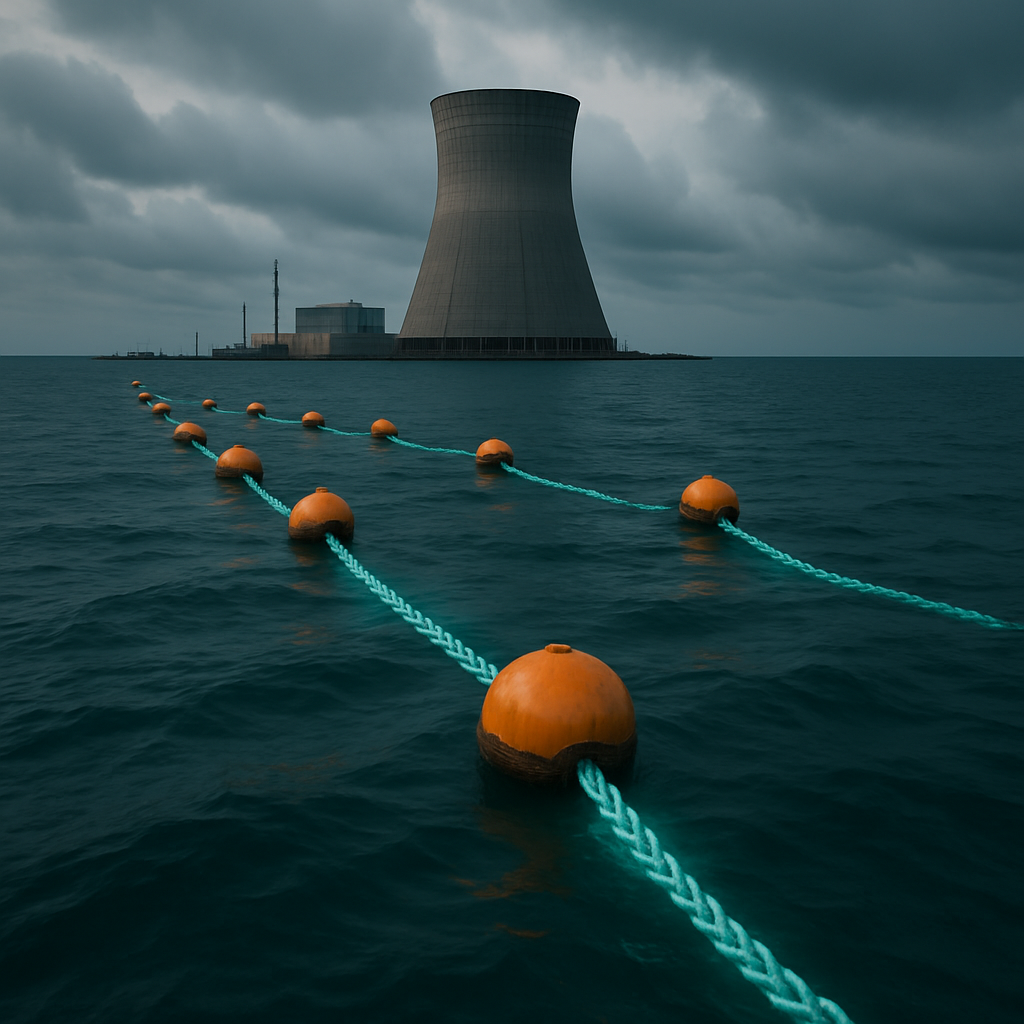
In trial demonstrations, this tech pulled uranium at a cost exceeding $200 per pound—more than twice what traditional Western producers charge now. But through engineering tweaks, especially by altering fiber geometry to expose greater surface area, Fluxnium claims it’s on track to bring that cost down. The manufacturing of fibers and their ocean deployment make up much of the expense. The process involves anchoring long braided fibers off buoys at sea for 30-60 days, harvesting the uranium, and then purifying it into yellowcake. Notably, there are no toxic tailings from this method, and the materials can be reused multiple times.
Backing, Strategy, and Market Implications
Fluxnium has worked quietly in stealth mode while developing this technology. It recently closed a $7 million seed round led by Congruent Ventures, with contributions from Active Impact Investments and Constellation Energy—the largest operator of nuclear plants in the U.S.
The timing aligns with a broader revival of interest in nuclear power, partly driven by booming electricity demand for AI data centers. Domestic reliance on uranium imports from regions like Kazakhstan, Russia, Uzbekistan, and Niger carries geopolitical risk. If demand outpaces supply, there could be structural shortages in coming years—unless alternatives like ocean extraction become economically viable.
Fluxnium’s CEO has led multiple startups before, including ventures in mailing, desalination, and carbon removal, believing the ocean uranium opportunity has both scale and urgency. The startup aims to enter uranium supply chains like any mine would, selling purified yellowcake. The licensed chemistry is not novel in concept—many parts of the process exist separately—but Fluxnium’s goal is to optimize cost and performance across all components.
This technology must still overcome several hurdles: cost reductions, durability of materials in marine environments, scaling up production and deployment, and regulatory approval. If Fluxnium’s claims hold up, the potential upside is enormous: a domestic, scalable source of uranium that could reshape energy security. But until it proves economically competitive with conventional uranium mining, it remains an emerging possibility rather than immediate replacement.
What this means:Ocean uranium could shift the geopolitics of energy, reduce import dependencies, and help nuclear power play a larger role in low-carbon grids. Fluxnium’s effort is a test case: if it delivers, the industry may have found a century’s worth of security in what many thought was just seawater. Investors, regulators, and utilities will be watching closely.