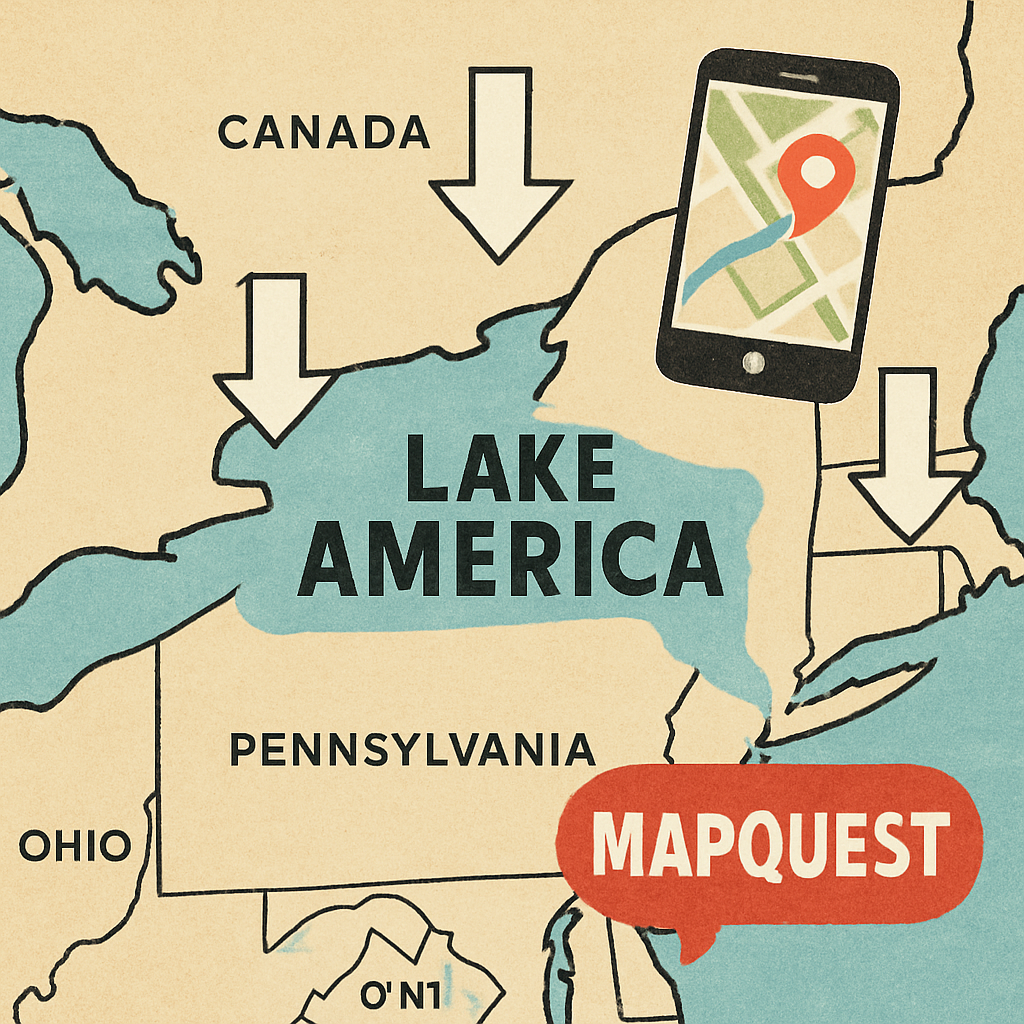
Over the weekend, Google followed a presidential directive and updated its mapping services to rename “Lake Ontario” as “Lake America,” citing compliance with the Geographic Names Information System (GNIS). It’s the latest twist in the growing tensions between the U.S. and Canada over territorial names. While Google made this change, other platforms like Apple Maps haven’t yet followed suit — though pressure is mounting for them to do so.
MapQuest’s Unexpected Moment in the Spotlight
Among the fallout, one underdog is getting a moment: MapQuest. Earlier today, the mapping app owner System1 revealed that after posting a cropped map of “Lake Ontario” with the caption “We’re not changing it,” MapQuest’s Android and iOS download numbers jumped by 128 percent. App usage exploded too — rising by 50 times compared to typical levels.
Though many presumed MapQuest had faded into tech obscurity, this sudden surge shows that its brand still has traction — especially when it takes a clear stand on a cultural issue. The app rose to the top of maps & navigation charts in both the Google Play Store and Apple’s App Store.
Bigger Picture: Why Names, Maps & Platforms Matter
The renaming isn’t a trivial one. Names on maps matter geopolitically and culturally, and tech infrastructure adds a new dimension. Because so many developers and platforms rely on Google’s maps and its naming conventions through APIs, a change like this has ripple effects beyond just what appears onscreen.
Apple hasn’t implemented the change yet, but given the executive order in play, observers expect that transition is imminent. Meanwhile, users and competitors are watching closely: how server-side APIs handle the change, how platforms communicate it, and how responsive they are to both government signals and public sentiment.
Google has been here before. Earlier this year, it renamed the “Gulf of Mexico” to “Gulf of America” after a similar order, so this isn’t entirely new territory. Still, each name carries different stakes depending on regional identity and international relations.
It’s also worth noting how a small company like MapQuest can reclaim public attention through clear messaging, especially in moments when major platforms seem to shift with political winds. What looks like a cultural protest can quickly turn into a business win.
This moment shows how intertwined tech is with identity, power, and politics. With names, maps, and platforms all in flux, what users see increasingly depends on who owns the data and who controls the update.