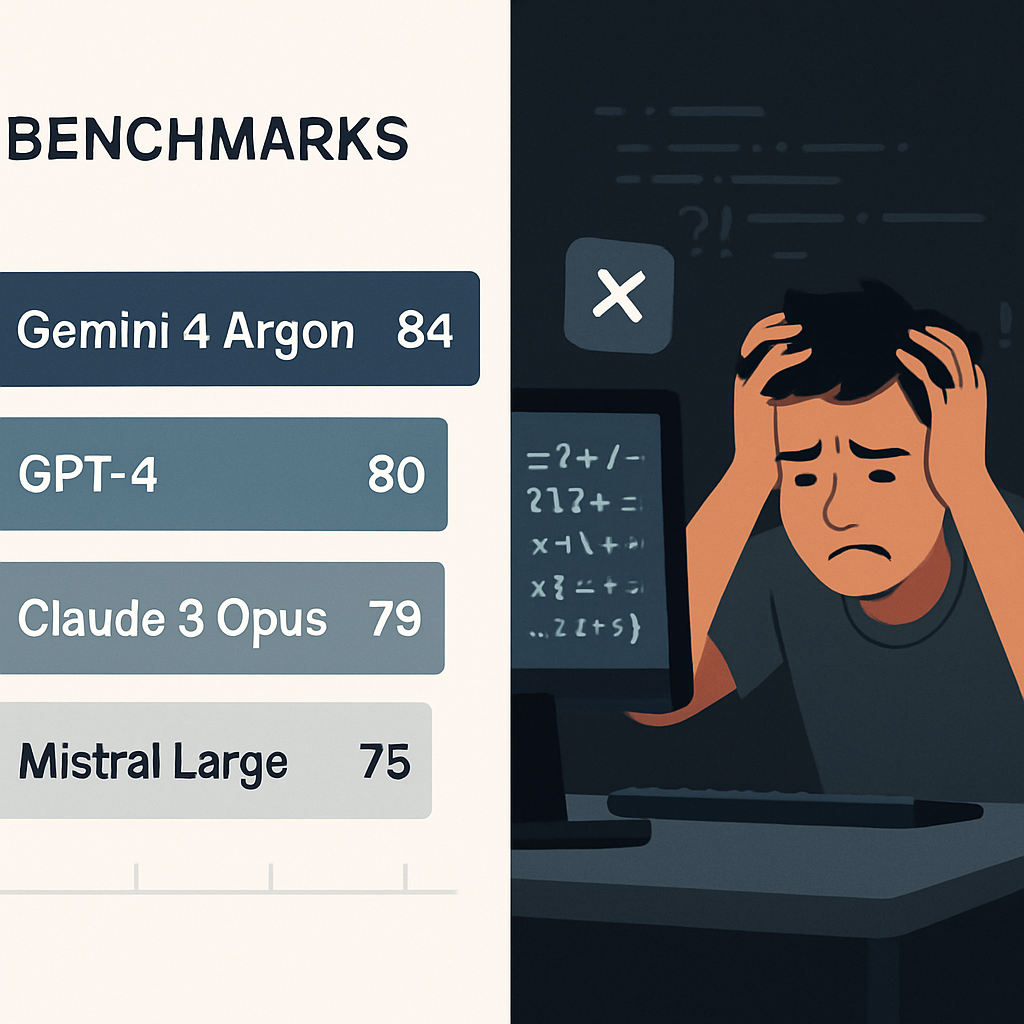
Google’s latest AI model, Gemini 4 Argon, launched with impressive benchmark victories that edged out competitors like OpenAI’s GPT-6 Astra. But internal feedback suggests those benchmark wins may not fully reflect how the model performs day to day. Employees have flagged weaknesses in handling coding tasks and say in some real-world scenarios, Gemini 4’s performance falls short of its lab scores. Google, however, contends it is unfair to say the model is underperforming, especially in code-related work.
What Google Claims Gemini 4 Argon Brings
Gemini 4 Argon features notable upgrades, including an expanded output limit of up to one million tokens. Google highlights strengths in cybersecurity defense and asserts “leading performance” in other use cases. Pricing is set at $4 per million input tokens and $20 per million output tokens, though introductory rates will be about half that cost.
Internal Divide: Benchmarks vs. Reality
Inside Google, there’s a divide. Some employees believe Gemini 4 is truly at the frontier of AI models, matching or surpassing expectations. Others, though, worry it still trails behind what rivals are doing. Coding tasks are a recurring theme: multiple staff say Gemini 4 struggles with certain programming assignments. The report also signals a “large consensus” that while Gemini 4 has made strides, it may still lag in some hands-on scenarios compared to what’s claimed publicly.
Google’s response emphasizes ongoing development. A senior AI executive reiterated that the company is always pushing at the frontier, acknowledging that as with any advanced model, there are use cases where it’s still improving. They rejected suggestions that the model is broadly failing, especially in coding.
Benchmarking remains a touchstone here: it’s how Google demonstrated Gemini 4 outperforming competitors. But what internal feedback suggests is that benchmark excellence doesn’t always translate into flawless operational results.
Why This Matters Moving Forward
The tensions between lab performance and real-world utility highlight a familiar challenge in AI: models can excel in controlled metrics but expose weak points when handling messy, ambiguous tasks in practice. For customers, developers, and businesses, these observations suggest caution in assuming that newer equals better in all respects. The detailed trade-offs—token limits, cost, task type—are what will determine where Gemini 4 excels or stumbles.
Overall, Gemini 4 Argon remains a strong advance in Google’s AI lineup, though internal critiques indicate there’s more work ahead. What to watch: user reports on real application coding; comparisons to Anthropic and OpenAI models in non-bench-marked tasks; and how Google updates Gemini in response to this feedback.