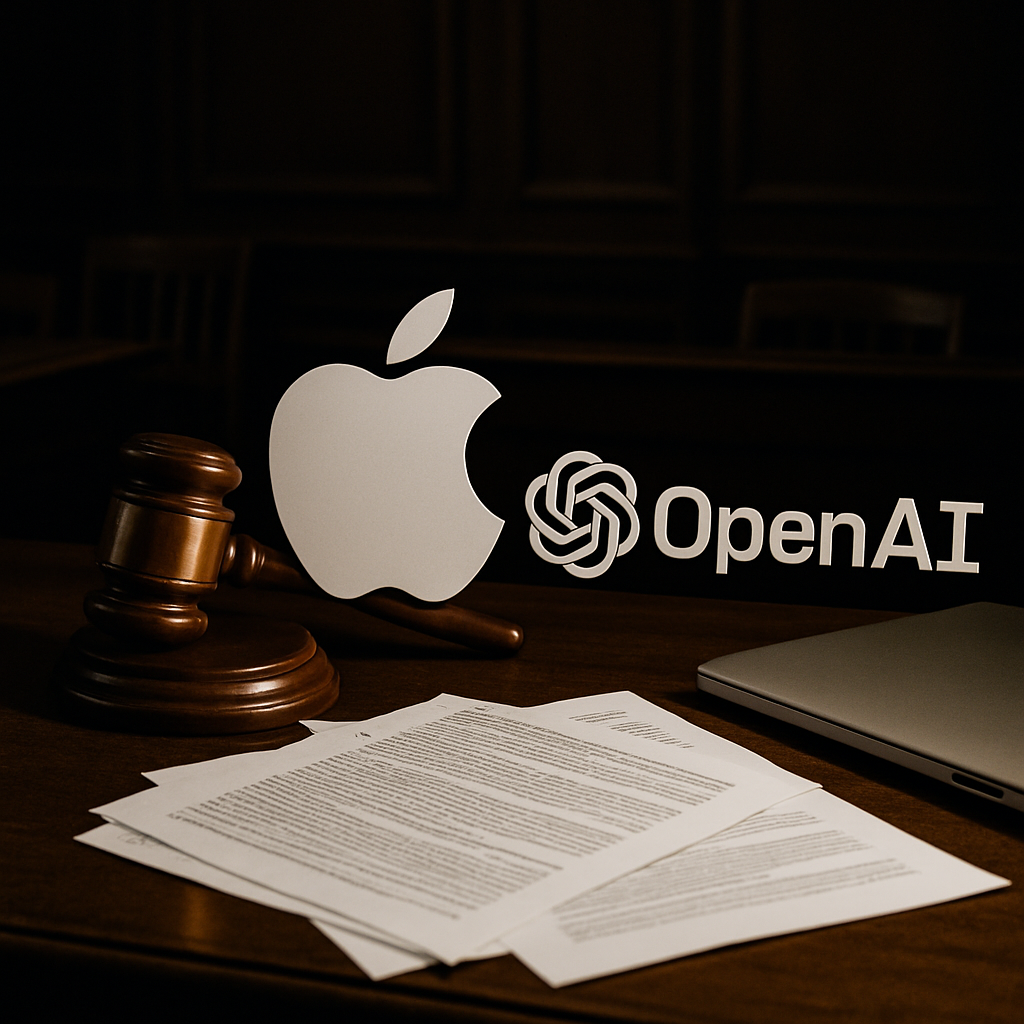
OpenAI has pushed back against Apple’s accusations that former engineers stole trade secrets related to hardware design, calling the case “a mess of Apple’s own making.” The clash centers around claims that two Apple-employed engineers, Chang Liu and Tang Tan, downloaded confidential materials after leaving the company and used them to help OpenAI develop new hardware. Apple presented what it says is “shocking evidence” from a forensic examination of a MacBook owned by Liu. (All details from Apple’s filings.)
What Apple Claims
Apple’s legal filing alleges that Liu and Tan accessed proprietary engineering files tied to hardware after their departure. As part of its case, Apple obtained Liu’s personal MacBook for forensic analysis and says that the findings revealed four pieces of evidence supporting its view that trade secrets were taken. The company asserts that these files are essential to its confidential hardware strategy and that their removal and use were unauthorized.
OpenAI’s Defense
Instead of denying some use of Apple’s information outright, OpenAI’s response shifts focus onto Apple’s internal practices. Key accusations include that Apple permits employees to use personal iCloud accounts for work documents, meaning sensitive data could reside in devices or accounts outside company control. The filing also claims exiting employees don’t get sufficient time to return devices, transfer files, or turn over responsibilities. Finally, OpenAI argues that former employees often continue to be contacted for help after leaving, potentially leading to unintentional disclosure of private files.
OpenAI’s argument implies that even if confidential information was accessed, Apple’s alleged lax protection measures could undermine its trade-secret claim. Under legal standards, protecting information is one of the foundational criteria for something to qualify as a trade secret. OpenAI contends that the issues stem from Apple’s own internal policies being inconsistent or poorly enforced.
Why This Case Matters
This is more than a dispute between tech giants—it could clarify how trade-secret law applies in the fast-paced world of AI and hardware development. Trade-secret claims hinge on proving that a company not only owns valuable confidential information, but also takes reasonable steps to protect it. If Apple is found lacking in internal safeguards, it could weaken its legal position significantly.
Meanwhile, for companies like OpenAI racing to develop AI-optimized chips, processors, or entire hardware platforms, access to engineering know-how can make or break product roadmaps. As firms compete for talent and insight, how they handle employee transitions, data access, and device returns might come under closer scrutiny.
We’ll be watching the court filings in detail—especially how judges interpret Apple’s evidence against its own internal practices. If OpenAI succeeds, this case could set precedent for what’s considered ‘reasonable protection’ of trade secrets, potentially reshaping internal policy norms across Silicon Valley.