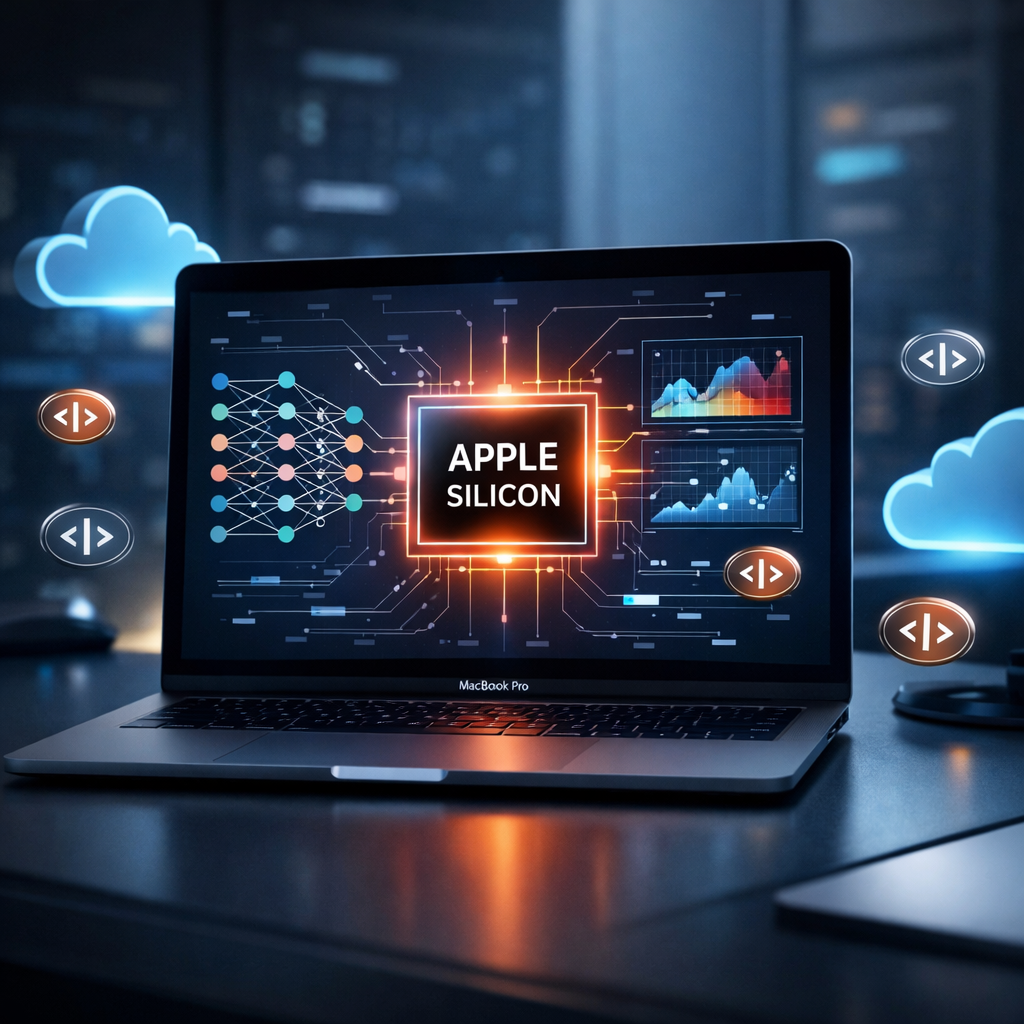
Hardware costs are rising, but in the current enterprise AI environment, Macs—particularly those with Apple Silicon—may deliver surprisingly strong value against escalating cloud costs tied to token usage.
Token Billing vs. Upfront Costs
In enterprise settings, cloud-based AI is increasingly priced per token. That pricing model works fine when usage is light. But with large-scale adoption—coding assistants, automated document analysis, multistep workflows—token consumption can explode, driving costs far beyond expectations.
By contrast, Apple Silicon Macs shift those costs into a one-time hardware purchase. Once you own the machine, there are few ongoing costs aside from power and maintenance. For organizations that run models locally, that can dramatically reduce total cost of ownership (TCO).
ROI of Apple Silicon for AI Workloads
Recent examples show how lucrative Apple Silicon can be against cloud token bills. For a 26-billion-parameter model running four hours a day—about 150 million tokens per month—costs with cloud providers can reach $450 to $850 per user monthly. A MacBook Pro with an M5 Max chip and 128 GB unified memory costs $6,500 and could reach payback in seven to 14 months.
Apple’s unified memory system grants Macs an edge over many PCs, where GPUs must share separate, often limited, memory. The unified architecture means large models run more efficiently—even on laptops—making high-end Macs viable tools for lots of AI work.
What Could Throw the Math Off
The savings assume local models are good enough for core tasks—summaries, content generation, internal data analysis, code scaffolding. Frontier models in the cloud are still ahead on deeply complex tasks, though the gap is narrowing.
Other limiting factors: many employees won’t burn 150 million tokens per month, token prices have dropped recently, and organizations often need a hybrid mix—running routine tasks locally, reserving cloud access for heavy lifting. Tools like AI gateways and on-device policies are emerging to manage usage and cost.
Even though Macs have gotten more expensive due to hardware shortages and inflation, token bills are rising faster. If local open-weight models become mainstream, a Mac’s price tag could look small in comparison over a normal device refresh span.
All of this depends on local AI models meeting real-world needs. But if they do, Apple’s current platform—strong with unified memory and accelerating device-level AI support—may offer long-term savings and control over unpredictable cloud expenses. The big question: can organizations adopt open-weight models broadly and maintain accuracy, security, and usage discipline as they scale?
Why It Matters
This trade-off between paying upfront for capable hardware and recurring cloud costs is defining how companies budget for AI. As token pricing, usage, and models continue shifting, IT leaders must assess total costs—not just sticker price. Macs may cost more up front, but with the right workloads and deployment strategy, they could become one of the best bargains in enterprise AI.