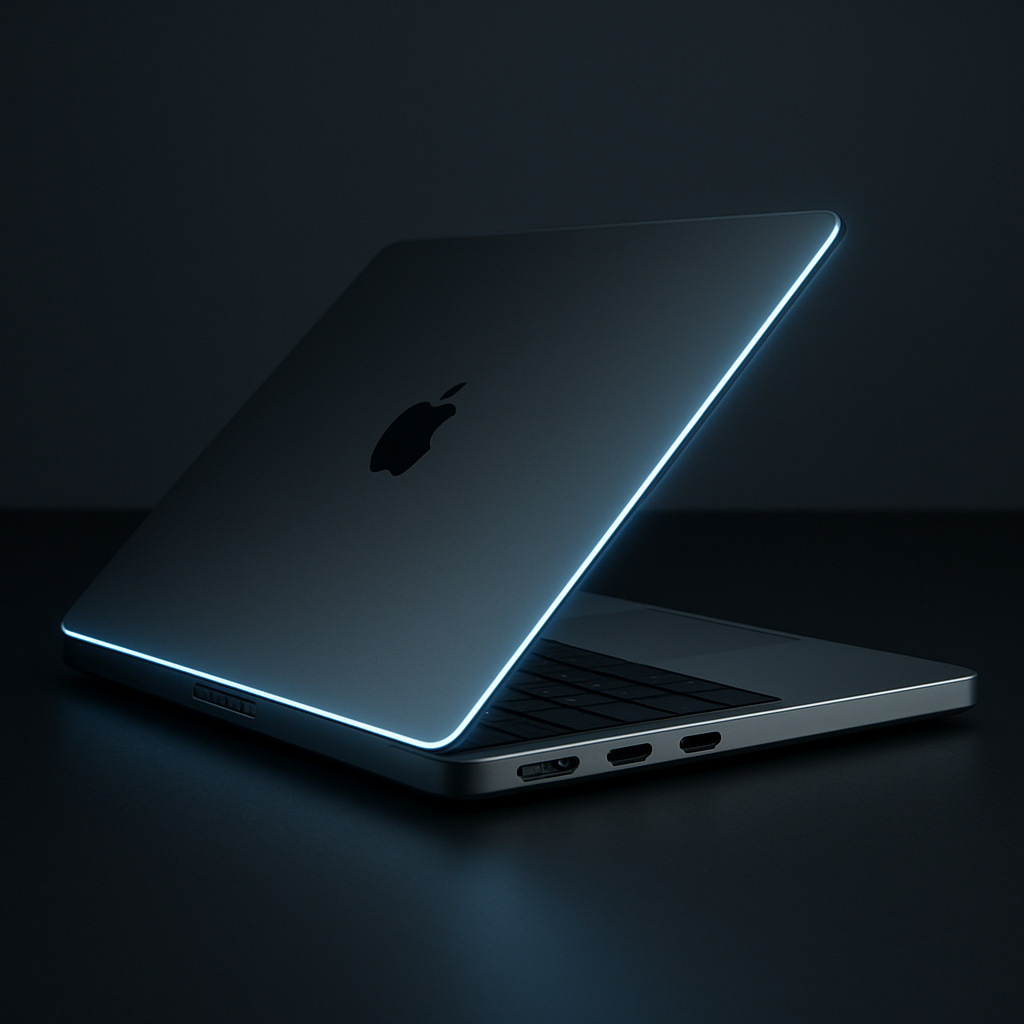
Apple is moving forward with the base 14-inch MacBook Pro getting its M6 chip upgrade. The changes lean heavily toward performance enhancements rather than design overhauls — the form factor is expected to remain almost entirely the same.
What’s staying the same: design and core features
Internally known as model identifier J804, the new “base” M6-powered 14-inch MacBook Pro will reportedly stick with the current generation’s shell. That means it’s likely to retain its miniLED display with ProMotion, the six-speaker audio setup, identical port selection, and the same $1,999 starting price as the M5 base model. Any major visual redesigns seem reserved for higher-end variants.
What changes under the hood
The performance jump is where the real news lies. Rumors point to updated memory architecture that boosts bandwidth from 153 GB/s in the M5 to roughly 200 GB/s in the M6. Additionally, the Neural Engine core count is expected to increase from 10 to 12. To improve graphics performance, Apple apparently tested configurations with 12 GPU cores — two more than in the current base model.
The M6 chip is also said to leverage TSMC’s first-generation 2nm (N2) manufacturing process. That shift should enable a smaller density, lower power draw, reduced heat output, and faster performance compared to the M5.
What to expect and what’s next
While the M6 upgrade promises clear gains in AI, Siri, and other on-device intelligence features, this base model won’t bring in flashy new hardware or design. The chassis remains consistent with the 2021 MacBook Pro structure introduced with the M1 Pro and M1 Max models. That said, a bigger redesign appears likely with the upcoming K-series machines — high-end MacBook Pros expected to introduce OLED panels, touchscreens, and more aesthetic changes.
Some rumors even suggest that this entry-level M6 model may be replaced in under a year. The M7-era MacBook Pros (codenamed K104) are tipped to bring in the design changes that users have been expecting.
Overall, the M6 14-inch MacBook Pro looks like a strong iteration for buyers who prioritize performance improvements, especially in AI workloads and graphics, but aren’t craving visual updates. For those with recent models, the benefit may feel incremental.
Analysis: Apple appears to be embracing a strategy of layered upgrades: improve core performance quietly while saving more disruptive design shifts for premium models. By rolling out the M6 into an existing chassis, the company can rapidly deliver capability improvements — especially in areas like AI and graphics. Yet, this approach also risks leaving one segment of users in limbo: those holding newer Macs may feel little motivation to upgrade until the more dramatic OLED- and touchscreen-laden high-end models arrive. Watch for the M7/K104 generation; that’s likely the moment when form and function shift together.