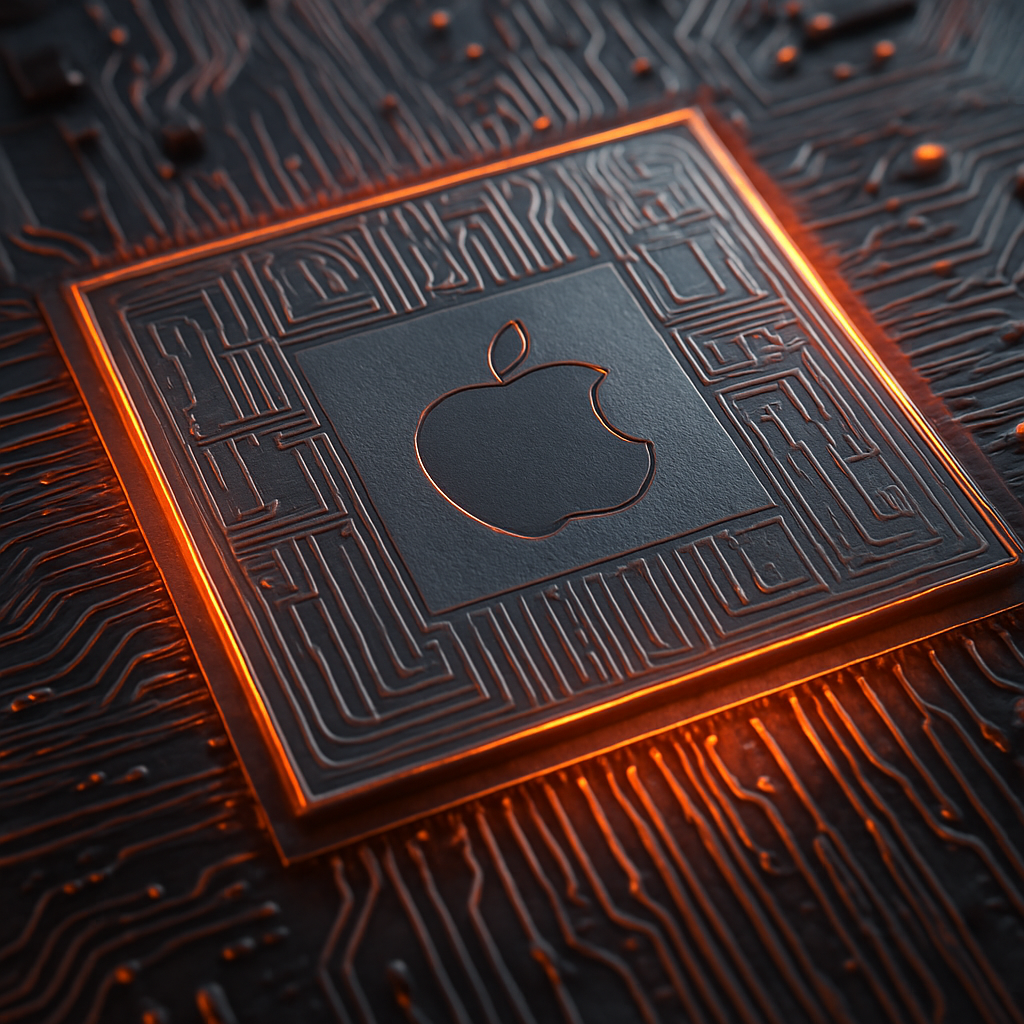
Apple’s newly unveiled M6 chip, revealed just days before its September iPhone event, is offering the strongest clues yet about the forthcoming A20 and A20 Pro processors expected to power the iPhone 18 lineup. Because Apple often shares core architecture between its M-series and A-series silicon, the M6 basically gives us a sneak preview of what’s ahead in the iPhone’s brains. Importantly, the process order was reversed this year: the M6 was launched first—on August 25—with the A20 Pro anticipated to follow.
What M6’s Tech Tells Us
The M6 marks Apple’s first chip built on TSMC’s 2nm node (N2), and reports suggest the A20 and A20 Pro will use this same fabrication process. That’s a big deal: the smaller node brings higher transistor density, better efficiency, and more performance packing in smaller chip real estate—fundamentally enabling the bump in performance Apple is promising.
On neural compute, the M6 introduces a dual 16-core Neural Engine, capable of handling both cores simultaneously to double its peak compute relative to the last iteration. This likely sets expectations for the A20 Pro to also offer a dual-engine setup; however, thermal and die size constraints could mean the non-Pro version gets a more modest upgrade.
Graphics improvements appear in refined details: the M6 delivers a 50% boost in geometry rate, updates to shader core architecture, improved dynamic caching, and adds hardware ray-tracing support. These gains generally translate into both the A-series and M-series silicon in past years—so graphics performance on the A20 Pro should rise significantly, though the overall leap may not match prior transformative jumps like the one from A17 to A19 Pro.
Memory bandwidth, a crucial factor in running large on-device models and heavy compute loads, also edges up. The M6 pulls in up to 170 GB/s, about a 10% improvement over the M5’s 153.6 GB/s, likely using faster LPDDR5X rather than a jump to LPDDR6. For reference, the current A19 Pro operates around 76.8 GB/s; a similar 10% gain for the A20 Pro would land it near 85 GB/s. The major gains may come instead from packaging changes—like WMCM—that shrink the distance between CPU, GPU, and memory.
Some limitations carry over. The media engine in the M6 supports hardware-accelerated H.264, HEVC, ProRes, and ProRes RAW, and allows AV1 decoding—but not AV1 encoding. Since the A-series usually mirrors these features, and because of how early the change would need to be made, it’s unlikely the A20 Pro adds AV1 encoding.
Performance Gains Expected for A20 Pro
Estimates suggest the A20 Pro will offer up to 18% faster performance and around 30% better power efficiency compared to the A19 Pro, closely matching the relative jump from M5 to M6. That means users should see smoother performance, especially in demanding tasks, with less battery drain.
However, though graphics and neural processing will improve, the gains may be more incremental than headline-grabbing. The jump in GPU AI compute delivered by M5 was massive; M6’s increase over M5 is solid but narrower. That suggests that while A20 Pro will be noticeably better than its predecessor, it might not redefine expectations in the same way.
Your phone’s capability to run on-device AI models more fluidly may depend less on memory speeds and more on packaging tech that reduces internal latency. WMCM packaging looks like a key innovation here, likely included in higher-end models to help bridge the gap.
M6’s specs strongly suggest that AV1 encoding won’t arrive in the A20 Pro generation, reinforcing that the encoding ecosystem will still depend on earlier-supported codecs—unless Apple surprises us.
The A20 Pro is expected to be revealed at Apple’s iPhone 18 Pro launch later this month.
Analysis: The picture emerging from M6 suggests that the A20 and A20 Pro will deliver steady, meaningful improvements for most users: better efficiency, neural compute, and graphics, but without radical leaps in every area. The biggest impact may come from packaging innovation and chip architecture rather than just raw numbers. For power users and AI enthusiasts, the A20 Pro looks poised to tick a lot of boxes—though areas like codec support may remain stuck in previous cycles. What to watch: whether Apple extends the dual Neural Engine to non-Pro models, improves memory bandwidth through new memory types, or finally adds AV1 encoding support.