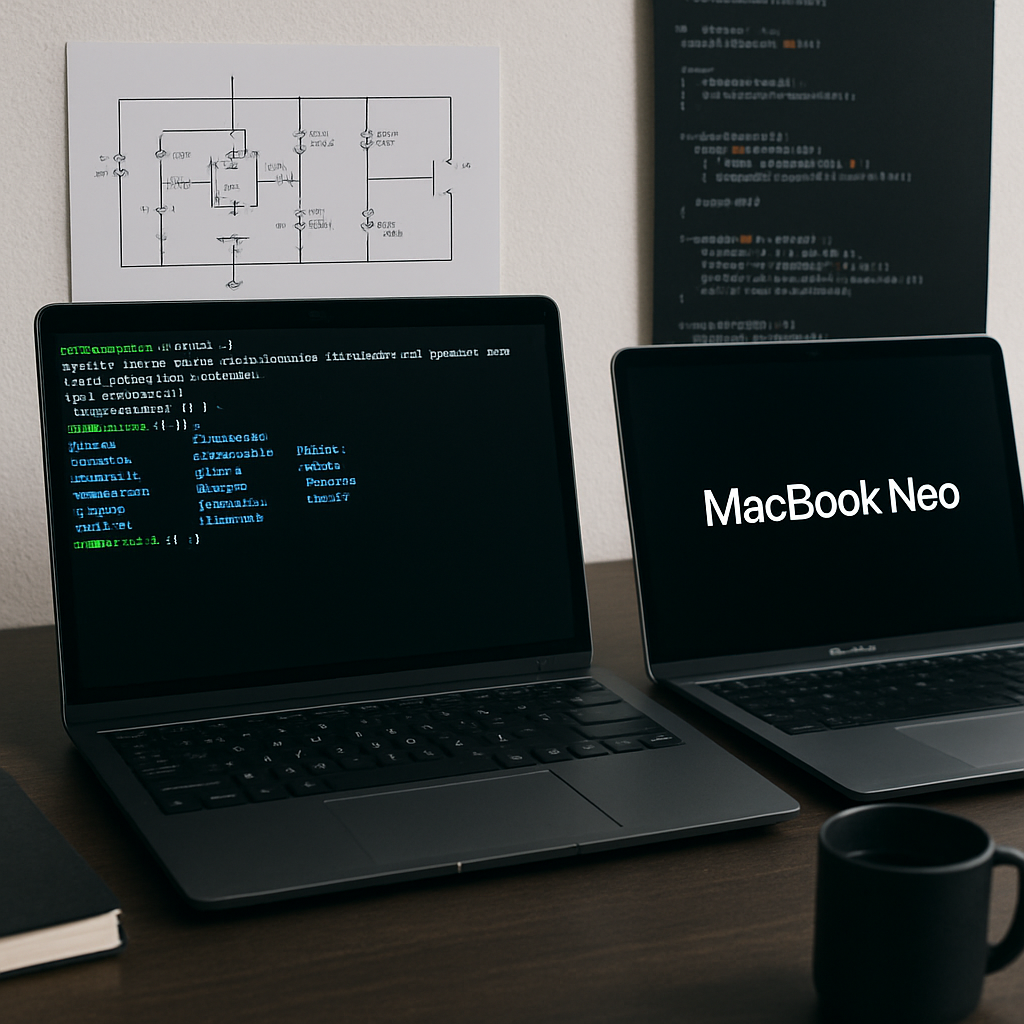
Linux 7.4 is gearing up to provide rudimentary support for Apple’s new M4 chip line. A developer working on the Asahi Linux project has submitted pull requests to introduce a base “device tree” entry for the M4 family—as well as initial compatibility specifically for the MacBook Neo. While this lays the groundwork for installation, it stops far short of a fully usable system right now.
The submitted code allows Linux 7.4 to recognize the M4 hardware and boot the kernel on those devices. However, key subsystems, especially graphics processing, are not yet functional. That means no GPU acceleration or a polished user experience—yet. The current implementation essentially enables Linux to load up on M4 machines, leaving usability to follow in later updates.
Background on M4 Hardware & Asahi Linux
The M4 series represents Apple’s latest in its in-house chip design, continuing the trend towards tighter integration of hardware and software. Asahi Linux is the community-driven effort to port Linux to run natively on Apple Silicon devices, an ambitious project given how custom many components are—including proprietary drivers and tightly locked-down firmware.
Earlier efforts have already brought up basic support for other Apple Silicon chips such as M1 and M2. Each new generation, however, tends to bring fresh challenges in the form of changes to device trees, power management, firmware APIs, and GPU drivers. The M4 family is no exception, requiring entirely new groundwork before full Linux compatibility can be achieved.
What’s Next Before It’s Truly Usable
To reach a level of usability suitable for everyday use, additional work will be needed on several fronts. GPU drivers must be developed or ported, likely involving reverse engineering or cooperation with Apple (which hasn’t traditionally shared full driver source). Beyond graphics, other hardware integrations—Wi-Fi, power management, display output, etc.—also need attention.
It’s unclear yet whether support for M4-based devices will land in Linux 7.4 itself or be merged later. As with past chip releases, expect incremental improvements over time rather than a single major update that delivers everything at once.
Why this matters: For Linux users and enthusiasts, native support for Apple Silicon chips like the M4 opens up exciting new possibilities—power-efficient laptops, energy savings, and novel setups that were previously hindered by missing drivers. Asahi’s continued work signals that the open-source community is inching closer to bridging Apple’s hardware with Linux freedom.