Kyoto Fusioneering, a Japan-based company specializing in fusion power plant technologies, has announced plans to develop a prototype fuel breeding device at Oak Ridge National Laboratory (ORNL) in Tennessee. This initiative is supported by grants from the U.S. Department of Energy and the state of Tennessee. Concurrently, the company is relocating its U.S. headquarters to Oak Ridge.
In fusion reactors, the primary focus is often on the core where atomic nuclei fuse to release energy. However, the surrounding systems, known as the balance of plant, are crucial for sustained operation. Kyoto Fusioneering is addressing this need by developing components such as breeding blankets, which are essential for both energy extraction and fuel generation.
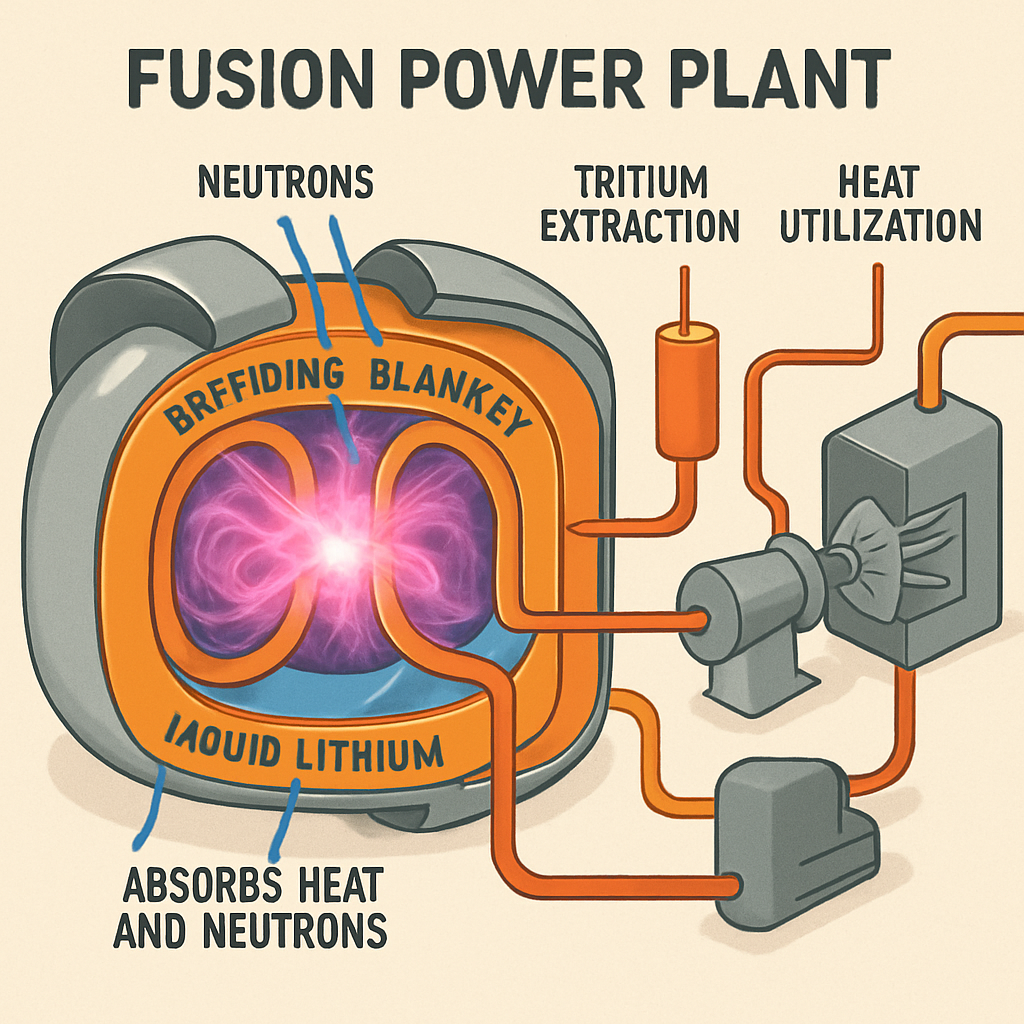
The upcoming device, named Unity-3, will test various breeding blanket materials, including liquid lithium. In this system, liquid lithium absorbs heat and neutrons from the fusion reaction. The neutron bombardment converts lithium into helium and tritium, a hydrogen isotope used as fusion fuel. The tritium is then extracted and recycled back into the reactor, while the heat is utilized for power generation. This process requires advanced materials and specialized equipment to handle high temperatures and radiation.
Kyoto Fusioneering’s efforts are significant in the fusion industry, as over half of fusion startups plan to collaborate with external suppliers for fuel cycle technologies. Companies like Realta Fusion, Thea Energy, Type One Energy, and Xcimer Energy are expected to use data from Unity-3 experiments to inform their reactor designs.
By focusing on the development of critical balance of plant components, Kyoto Fusioneering positions itself as a key supplier in the fusion energy sector. Their work on breeding blankets and other systems is essential for the commercialization of fusion power, aiming to provide a sustainable and virtually limitless energy source.