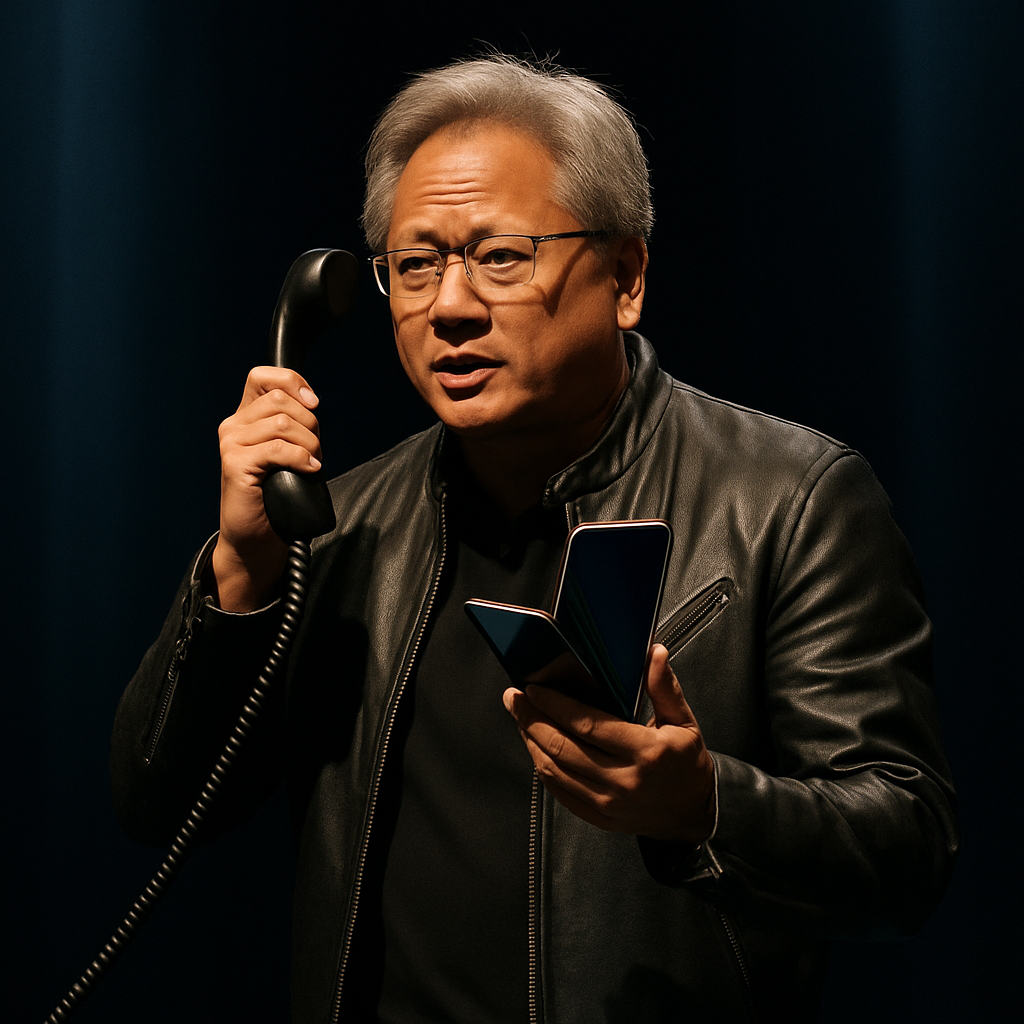
Nvidia CEO Jensen Huang hijacked the spotlight at L.A.’s All-In conference Monday — not just with a surprise phone call from former President Donald Trump, but by brandishing Apple’s upcoming foldable iPhone on stage weeks before it hits stores.
The event kicked off when Trump phoned in live from offstage. Huang, clad in his signature alligator-leather jacket, accepted the call using an unreleased $1,999 foldable iPhone that won’t be officially available for purchase for another five weeks. The moment did more than amplify the political drama; it spotlighted Apple’s hardware in a setting normally dominated by Nvidia chips and AI strategy.
Trump, AI Panic, and a Shared Narrative
Once Trump was connected, the discussion turned to the mounting fears about artificial intelligence. Trump dismissed concerns about AI risks as a “hoax,” suggesting that political actors and China were the real beneficiaries of the fearmongering. He also argued AI’s influence is “bigger than the internet” and opposed efforts to slow down its development. Huang offered minimal pushback, and, according to him, the audience received the exchange with applause.
No indication was given whether Huang privately aligns with Trump’s stance or was simply unwilling to contradict a political figure publicly. But given Nvidia’s business model — which depends heavily on demand from AI labs and developers — emphasizing the upside of AI aligns with its financial interests. After all, the company’s shares are up roughly 33% year over year, even though they slipped slightly that day.
Hardware Spotlight: The Foldable iPhone Makes Its Mark
While much of the media coverage zeroed in on Huang-Tump interaction, many in the room noticed something more subtle: the allusion inherent in holding up Apple’s foldable phone. This moment marked a symbolic bridge between Apple and Nvidia — two firms that have trended apart forever now intertwined through high-profile AI features. The foldable device is part of Apple Intelligence, the tech giant’s new AI platform, and the Nvidia internals are said to contribute to parts of it.
Apple has long moved away from using Nvidia hardware in its devices. Displaying this foldable in Huang’s hand is as much a tease for the handset’s innovation as it is an indirect signal about Apple’s reliance on Nvidia’s AI muscle going forward.
To many, the stage moment served not only as a high-profile flex but a signpost for where both AI and hardware trends are converging: uncertainty over AI’s future, public figures weighing in, and consumer devices bridging ecosystems.
What to Watch: Grandstanding aside, this episode underscores how intertwined hardware, AI strategy, and public perception have become. As Apple’s foldable iPhone launch draws near, its performance under the hood — especially its AI capabilities powered by Nvidia — will become a key test of its appeal. Meanwhile, AI regulation, political commentary, and corporate alliances will likely become even more entangled in the tech narratives of 2026.