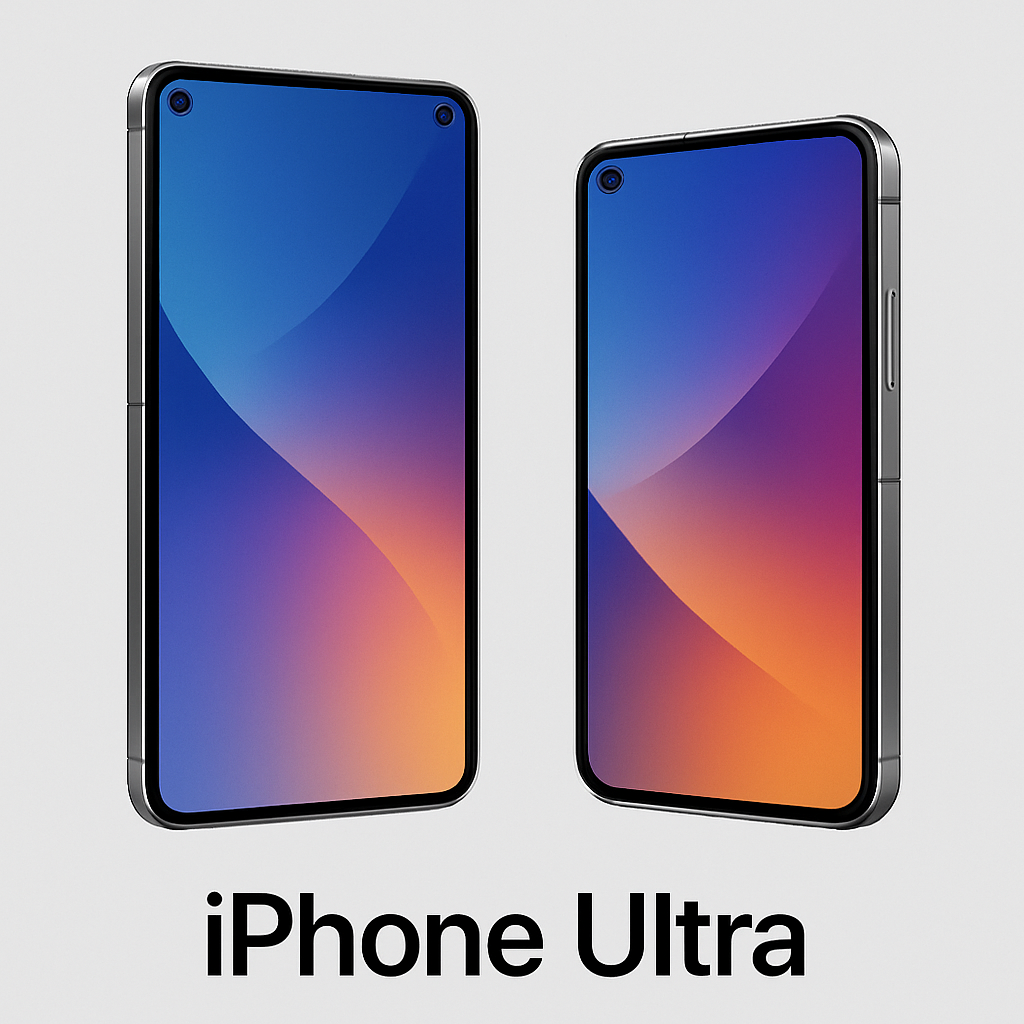
As Apple prepares to introduce its first foldable smartphone, the iPhone Ultra, next month, recent leaks suggest a significant departure from traditional front camera placements. Historically, iPhone front-facing cameras have been centrally located at the top of the display. However, new information indicates that the iPhone Ultra may position its front cameras in the corners of both its external and internal displays.
The iPhone Ultra is anticipated to feature two rear cameras—a Main and an Ultra Wide lens—and two front-facing cameras to accommodate its dual-display design. The outer display, accessible when the device is folded, and the larger inner display, revealed upon unfolding, each require a front camera. Traditionally, these cameras are centered to facilitate natural eye contact during selfies and video calls.
Recent leaks, including images of third-party screen protectors, show cutouts for front cameras in the top-right corner of the outer display and the top-left corner of the inner display. This suggests a shift from the conventional centered placement to corner positions. While accessory manufacturers often base their designs on available information and may not always reflect final product specifications, these leaks have sparked discussions about potential design changes.
Placing the front camera in a corner could impact user experience. For instance, during selfies or video calls, users might need to adjust their gaze to align with the new camera position, potentially affecting the natural feel of interactions. The inner display’s off-center camera placement might be a design necessity to avoid the fold area, but an off-center camera on the outer display would be a notable change requiring user adaptation.
It’s important to note that these design details are based on leaks and may not represent the final product. Apple has not confirmed any specifics regarding the iPhone Ultra’s camera placements. As the official unveiling approaches, more accurate information is expected to emerge.
If these unconventional camera placements are implemented, it would mark a significant shift in Apple’s design philosophy, potentially influencing future smartphone designs. Users and industry observers will be keen to see how such changes affect usability and whether they set new trends in smartphone design.