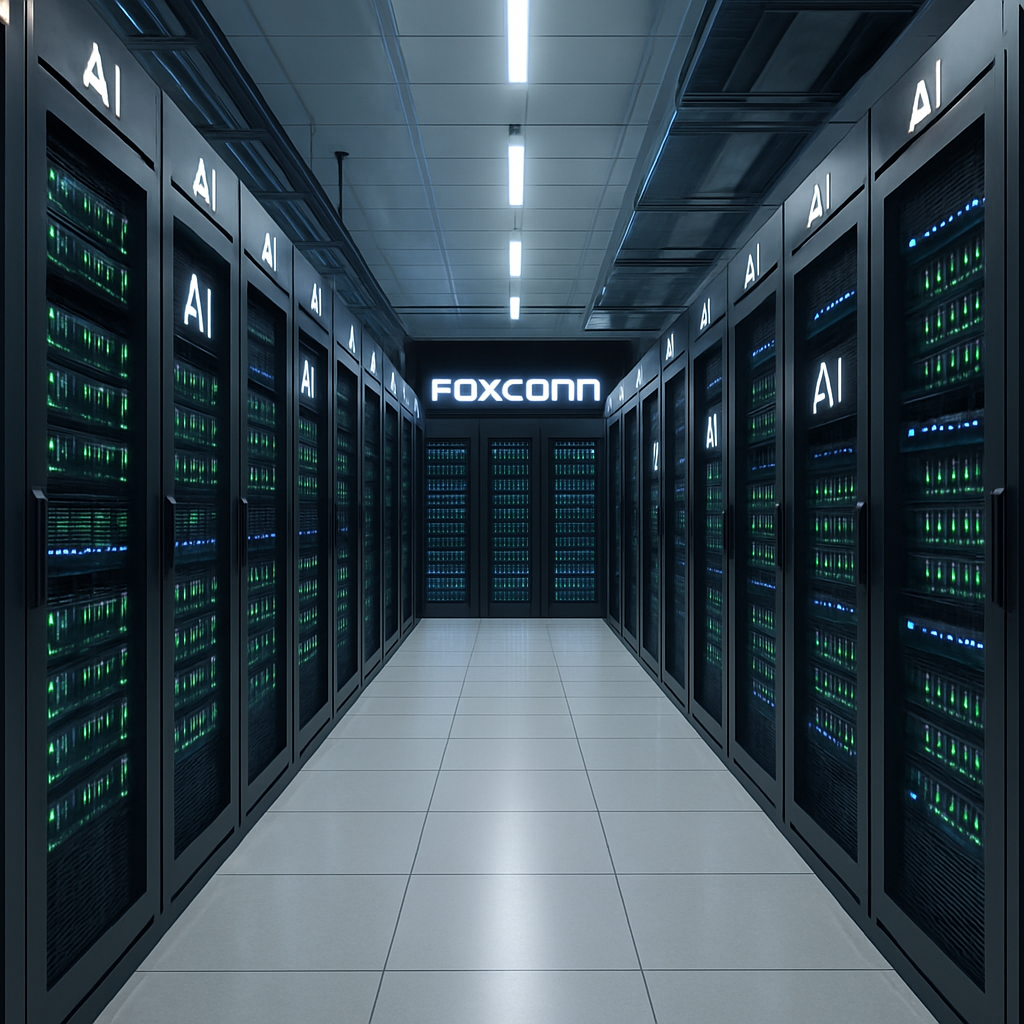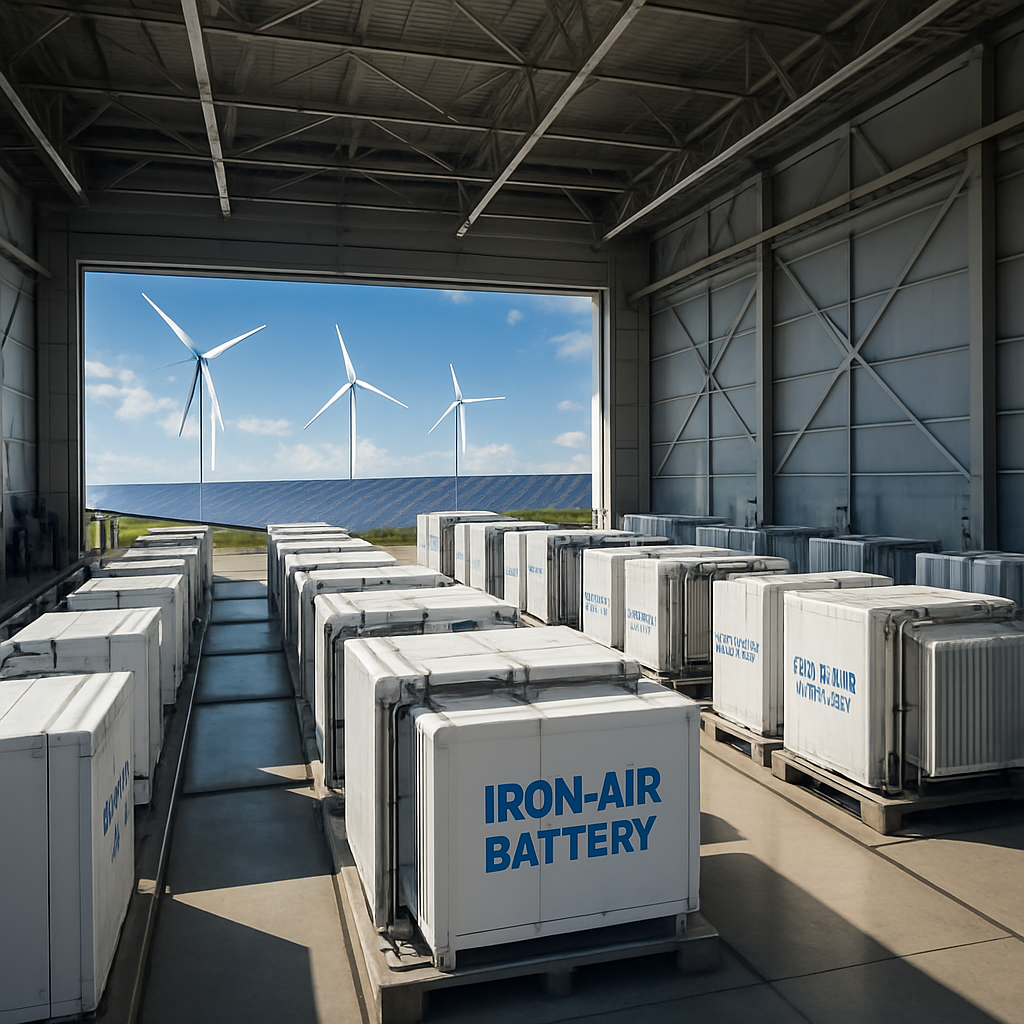
Form Energy, a pioneering battery startup, has successfully raised $750 million to enhance its manufacturing capabilities in West Virginia. This substantial investment underscores the growing demand for advanced energy storage solutions, particularly as the surge in AI-driven data centers amplifies the need for reliable power sources.
In the first quarter of this year, the United States installed 9.7 gigawatt-hours of energy storage, marking a 32% increase from 2025. While most existing batteries offer limited discharge durations, Form Energy’s innovative iron-air batteries can deliver power continuously for up to 100 hours. This extended duration is crucial for bridging gaps in renewable energy generation, especially as renewables are projected to account for over 90% of new generating capacity in the U.S. this year.
Form Energy’s batteries utilize a unique chemistry that leverages iron, a more abundant and cost-effective material compared to traditional minerals like lithium, cobalt, and nickel. The charging and discharging process involves the oxidation and reduction of iron, effectively converting it to rust and back, facilitating efficient energy storage and release.
This technological advancement has attracted significant clientele. Notably, Google is integrating a 30-gigawatt-hour Form Energy battery into its new Minnesota data center, a project valued at approximately $1 billion. Additionally, Crusoe has committed to purchasing 12 gigawatt-hours of these batteries, and utility companies like Xcel Energy and FuturEnergy Ireland have also become customers.
Form Energy’s commitment to sourcing materials domestically is evident, with 80% of its components originating from the U.S., and the remainder sourced from Europe and Asia, excluding China. This strategic supply chain approach aligns with U.S. initiatives to reduce dependency on Chinese battery manufacturing.
The escalating electricity demands, primarily driven by the expansion of data centers, highlight the importance of Form Energy’s solutions. Data centers are anticipated to quadruple their electricity consumption in the U.S. by 2035, potentially accounting for 20% of the nation’s total electricity usage.
Currently, Form Energy boasts a commercial project backlog totaling approximately 80 gigawatt-hours of energy storage, a fourfold increase from earlier this year. The recent Series G funding round was led by T. Rowe Price and saw participation from prominent investors, including Sequoia Capital, Janus Henderson, Franklin Templeton, and others.
Form Energy’s substantial funding and innovative technology position it as a key player in the evolving energy storage landscape. As the demand for sustainable and long-duration energy solutions intensifies, the company’s iron-air batteries could play a pivotal role in ensuring grid stability and supporting the transition to renewable energy sources.