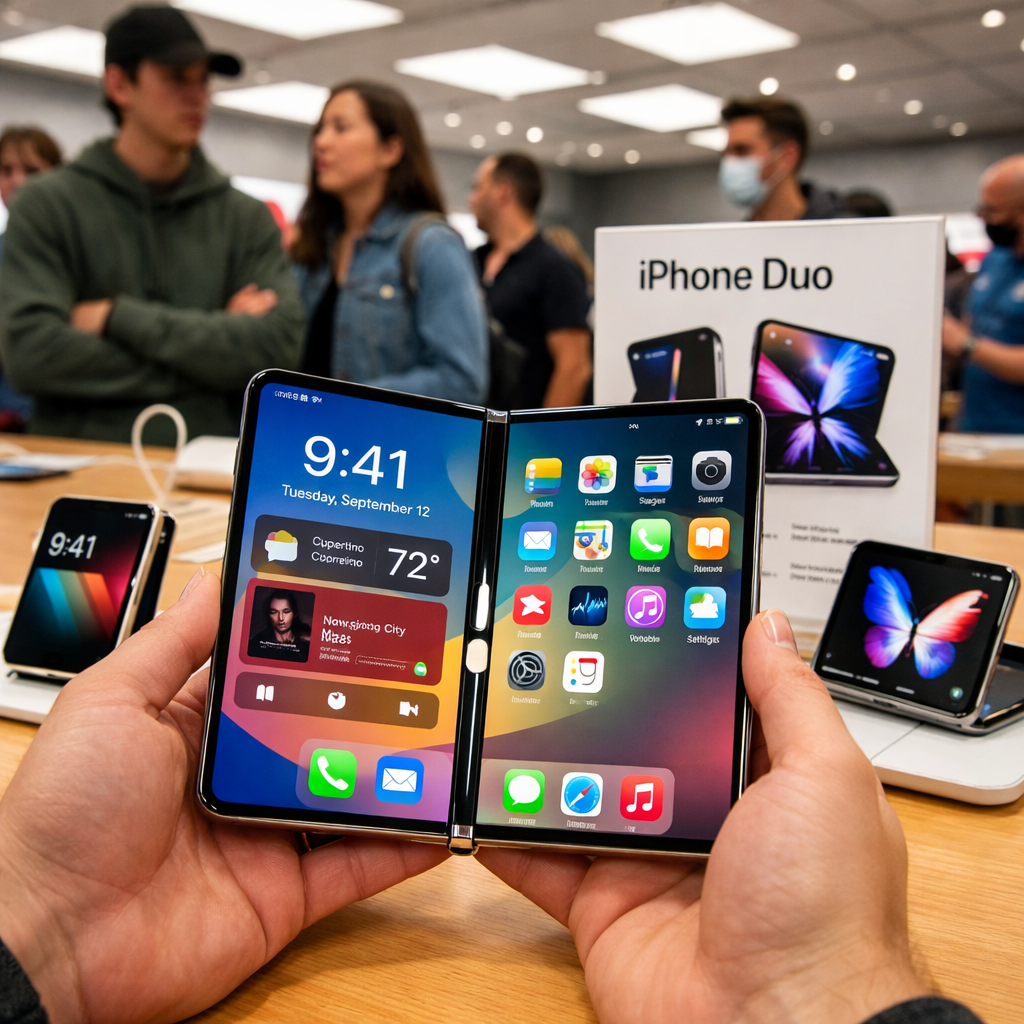
As of October 30, new buyers of Apple’s iPhone Duo face an average wait time of about 89 days—roughly three months—despite a modest one-week improvement. This data comes from UBS Investment Bank, which tracks order backlogs across over 30 markets via the UBS Evidence Lab tracking tool.
In contrast, those ordering the iPhone 18 Pro see much shorter delays. Average wait times for the Pro model are near five days—three days less than the previous week—while the iPhone 18 Pro Max remains at about an 18-day wait. This reflects starkly different demand or inventory pressures across model lines.
Pre-Order Surge & Initial Supply Constraints
When the Duo went on sale October 16, its pre-orders were pushed to a late January delivery window just minutes after going live. However, a large number of customers who placed orders on launch day were able to walk out of stores with the device immediately. That was possible because Apple allocated close to 80% of its initial Duo inventory to its retail outlets—some locations received as few as 50 units.
Apple portrayed demand as “extraordinary,” noting it was working to fulfill orders as quickly as possible. Still, with orders stretching into the new year, there’s a chance initial delivery estimates may improve for later buyers depending on supply chain adjustments.
Repair and Demand Signals
UBS analysis suggests that issues like display cracks shouldn’t be considered the driving force behind shortened wait times for the Duo. While reports of cracked screens have emerged, they don’t appear to correlate strongly with demand letting up or more units being available in the supply chain yet.
Given how the numbers alone can’t distinguish between a drop in demand versus improved supply, it’s still unclear whether the Duo’s extended wait times will continue shrinking or plateau.
The iPhone Duo’s pricing in the U.S. starts at $1,999 for the 256GB model, rising to $2,199 for 512GB, $2,599 for 1TB, and $3,199 for 2TB.
What this means is, even with small relief, Duo buyers are still in for a long wait unless Apple ramps up shipments significantly. Keep an eye on Apple’s weekly updates—each drop in days could signal easing supply constraints or cooling demand—both with serious implications for Apple’s near-term performance.