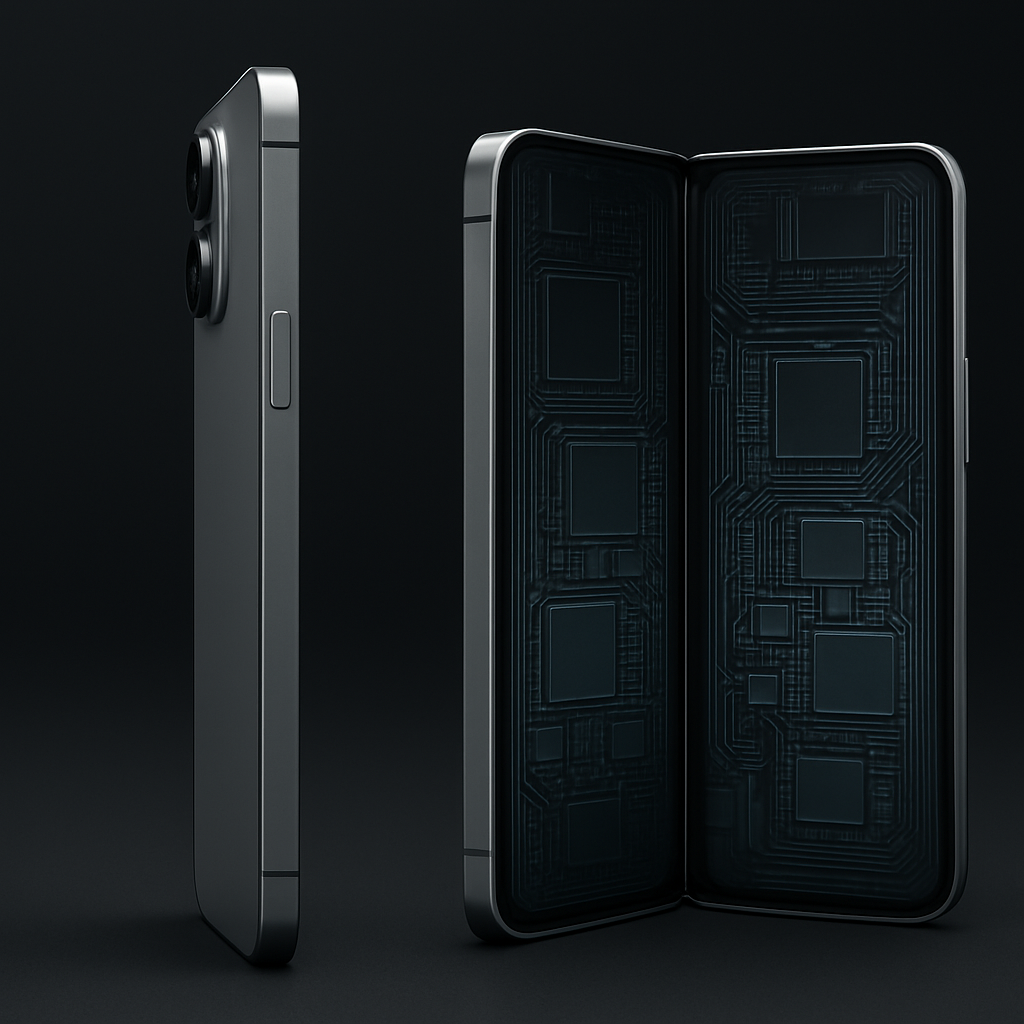
Early benchmark data suggests the forthcoming iPhone Duo matches the iPhone 18 Pro in performance, with no concessions made despite its thin and folding design. The two phones share Apple’s A20 Pro chip, and Geekbench 7 scores show the Duo holding its own even though design constraints could have forced thermal compromises.
Geekbench Results: Near Parity in Real Tests
In single-core benchmark tests, the iPhone Duo actually edges out its more traditional sibling, posting a score of 3,986 versus the iPhone 18 Pro’s 3,980. The difference is negligible and well within the margin of error, but the takeaway is clear—everyday tasks like app startup, scrolling, and iOS navigation should feel no slower on the Duo.
Multi-core results amplify that message. The iPhone Duo tallies up 11,067 points, while the iPhone 18 Pro leads with 11,540. The gap is slightly wider but still insignificant in practical usage. Interestingly, the Duo outperforms last year’s iPhone 17 Pro, which managed only 9,909 points in the same test, reinforcing how far Apple’s silicon continues to advance.
Design Constraints, Uncompromised Power
One concern was that the folding mechanism and slimmer build of the iPhone Duo might force trade-offs in cooling, throttling, or sustained performance. The standard iPhone 18 Pro benefits from a larger vapor chamber cooling system, which usually aids in maintaining higher performance under load. However, early numbers indicate the Duo’s design doesn’t meaningfully hurt its ability to keep pace, even under benchmark stress.
The comparable scores suggest that whatever engineers sacrificed in form—thickness, hinge mechanism, internal layout—they preserved in function. The Duo appears ready to handle both bursty workloads like launching apps and sustained multi-core tasks without falling far behind the more robustly cooled 18 Pro.
Pre-orders for the iPhone Duo begin October 16, with deliveries starting October 23. It’s entering a market used to foldables that often compromise performance; these results suggest Apple might have sidestepped that trap.
What this means: if these benchmark scores hold up under broader use, the iPhone Duo could redefine expectations for foldable phones. Buyers won’t need to settle for mid-range power just to get a folding screen—Apple may have delivered full-sized performance in a compact, flexible chassis. As more hands-on testing rolls in, watch for thermal behavior under sustained loads, battery life trade-offs, and what this means for Apple’s folding phone category going forward.