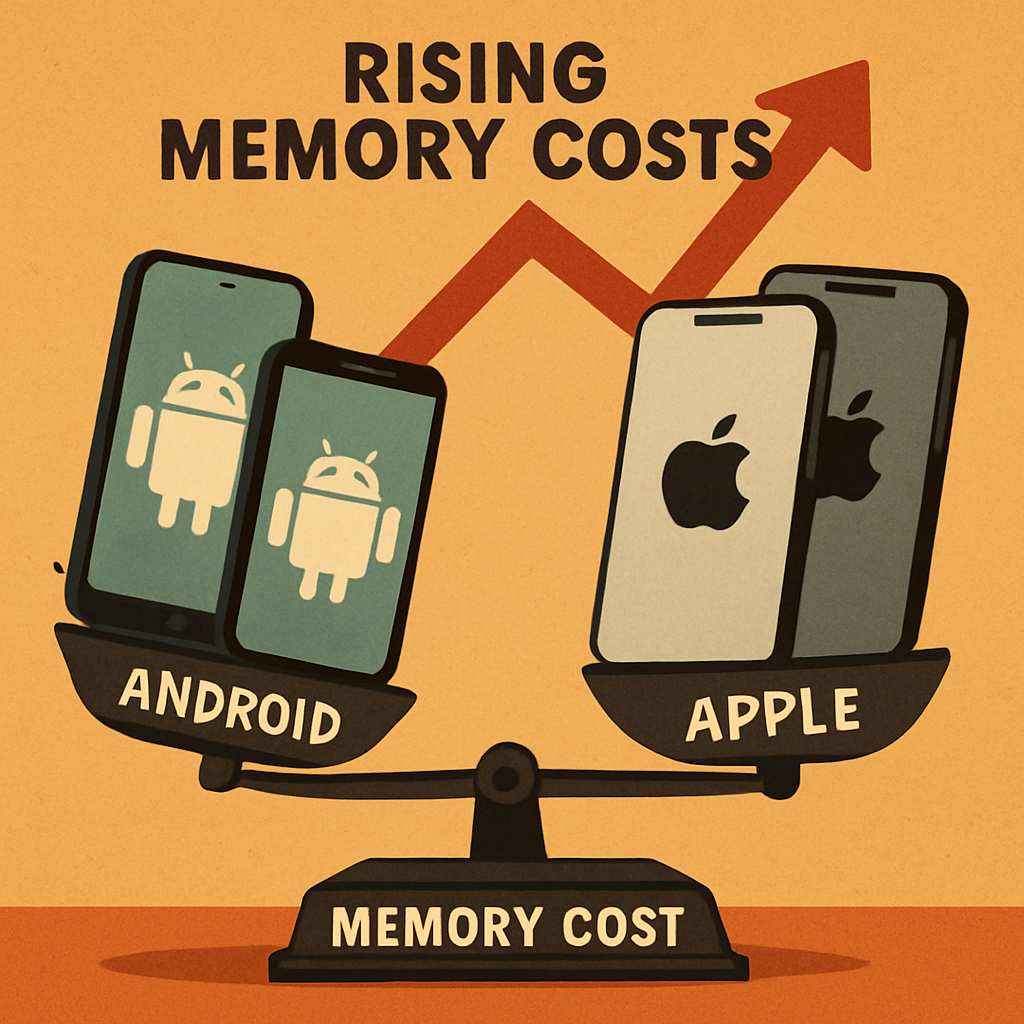
The smartphone industry is grappling with escalating memory prices, a trend that is particularly challenging for Android manufacturers. The surge in costs for DRAM and NAND flash memory has significantly increased production expenses, especially for budget and mid-range devices. This financial strain is leading to a reduction in the availability of affordable Android smartphones, as manufacturers find it increasingly difficult to maintain profitability in these segments.
Market analysis indicates a notable decline in the production of smartphones priced below $400. Research from Omdia highlights that memory costs now constitute nearly 60% of the bill of materials for these devices, up from approximately one-third in late 2025. This substantial increase is compelling manufacturers to either raise prices or reduce production, resulting in fewer options for consumers seeking budget-friendly smartphones.
In contrast, Apple appears to be less affected by these rising memory costs. The company’s focus on premium devices, which offer higher profit margins, provides a buffer against the impact of increased component prices. Additionally, Apple’s strong supply chain management and purchasing power enable it to secure necessary components more effectively than many of its competitors.
As the availability of affordable Android devices diminishes and their prices rise, consumers may begin to view Apple’s entry-level iPhones as more competitively priced alternatives. This shift could potentially lead to an increase in iPhone sales, as the price gap between budget Android phones and Apple’s offerings narrows.
In summary, while rising memory costs are posing significant challenges for Android manufacturers, they may inadvertently benefit Apple by making its products more appealing to consumers who are facing higher prices and fewer options in the Android market.