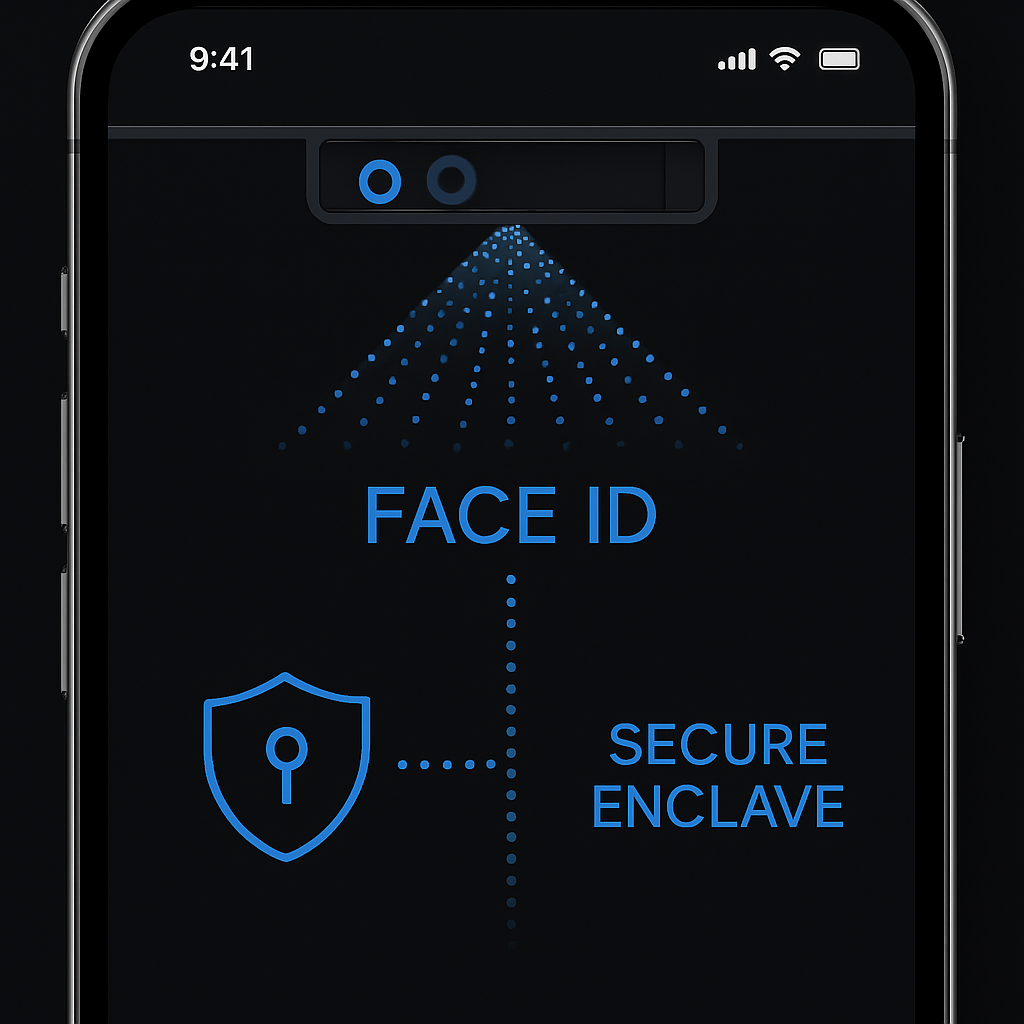
The iPhone 18 Pro introduces a new element to its Face ID authentication system: supplemental image data processed in a newly revealed secure exclave. This enhancement aims to preserve authentication performance while adapting to changes from the under-display implementation of Face ID components.
What’s Different in iPhone 18 Pro Face ID
Traditionally, Face ID works by combining infrared dot projection, depth sensing, attention checks, and a mathematical representation of your face. These ensure strong biometric security. The iPhone 18 Pro keeps all those elements but adds “additional image data” to the mix, according to updated support documentation. This new data works in tandem with the depth and infrared inputs to “maintain” Face ID performance under new hardware constraints.
The hardware changes stem from moving the dot projector beneath the display—a design that partially obscures a portion of the Face ID system. To compensate, Apple has disclosed that it turns off pixels around the under-display sensor area when needed so infrared projections can pass through correctly. The goal appears to be preserving Face ID’s speed without compromising its accuracy.
Secure “Exclave” Joins the Process
Alongside supplemental image data, Apple explains that these images are handled by a secure exclave in newer chips. This hardware component processes facial imagery to generate a second mathematical template, which is then compared to the one stored within the secure enclave. Both are isolated from the rest of the system—neither iOS, apps, nor users can access them.
Notably, the secure exclave is part of the system-on-chip in the latest processors (M4 and A18)—a separate domain designed to remain operational and trusted even if the rest of the chip is compromised. While image recognition alone isn’t reliable enough for authentication, combining it with the existing Face ID suite makes the system more resilient to hardware changes without sacrificing trust.
Performance, Bugs, and What Users Are Seeing
Some iPhone 18 Pro users have reported slower Face ID unlocks or occasional failures. A few discovered a more serious bug that leads to system crashes during authentication attempts. Apple, for its part, has not confirmed widespread issues—internal reviews from users with early units suggest these are anomalies rather than systemic flaws.
The iPhone 18 Pro officially went on sale September 18, following the hardware updates. Since then, many users haven’t experienced obvious problems with Face ID, though those anomalies have prompted attention. Apple has pledged fixes via software updates where needed.
Adding another image-based step to Face ID without weakening its core security protocols shows Apple navigating a delicate trade-off: adapting to hardware innovation (like under-display sensors) while preserving speed, accuracy, and privacy. By offloading certain tasks to the secure exclave, the company appears to keep sensitive biometric data insulated. Still, users experiencing slower unlocks or crashes point to areas to monitor. The coming weeks’ updates will be telling for whether Face ID on iPhone 18 Pro can live up to its security promises without compromise.