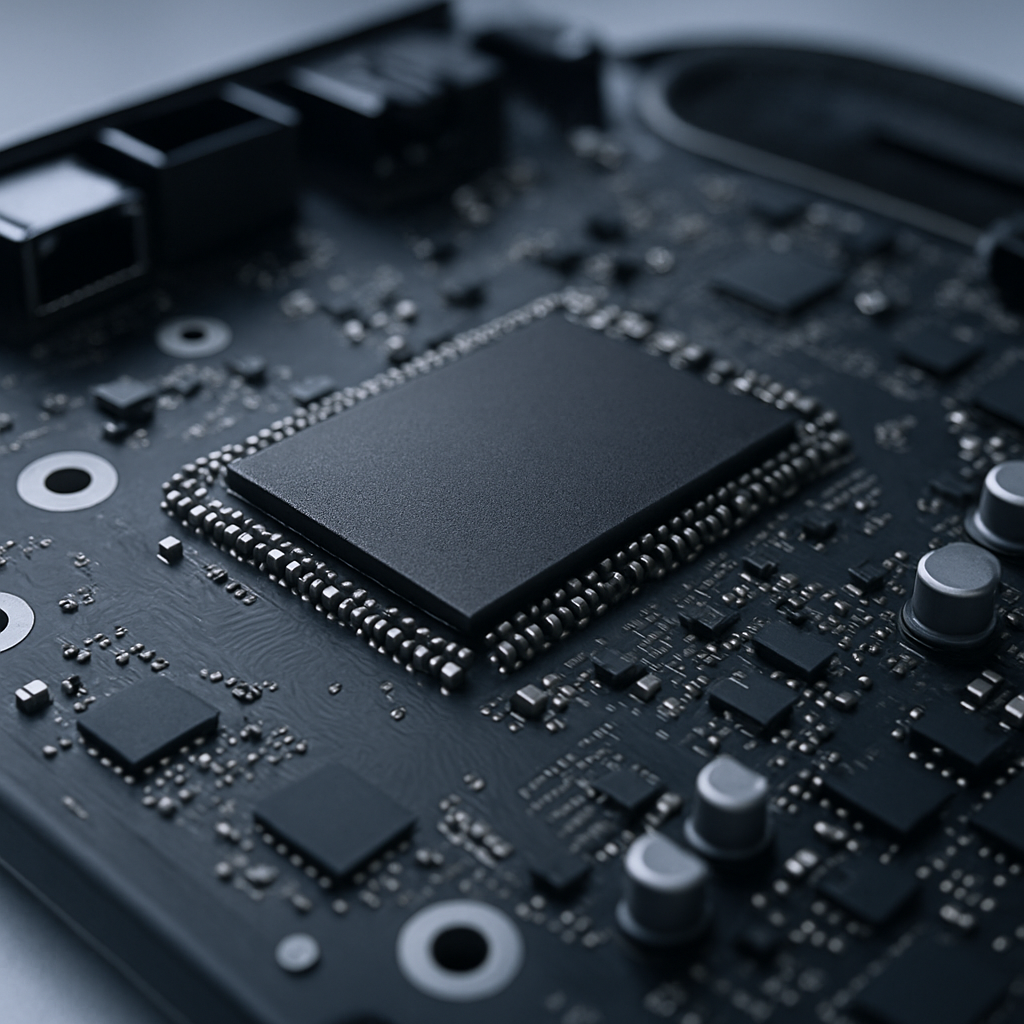
Apple’s latest Mac mini models—featuring the M6 and M5 Pro chips—no longer allow users to upgrade storage after purchase. The internal SSD is now soldered to the logic board, closing off the SSD module slot that was accessible in earlier versions.
🔧 What’s Changed from Previous Models
In the M4 Mac mini released two years ago, it was revealed through teardowns that the SSD was removable—not soldered—giving users the option to upgrade storage without buying a new machine. Expand Mac mini, a third-party upgrade firm, provided expansion modules for those earlier models. With the M6 and M5 Pro variants, that option has been removed. The NAND storage is now permanently attached, meaning the SSD module is non-removable. Expand Mac mini has confirmed that because of this change, offering SSD upgrades for these new Mac minis is now “unlikely.”
💸 Sticker Shock on Pricing Differences
For those who did act when upgrades were possible, the cost savings could be considerable. Expand Mac mini’s 1TB module for the M4 Mac mini ran $300; upgrading the M6 internally from 256GB to 1TB through Apple costs $500. Similarly, the third-party 2TB module was priced at $420, while Apple’s equivalent bump carries a hefty $1,000 price tag.
Interestingly, the Mac Studio still appears to retain an SSD that’s marked as removable in Apple’s repair documentation, though no teardown has yet confirmed whether that remains true in practice.
For those stuck with the newer sealed models, accessories are one route forward. One option already available pairs an SSD enclosure with added ports for the M6 Mac mini—helping to expand storage without altering internal components.
What this means:
Apple seems to be returning to a more tightly controlled hardware paradigm—first seen with the M1 and M2 Mac minis—where internal storage upgrades are off the table. For buyers, this raises questions about making the right choice at point of purchase, especially when storage becomes a permanent spec. The premium Apple charges for higher capacities is stark, and with third-party upgrade paths closed, the impact to resale value and longevity could be significant.