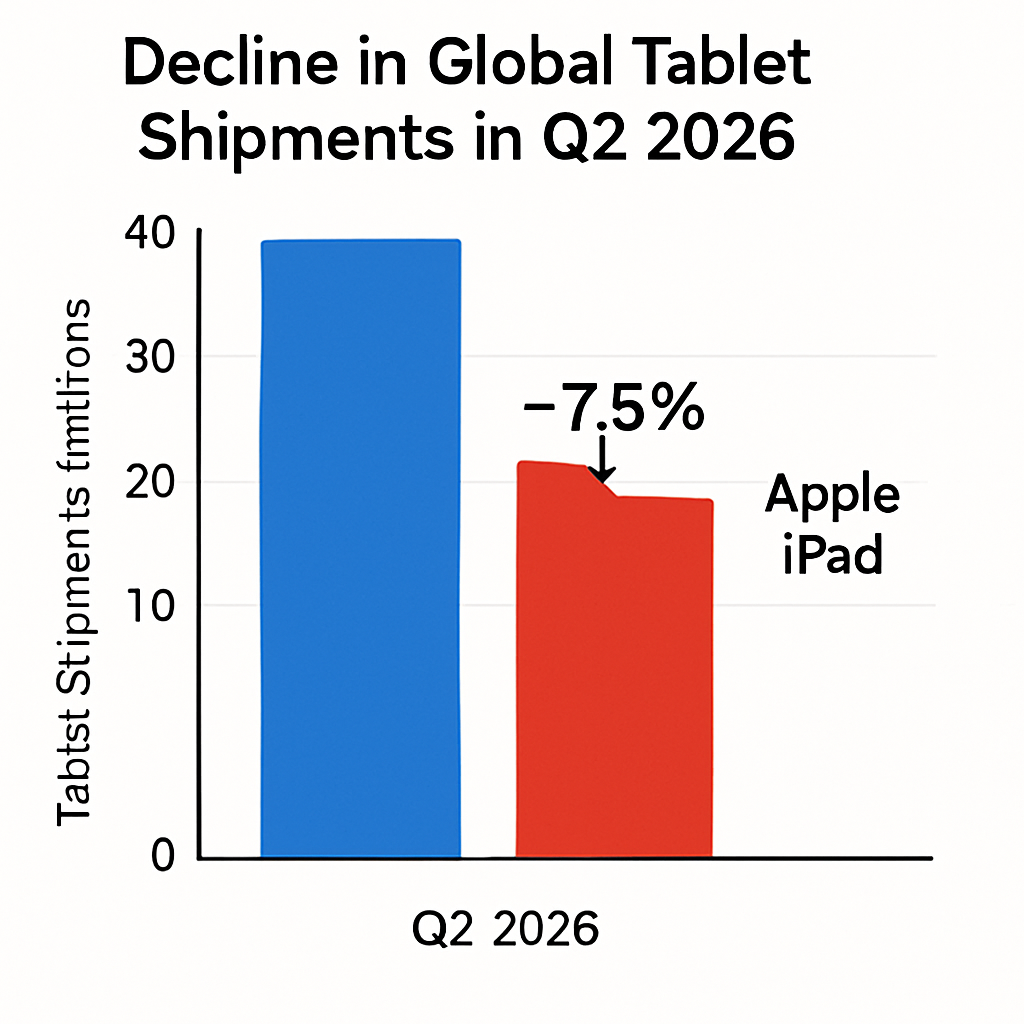
The global tablet market experienced a significant downturn in the second quarter of 2026, with shipments declining by 9.9% year-over-year to 35.5 million units. This marks a departure from the typical seasonal increase associated with back-to-school demand during this period.
Apple, while maintaining its leadership position, was not immune to this trend. The company shipped 13.5 million iPads in Q2 2026, representing a 7.5% decrease from the same quarter in the previous year. Despite this decline, Apple secured a 37.8% share of the global tablet market.
Samsung followed as the second-largest tablet vendor, shipping 5.8 million units and capturing a 16.3% market share. Lenovo stood out as the only top-five vendor to achieve growth during this period, with shipments increasing by 27.1% year-over-year, resulting in an 11.1% market share. Xiaomi and Huawei rounded out the top five, holding 8% and 7.7% of the market, respectively.
Vendors outside the top five collectively accounted for 19.1% of shipments, but their combined volume fell by 23.5% compared to the previous year. This indicates a broader market contraction affecting smaller players more severely.
Industry analysts attribute the overall market decline to several factors, including ongoing component supply constraints and shifting consumer priorities. Tablets have become integral to many households, often replacing traditional PCs for everyday computing tasks. Their affordability and versatility, especially in educational and field-based commercial environments, have sustained demand in certain segments. However, the broader market weakness suggests that vendors may need to reassess their strategies.
Looking ahead, manufacturers are expected to focus their limited resources on flagship and premium models, further shifting their portfolios toward high-end devices. This approach aims to capitalize on the segments that continue to show resilience amid the overall market downturn.
For Apple, the decline in iPad shipments aligns with the broader industry trend. However, the company’s strong market position and focus on premium products may help mitigate some of the adverse effects. As the tablet market continues to evolve, Apple’s ability to adapt to changing consumer preferences and supply chain challenges will be crucial in maintaining its leadership.