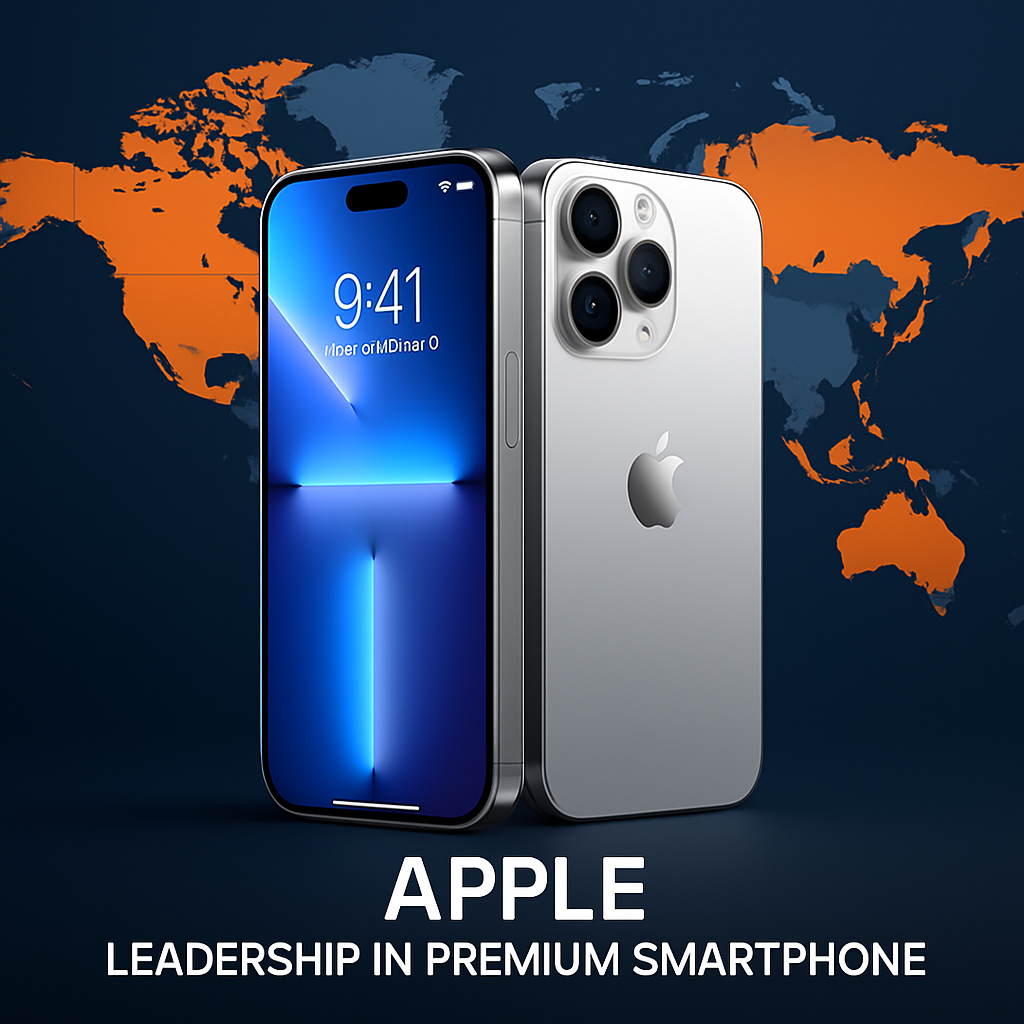
Apple continues to assert its dominance in the premium smartphone segment, capturing 65% of the global market for devices priced above $600 in the first half of 2026. This marks a 9% year-over-year growth, underscoring the enduring appeal of the iPhone among consumers seeking high-end devices.
Despite this impressive growth, Apple’s share in the premium market has declined from 74% in 2022. This shift is largely due to the emergence of Chinese manufacturers such as Huawei, Xiaomi, and Oppo, which have been gaining traction in their domestic markets by offering competitive premium models. These brands have successfully attracted consumers with feature-rich devices at slightly lower price points, challenging Apple’s previously unassailable position.
In the broader smartphone landscape, Apple holds a 23% share of global shipments and accounts for 49% of the industry’s total profit. This profitability is driven by the company’s focus on premium devices, which command higher margins compared to mid-range and budget offerings.
Apple’s sustained success in the premium segment can be attributed to several factors. The company’s commitment to innovation, exemplified by the iPhone 17 series, has resonated with consumers. Features such as advanced camera systems, enhanced processing power, and seamless integration with the broader Apple ecosystem have reinforced customer loyalty.
Moreover, Apple’s strategic pricing and financing options have made premium devices more accessible. By offering trade-in programs and installment plans, the company has lowered the barrier to entry for consumers looking to upgrade to the latest models.
However, the competitive landscape is evolving. Chinese brands are not only expanding their presence in domestic markets but are also making inroads internationally. Their ability to offer high-quality devices with cutting-edge features at competitive prices poses a significant challenge to Apple’s dominance.
Looking ahead, Apple’s ability to maintain its leadership in the premium segment will depend on its capacity to innovate and adapt to changing consumer preferences. The company will need to continue delivering compelling features and experiences that justify the premium price tag, while also exploring strategies to counter the growing influence of Chinese competitors.
In conclusion, while Apple remains the leader in the premium smartphone market, the dynamics are shifting. The rise of Chinese manufacturers introduces new challenges, and Apple’s response to this competition will be crucial in determining its future position in the industry.