The iPhone 18 Pro introduces a new camera mode called Reference Image, designed to ensure every photo captures not only what you see, but that its authenticity can be verified long after it’s taken. This mode builds on Apple’s broader push for verified digital photography by combining hardware-based verification, secure cloud processing, and post-capture tamper detection.
Why Apple built Reference Image mode
As generative tools and editing software become more accessible, digitally altering photos has become easier—and identifying doctored images harder. Existing industry standards for provenance, like C2PA, provide some safeguards but can still be vulnerable when edits occur after initial authentication. To tackle this, Apple has developed what it claims is the first image-provenance system that holds up even against quantum-level threats. This system aims to deliver strong guarantees of authenticity without sacrificing privacy, and does so by embedding security into the photo’s journey—starting at the sensor and ending with a signed, verified image.
How the Reference Image trust chain works
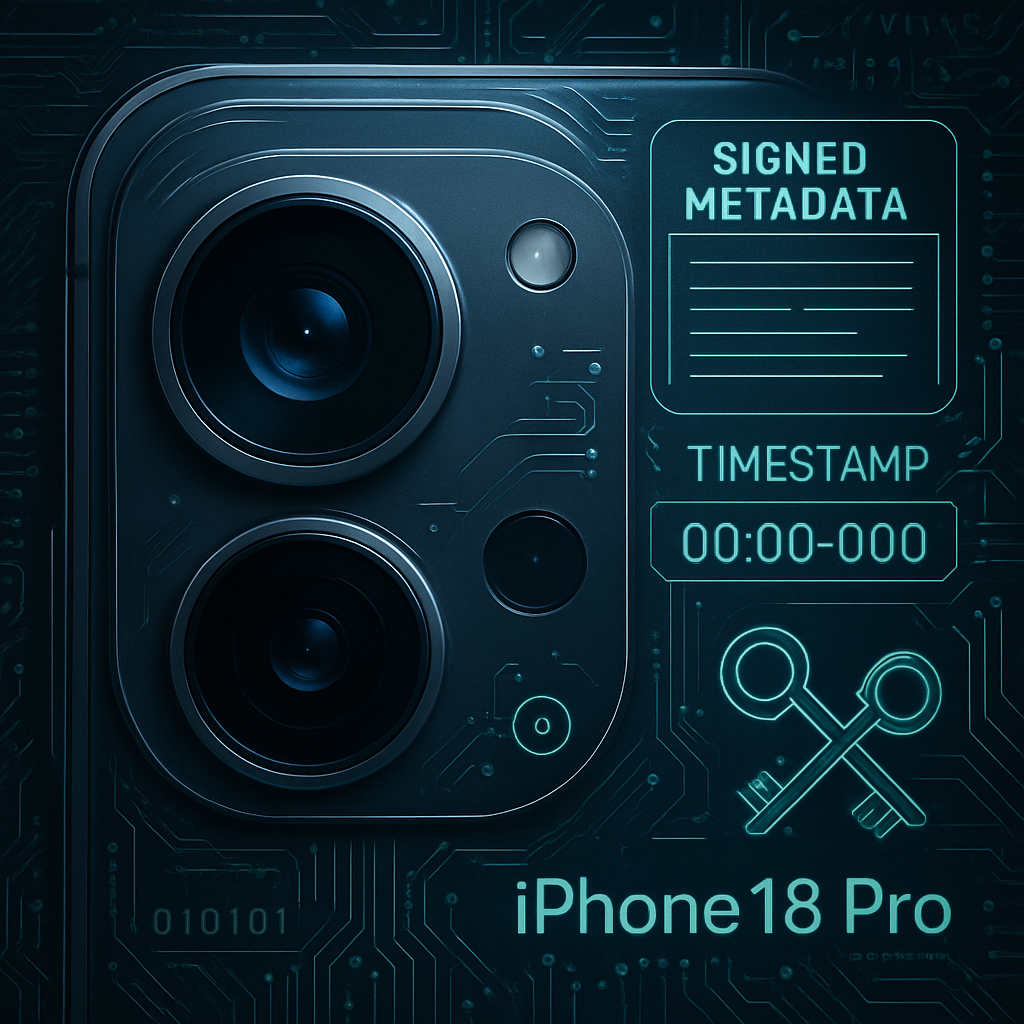
When the iPhone 18 Pro is manufactured, its camera sensor is given a unique signing key pair. A private key stays inside the sensor, while the corresponding public key is certified and stored in the device’s foundational hardware records. From that moment on, every photo shot in Reference Image mode is cryptographically bound to that specific sensor, ensuring that the origin of the image is both known and unforgeable.
Reference Image photography involves several steps to confirm when and how the photo was taken. Apple includes cryptographic timestamps both before and after capture, establishing a time window during which the image must have been recorded. Additional metadata—signed by the Secure Enclave—is validated during processing. Once all these checks are satisfied, the raw pixel data and metadata are combined and converted into a secure digital negative within Apple’s Private Cloud Compute infrastructure. The final image, such as a JPEG Reference Image, is then signed using both traditional cryptography and post-quantum algorithms to resist future advances in computing.
Maintaining privacy and revocation
One of the more nuanced parts of this system is its privacy safeguards. Apple designed Reference Images so that outside parties cannot identify the photographer, trace a photo back to a particular phone, or link multiple images to the same device—while still proving authenticity. That’s especially relevant for journalists, activists, and others needing to verify evidence without revealing identity or device info.
Reference Images and the sensors themselves can both be revoked. If a sensor is deemed unreliable—say after malfunction or compromise—it loses the ability to produce signed Reference Images. Similarly, individual images can be marked fraudulent, and devices receive updated revocation lists. These keep the system from being compromised even after deployment.
Collectively, Apple’s new chain-of-verification aims to meet three core standards: authentic image content, resistance to post-capture tampering or sensor compromise, and strong privacy protections.
When enabled, Reference Image mode activates only on iPhone 18 Pro. It requires using the dedicated mode during capture—once a picture is taken, you get a signed Reference Image that carries all this provenance and verification. Regular photos still work as before, but without these strong guarantees.
This mode is part of Apple’s larger effort in “verified photography,” intended to help users, platforms, and even institutions discern genuine images from manipulated ones.
What this means: Apple’s Reference Image mode could become a benchmark for image authenticity across mobile devices. As disinformation and deepfakes grow with AI advances, having photos whose origin and integrity can be cryptographically proven is likely to become essential. Moving forward, we’ll want to watch how media outlets, social platforms, and legal systems adopt—or demand—such tools, and how Apple’s approach influences standards in photography and digital forensics.