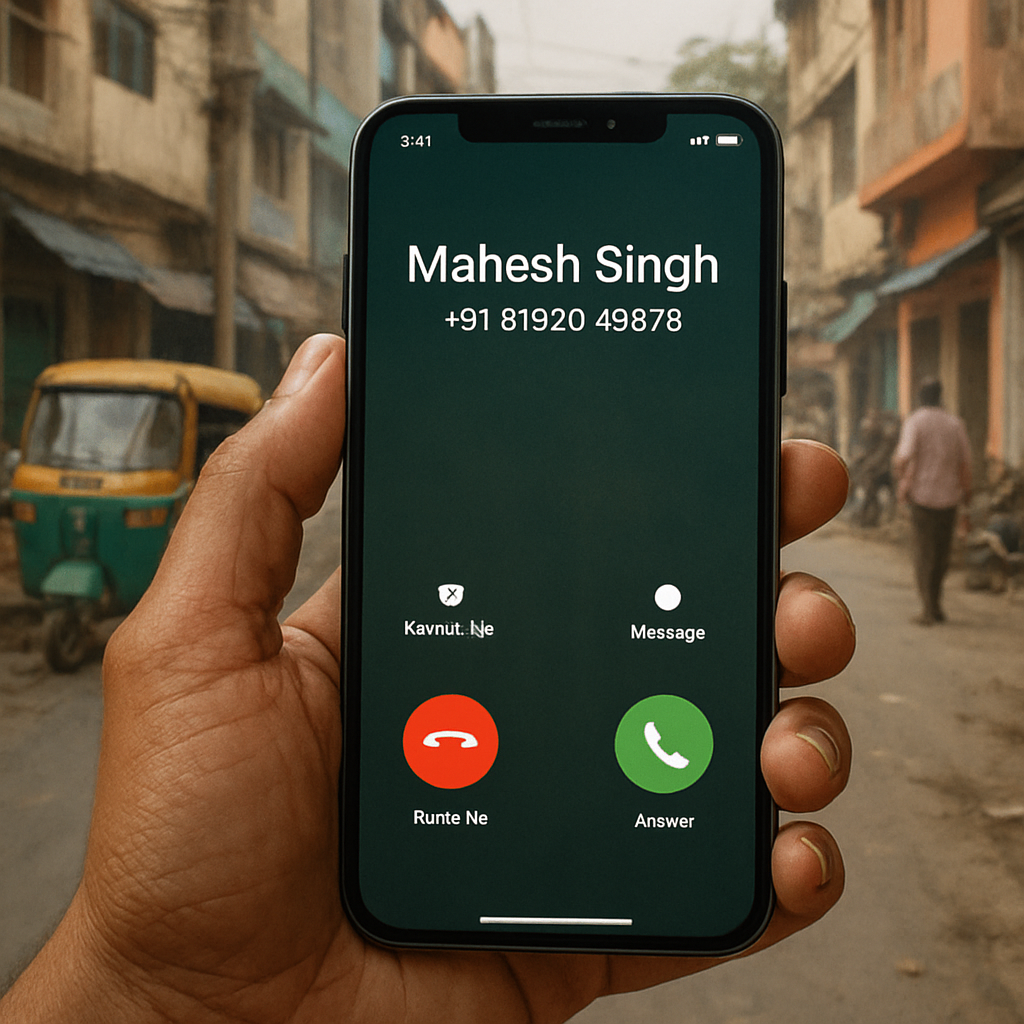
From November 1, 2026, all incoming calls on India’s 4G and newer mobile networks must display the caller’s registered name alongside their number. This mandate, issued by the Department of Telecommunications, aims to reduce spam and fraudulent calling while helping users recognize who is reaching out. Existing caller ID practices—showing only numbers—won’t be enough anymore. A feature known as Calling Name Presentation (CNAP) will be introduced for this purpose.
How CNAP Will Work
The calling name identity (CNI)—essentially the name linked with the caller’s number in their telecom provider’s records—will be shown along with the number at the receiver’s end. If the recipient has already saved the number in their contacts, that name takes priority. For domestic numbers not in the user’s address book, the name from the subscriber database gets displayed. Calls from outside India will be labeled “International Call” instead of a name.
Telecom providers (TSPs) will need to build and maintain a system to map numbers to names, and the network of the call’s recipient will query this database to fetch the caller identity. The rules apply only to wireless terrestrial networks on 4G and above. For older technologies like 2G, 3G, or public switched telephone networks, separate rollouts will be planned after further evaluation.
Privacy & Preferences
User privacy protections are part of the rollout. There will be a Calling Line Identification Restriction (CLIR) option, letting callers block their name from being shown. Service providers are instructed to design the CNAP infrastructure securely—meaning they should not retain the caller name identity after the call is completed, and must maintain existing quality-of-service standards.
Businesses or users with bulk connections can use a “preferred name” instead of the default name. Such names must be officially registered—either a trademark registered with the trademarks registry, or a trade name listed on the Goods and Services Tax portal. For new connections, proof of registration under the preferred name needs to be submitted and recorded by the originating telecom provider.
This change is part of a larger trend of regulators worldwide requiring more transparency in communication channels. India’s mandate helps combat spam, phishing, and voice fraud—big issues especially in regions where unrecognized numbers or spoofing are common. Telecom firms will need to invest in secure databases and query systems, and users will have new choices around privacy and identity management.
What this means: if you’re in India and use a 4G or 5G mobile connection, starting November 1 your phone will display more than just a number when someone calls. For service providers this is a chance to enhance trust, but implementing CNAP securely will be critical to ensure privacy isn’t compromised. Keeping an eye on how PSTN and older wireless networks adapt will also be important—this isn’t the final frontier yet.