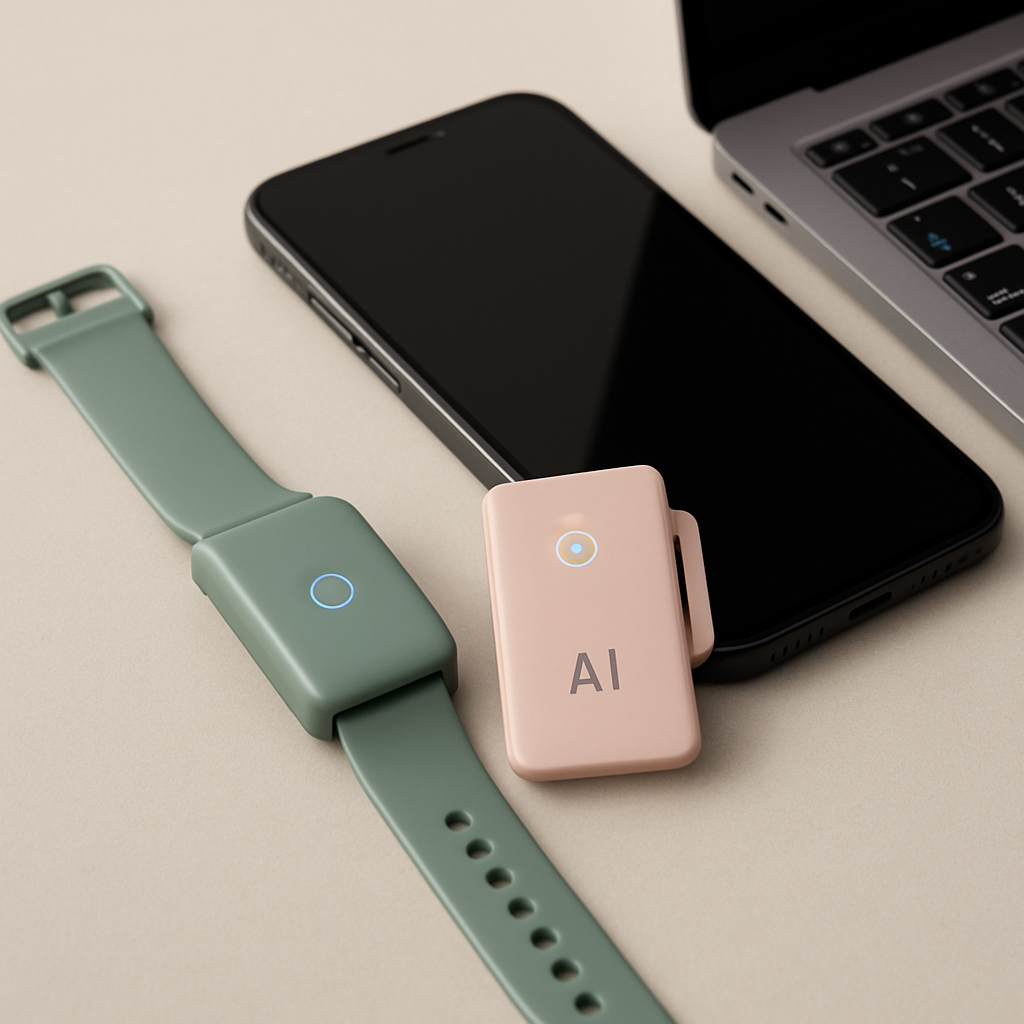
Amazon’s wearable AI division, Bee, just released two new devices designed to capture your conversations and turn them into actions. The Bee Frontier—a wrist or clip-on wearable—launches at $74.99, while the Bee Eclipse offers a credit-card-sized form factor that magnetically adheres to the back of your smartphone and costs $99.99.
What They Do & How They Work
These devices build on Bee’s mission to use AI for capturing everyday speech and converting it into summaries, to-dos, and insights. Whether you’re making plans, attending lectures, or discussing medical care, these tools can recognize commitments like dates or action items, and automatically generate calendar invites or notes. Summaries and voice recaps are available to all users with 14 days of memory out of the box. A $11.99/month Pro plan unlocks unlimited summaries, integrations with platforms like Amazon.com and Alexa+, third-party app support, suggested to-dos, daily memory features, conversation templates, and a personal chat assistant.
Privacy is central: audio is processed in real time then deleted, so raw recordings aren’t stored. What remains are encrypted transcripts, accessible only via keys controlled by the user. Amazon cannot access those files unless the user explicitly shares them. For users opting to connect their Bee to Alexa, a Voice ID option enables Echo devices to respond when you speak—and then the Bee handles recording and insights. Users retain control to delete any transcript or summary whenever they choose.
Specs, Features, & Availability
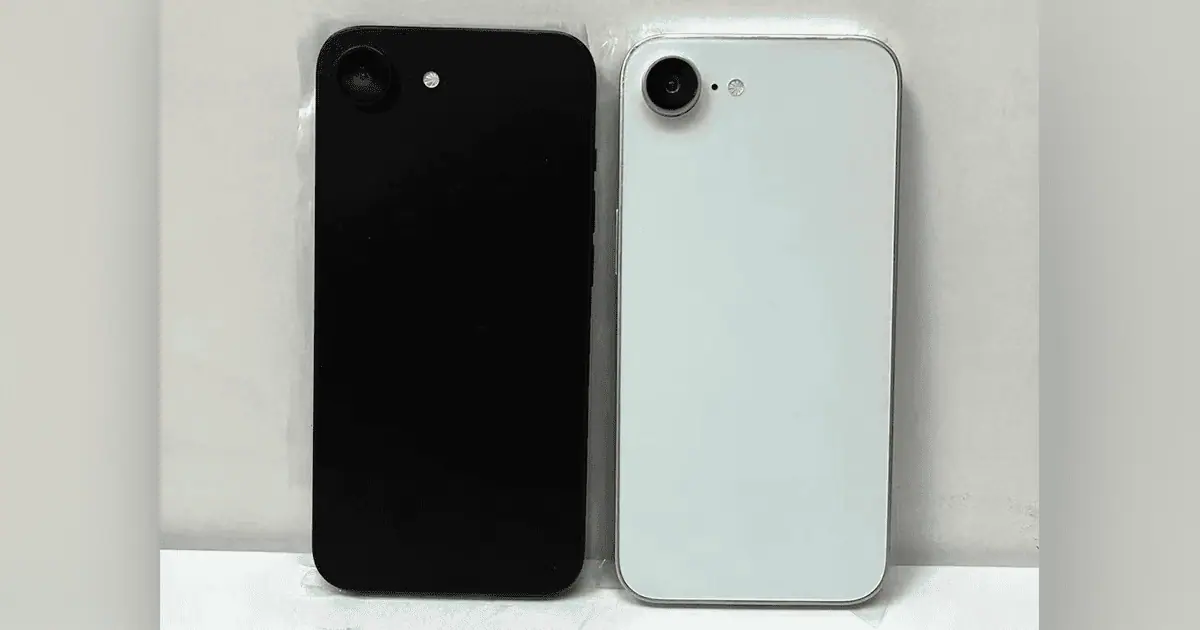
The Bee Frontier comes in Onyx, Lavender, and Sage finishes; Bee Eclipse is available in Silver, Midnight, Honey, and Blush. Frontier offers IP67 water resistance, up to seven days of battery life, USB-C charging, and dual microphones with noise filtering. Both devices have a single power button and an indicator light for when a conversation’s being summarized.
The devices plug into your existing workflow—integrating with Gmail, Google Calendar, Microsoft Outlook—to draft emails, schedule meetings, and surface next steps from conversations. There’s also photo uploads and optional integration with Apple HealthKit, so wellness and visual context feed into your AI insights. Meanwhile, users get redesigned mobile and new desktop Bee apps.
The Frontier is available now on Amazon; Eclipse will follow shortly.
This product lineup directly challenges AI wearables like Plaud Note (around $159) and Pocket AI ($129) by offering similar conversational capture and summarization for significantly less.
Why It Matters: Amazon is pushing deeper into the personal assistant space—not through your phone or speaker, but through wearables designed to be always listening. Features like real-time voice processing and tight integration with core tools can make these useful in professional settings, everyday life, or health contexts. On the flip side, the privacy architecture shows awareness of growing concern over audio surveillance and data leaks. What to watch: how well the voice-ID integration with Alexa works in practice; battery life in real-world conditions; and whether Pro subscription value convinces users to upgrade. If Bee nails this balance, Amazon could redefine assistive AI devices in 2027 and beyond.