Apple has quietly become a major player in language preservation. Its iPhones now support over 200 languages, and the company has deepened its collaboration with Indigenous communities to ensure that critically endangered languages are correctly represented across its software. This work goes far beyond merely adding words—it touches fonts, keyboard behavior, layout, and even cultural input.
Community-Driven Design: From Unicode to Keyboard Layouts
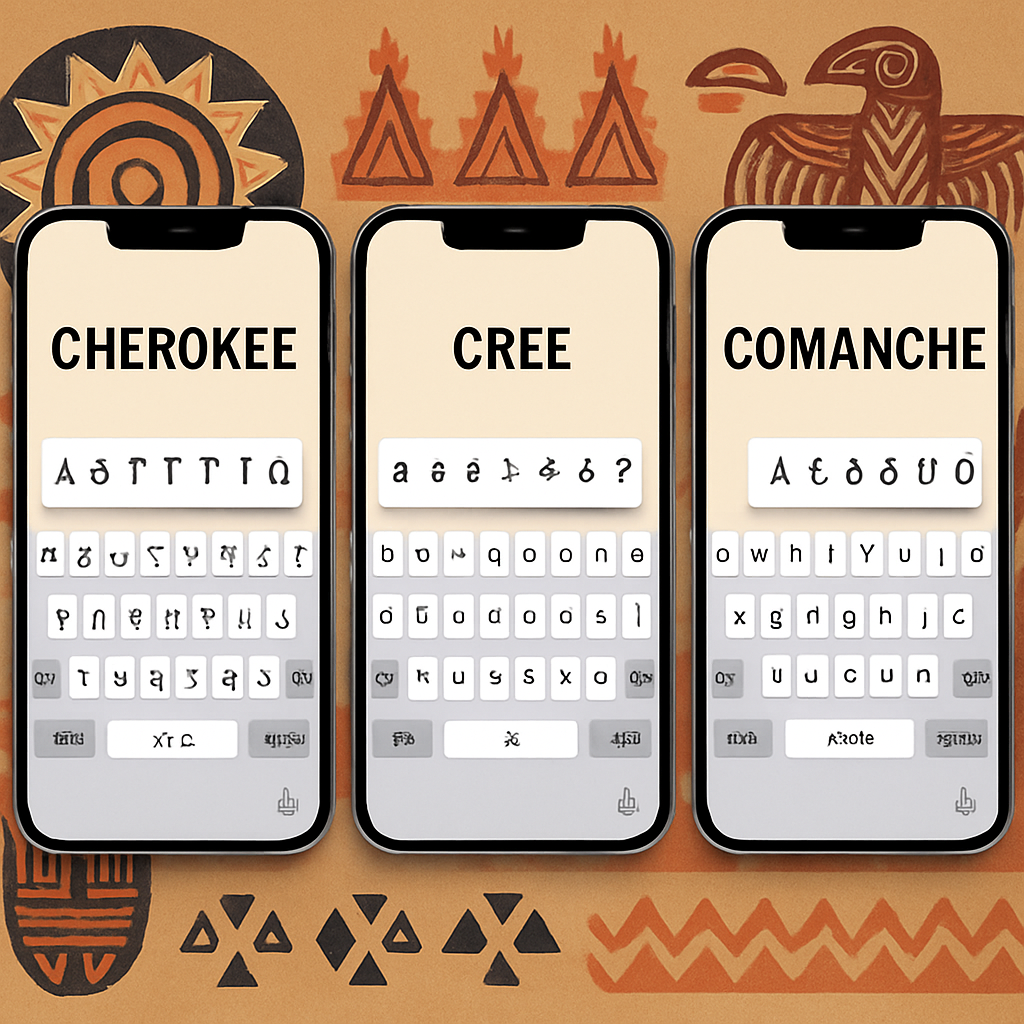
Before a language appears in iOS, it must first be added to Unicode, the global standard for digital text. Once that foundational work is done, Apple teams up with linguistic and cultural experts from Indigenous nations to decide how a language should be expressed in writing—in what characters, accents, or glyphs, and how letters should behave in context. For example, in languages like Osage, established physical keyboard layouts are adapted into software. In Nez Perce or Nimipuutímt, which do not use capitalization, Apple repurposed what’s usually the Shift key, enabling access to accented characters instead of uppercase letters. In Cherokee, the keyboard’s bottom row dynamically changes based on what the user types.
Major Expansion in iOS 27 Adds Dozens of New Indigenous Languages
With the release of iOS 27, Apple has added support for over 30 new languages and variants across features like the QuickType Keyboard, Dictionary, Visual Look Up, and Siri activation. This includes Indigenous languages like Blackfoot, Comanche, and several distinct Cree varieties—Moose Cree, Northern East Cree, Plains Cree, Southern East Cree, Swampy Cree, and Woods Cree—each treated separately to reflect real linguistic differences. Also added are Kiowa, Salish, Tsuut’ina, and Nheengatu.
Some of these languages have tiny speaker populations, often many of them elderly. Cherokee, for instance, was the first Native American language to be included in iOS back in 2010. Today it has fewer than 2,000 fluent speakers, most over age 70. This expansion offers new tools for Indigenous communities, such as younger learners in immersion programs, to see their languages used naturally—on their devices and in their digital lives.
Why This Matters
Language loss isn’t just about losing words—it’s losing access to entire worldviews, traditional knowledge, ceremonies, and ways of being. Historically, factors like colonization, forced removal, and boarding schools decimated Indigenous linguistic communities. Today, the threat comes from a lack of visibility and usage in everyday life. If a language has no presence in the tech tools people use most, it’s much less likely to be learned. Apple’s approach tries to reverse that: making sure speakers can type, autocorrect, swipe, dictate, and hear their language natively.
Still, these moves are incremental. Encoding a language in Unicode and building keyboard support don’t necessarily solve issues like access to education in that language or preserving oral traditions. And community preferences vary—what works for one might offend or alienate another if done improperly. Ongoing consultation remains essential. But with iOS 27, Apple has made one of its most ambitious pushes yet in supporting Indigenous cultures—and set a higher standard for tech inclusivity globally.