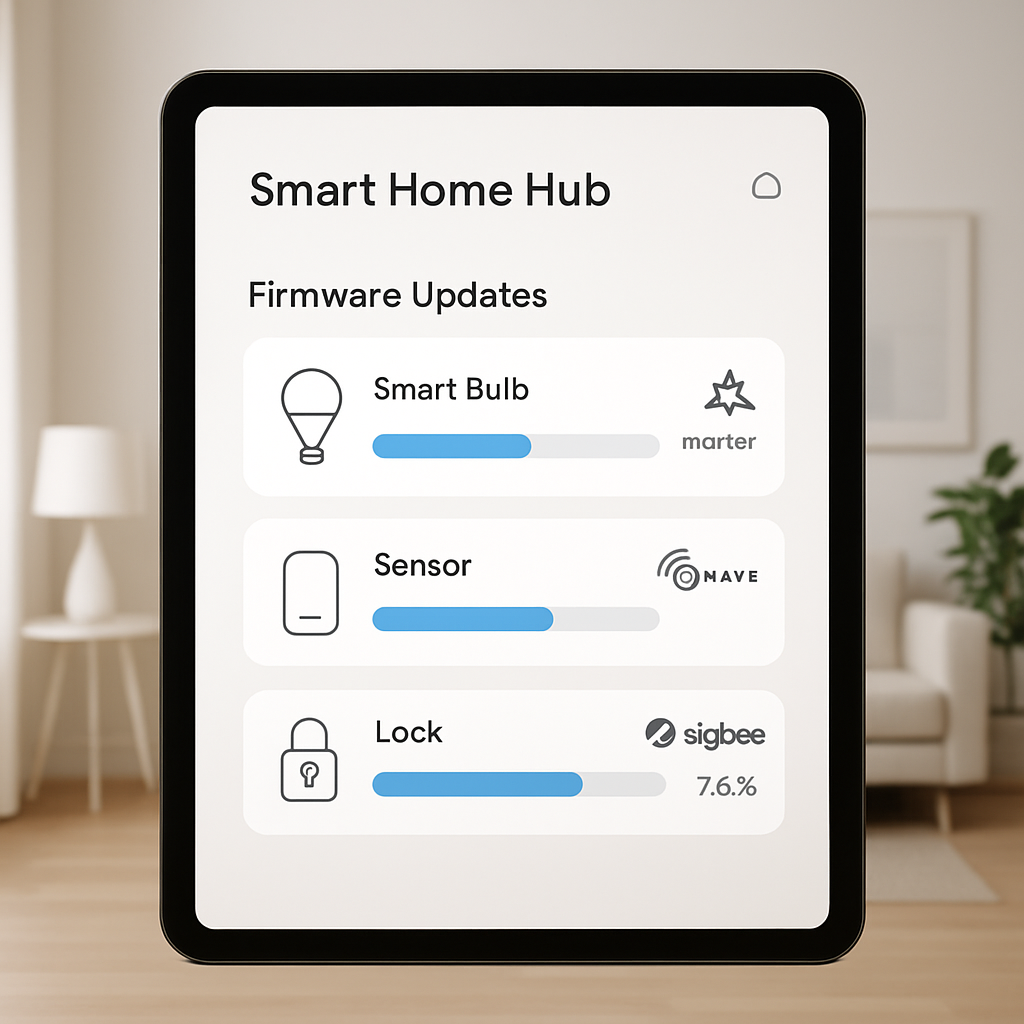
Firmware updates have long been a stumbling block for smart homes, with patches often locked behind individual brand apps or neglected entirely. Homey just unveiled a new “Device Updates” feature that aims to fix this, especially for those invested in Matter, Z-Wave, and Zigbee ecosystems. This rethinking of firmware delivery could finally deliver on the promise of seamless smart home maintenance.
Unified Updates Dashboard
The new Device Updates feature in Homey lets users manage firmware upgrades for a wide range of connected devices all in one place—whether they’re Matter, Z-Wave, or Zigbee. Users can push updates for Matter lights, apply security patches to locks, or enhance sensor functionality, all from the Homey Mobile or Web App without needing to open a device maker’s proprietary app. Users initiate the update, Homey takes care of delivery, progress tracking, and notifies when it’s done. Updates can be accessed via the “More > Settings > Device Updates” menu, or within each device’s maintenance settings.
Currently, Z-Wave and Zigbee updates depend on device manufacturers and developers to publish firmware via their Homey apps. Despite that hurdle, a strong group of vendors already support the feature—including IKEA, Aeotec, INNR, Niko, Inovelli, Zooz, frient, ThirdReality, EcoDim, HeatIt, Namron, amina, CTM Lyng, and Nous. More partners are joining soon.
Matter’s Promise Realized
What stands out is how Homey handles Matter device updates. Unlike typical scenarios where you need a manufacturer’s app or cloud infrastructure, Homey taps directly into the Distributed Compliance Ledger (DCL)—run by the Connectivity Standards Alliance. Through the DCL, Homey gains access to firmware metadata, including download URLs, checksums, version info, and compatibility details. It then delivers firmware using Matter’s native OTA update system, so no additional manufacturer steps or app updates are needed.
This approach means that the update process for Matter gear is standardized and not tied to any single brand’s cloud or app. Any controller built with support for the DCL and Matter’s OTA mechanism can deliver updates without friction. It’s a major shift from the current norm of fragmented update paths.
New Compatibility & Requirements
Homey’s latest firmware update (v13.2.0 or later) enables Device Updates on Homey Cloud, Homey Pro (2023–2026), Homey Pro mini, and Self-Hosted Server platforms. If you don’t see an expected update, it’s likely because the manufacturer hasn’t published it to the DCL, or the Homey app for that device hasn’t added support. Either way, availability is tied to both compliance and developer participation.
Another major addition: hardware from Eve, a privacy-focused brand known for Apple Home integration, now works with Homey via Matter. This includes a wide range of Eve devices—energetic sensors, weather monitors, motion detectors, blinds—that are now compatible with Homey as it acts as a Matter controller and Thread Border Router.
Eve devices have always avoided cloud dependency and user tracking, integrating deeply with Apple’s frameworks while keeping registration optional. The big change here isn’t the experience for Eve users, but the fact that Eve’s Thread and Matter framework now makes its devices interoperable beyond Apple Home. That portability more fully realizes what Matter has long been intended to offer.
For years, the smart home industry has hyped interoperability while delivering siloed systems. Homey’s rollout of Device Updates highlights the long-term value Matter was designed to bring: a standardized, transparent, and secure firmware update path. While standardization efforts sometimes lag expectations, features like this underline why the vision matters—and what gets missed when it doesn’t come together fully.
Why this matters: Smart homes are only as reliable as their weakest link—and firmware is often that weak link. Homey’s unified model of updates could reduce security risks, improve device performance, and push more manufacturers to keep their products up to date. It’s something to watch closely, especially as other smart hub makers respond and as update coverage broadens.