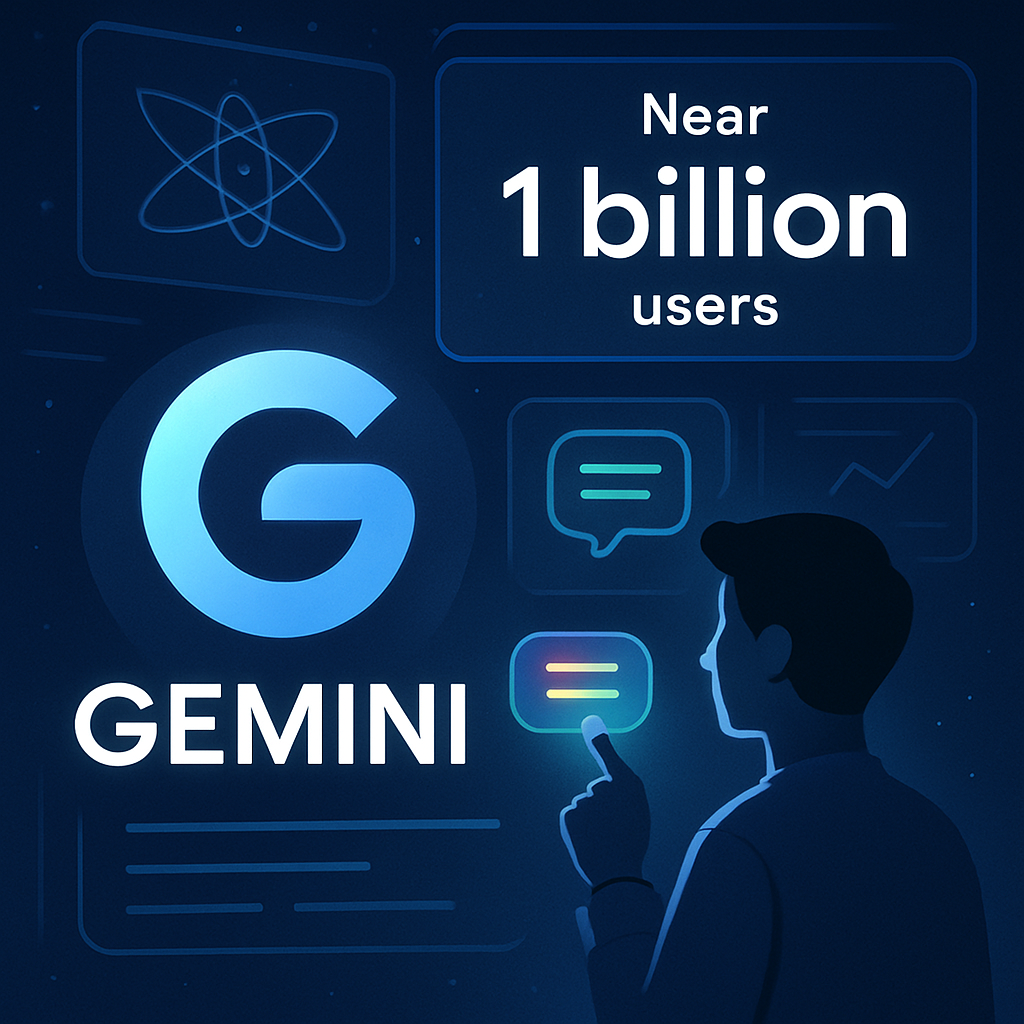
Google’s AI assistant, Gemini, is on the verge of joining the company’s elite group of products with over a billion users. During its Q2 2026 earnings call, Google announced that Gemini now boasts over 950 million monthly active users, a significant increase from the 750 million reported in February 2026. This growth positions Gemini as a formidable competitor to OpenAI’s ChatGPT, which reached 1 billion monthly active users in June 2026.
The surge in Gemini’s user base is attributed to the introduction of innovative features such as Daily Brief and the personalized agent, Gemini Spark, which have been well-received both in the U.S. and internationally. Sundar Pichai, CEO of Alphabet, highlighted the rapid deployment of these features during the earnings call.
While Android users form a substantial portion of Gemini’s audience, the app has also gained significant traction on iOS platforms. Over the past year, Gemini has been downloaded more than 137 million times on iOS, driven in part by the launch of the Nano Banana image generation model.
In the broader AI assistant market, Gemini’s growth is notable. Sensor Tower’s “State of AI” report for the first half of 2026 indicates that ChatGPT’s market share among AI assistants has fallen below 50% for the first time, while Gemini’s share has risen to 27.7%.
Despite the increasing use of AI assistants as alternatives to traditional search engines, Google’s search services remain robust. The company’s AI-centric enhancements have contributed to this resilience. Notably, the Q&A-style AI mode within Google Search surpassed 1 billion users this quarter, leading to an incremental increase in search queries. Additionally, through advancements in hardware engineering, Google has managed to reduce the operational costs of its AI mode, even as new models and features are introduced.
As Gemini approaches the 1 billion user milestone, it underscores the growing integration of AI assistants into daily digital interactions. This trend highlights the importance for businesses and developers to adapt to an evolving landscape where AI-driven platforms play a central role in user engagement and information dissemination.