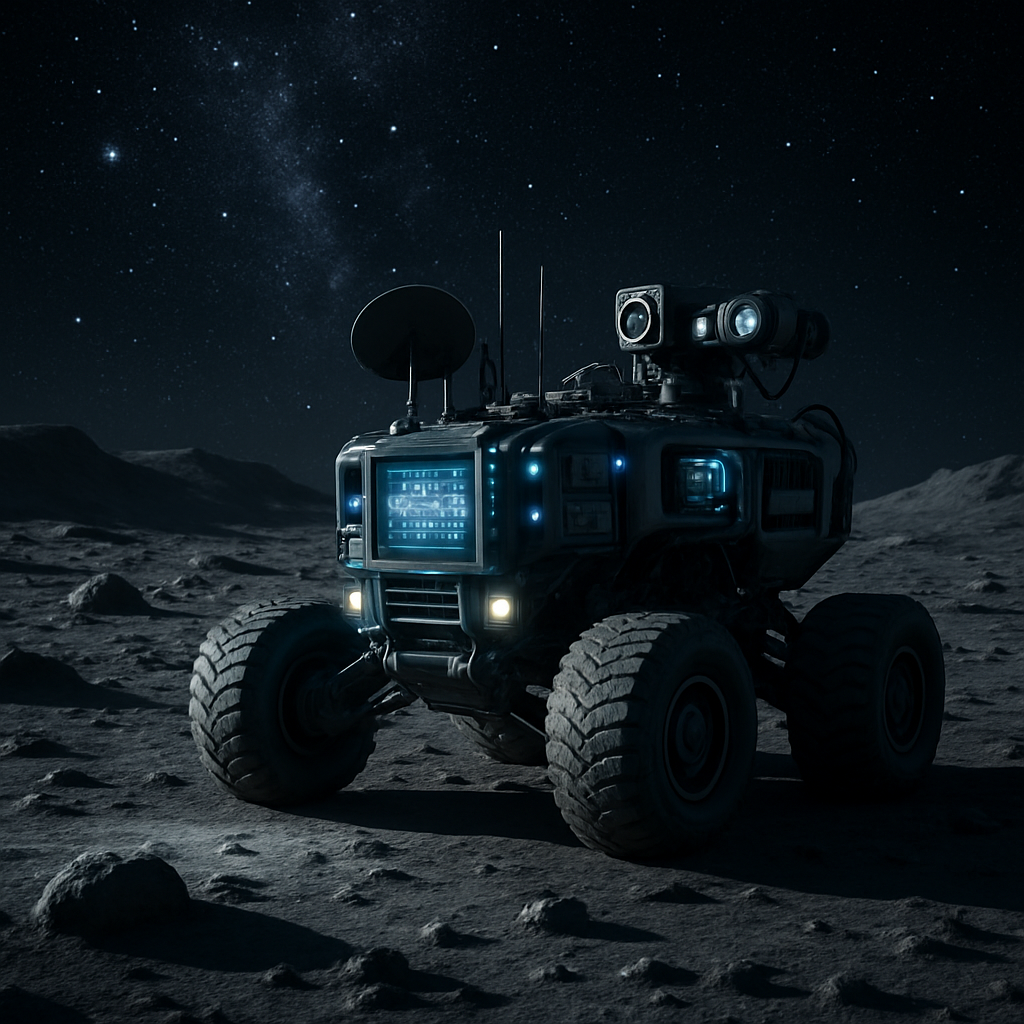
Nvidia is extending its GPU technology beyond Earth, aiming to deploy its Jetson chips on the lunar surface. Lunar Outpost, a company specializing in space robotics, plans to equip its upcoming moon rover with Nvidia’s Jetson platform to manage its lidar system. This initiative could mark the first instance of a GPU operating on the moon.
Justin Cyrus, CEO of Lunar Outpost, highlighted the comparative analysis between the Nvidia Jetson and their existing flight computing systems, emphasizing the potential advantages of integrating GPU-powered solutions in the harsh lunar environment.
NASA’s current strategy involves collaborating with private enterprises to explore the moon ahead of planned human missions, potentially commencing as early as 2028. This approach encourages technological firms to develop vehicles capable of transporting scientific instruments to the lunar surface, aiming to study its terrain and identify resources like water that could be beneficial for future missions.
In a related development, Nvidia has partnered with Firefly Aerospace, the first private entity to achieve a successful robotic moon landing. This collaboration will see the Jetson platform utilized on a lunar-orbiting satellite to process imagery, assisting scientists in mapping the moon and monitoring the increasing number of robotic activities on its surface.
Lunar Outpost’s forthcoming rover is set to be delivered via a lander constructed by Intuitive Machines, another company focused on lunar technology. The rover’s mission includes deploying sensors into challenging terrains such as craters, with an upcoming exploration targeting Reiner Gamma, a lunar region known for its enigmatic magnetic anomaly.
These missions are scheduled to launch aboard a Falcon 9 rocket before the year’s end.
Nvidia’s Jetson platform, while not as prominent as its Blackwell and Vera Rubin counterparts, plays a crucial role in various AI-driven physical systems. Designed for compactness and energy efficiency, Jetson enables robotic platforms to process sensor data locally, facilitating quicker environmental understanding and response.
Cyrus noted the evolution of their autonomy systems, now incorporating both deterministic methods and physical AI, and emphasized the importance of integrating physical AI to achieve unprecedented capabilities.
Operating GPUs in space presents significant challenges due to extreme conditions. While most space-based GPUs function in Earth’s orbit, benefiting from some protection against radiation and temperature fluctuations, the moon’s environment exposes systems to intense cosmic radiation and severe temperature variations.
Cyrus pointed out the necessity for systems to endure the lunar night while operating on minimal power.
Successfully deploying GPUs in such conditions could enhance the capabilities of lunar vehicles, enabling faster environmental processing and decision-making. As NASA pursues sustained human presence on the moon, autonomous systems like these will be vital in supporting and advancing lunar exploration efforts.
Nvidia’s venture into lunar applications signifies a broader trend of integrating advanced computing technologies into space exploration. This move not only showcases the versatility of GPU technology but also underscores the growing collaboration between private tech companies and space agencies in pushing the boundaries of what’s possible beyond our planet.