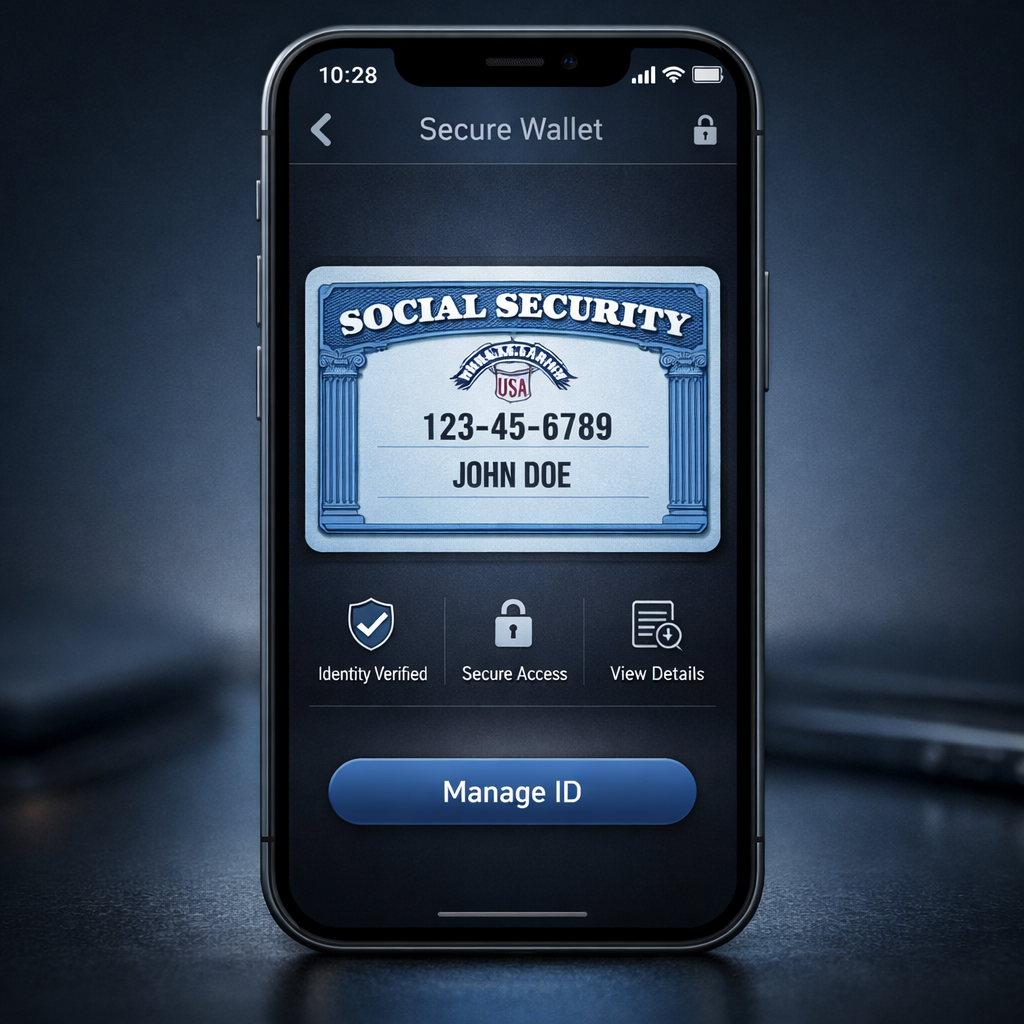
Google Wallet is reportedly expanding its digital ID features to include Social Security cards. Until now in the U.S., the app has supported storing passports and certain state driver’s licenses—but support for Social Security documents appears to be arriving soon.
Code uncovered in the latest Google Play Services build (version 26.46.30) shows explicit references to “Social Security Number” tied to Google Wallet. Alongside that, there are mentions of Social Security benefits including Retirement, Survivors, and Disability Insurance (RSDI), Supplemental Security Income (SSI), and Medicare. Terms such as “qualifiers for deductions” and “effective dates” are also included.
It’s unknown so far whether Wallet will store just the number, the full card image, or exactly what legal or medical documents will be supported. The feature may allow users to see or log Social Security benefits digitally—such as retirement or disability payments—rather than providing more traditional physical documentation.
Why This Is Significant
If implemented, the addition of Social Security cards marks a considerable shift in what digital identity verification means on Android devices. Digital storage of government-issued IDs has become increasingly common, but Social Security cards carry particularly sensitive data. Ensuring proper security, privacy, and usability protections will be essential.
For many, replacing a misplaced paper card is a time-consuming process. A digital version, tightly protected, could streamline access to services in medical, financial, or government sectors—assuming it is widely accepted and trusted.
Google Wallet has previously expanded features around state ID support, home keys, and financial insights, steadily growing its role as a central identity and document management tool for Android users.
This likely ties into broader efforts across tech to use encrypted cards, privacy controls, and local device authentication (PIN, biometrics) to replicate real-world credentials safely.
What to Watch For
Key determinants will include how Google secures the stored data—whether it remains offline, encrypted, or transmission-protected—and what verification measures users need to complete to add their Social Security card. It’s also crucial to see how official agencies view or accept digital Social Security credentials.
What this means: A digital Social Security card in Wallet could make an already useful app even more central in day-to-day identity verification and benefits access—and could trigger important debates about data security, governmental acceptance, and personal control over sensitive identity info. The rollout, user trust, and legal frameworks will determine whether this ends up being a convenience or a risk.