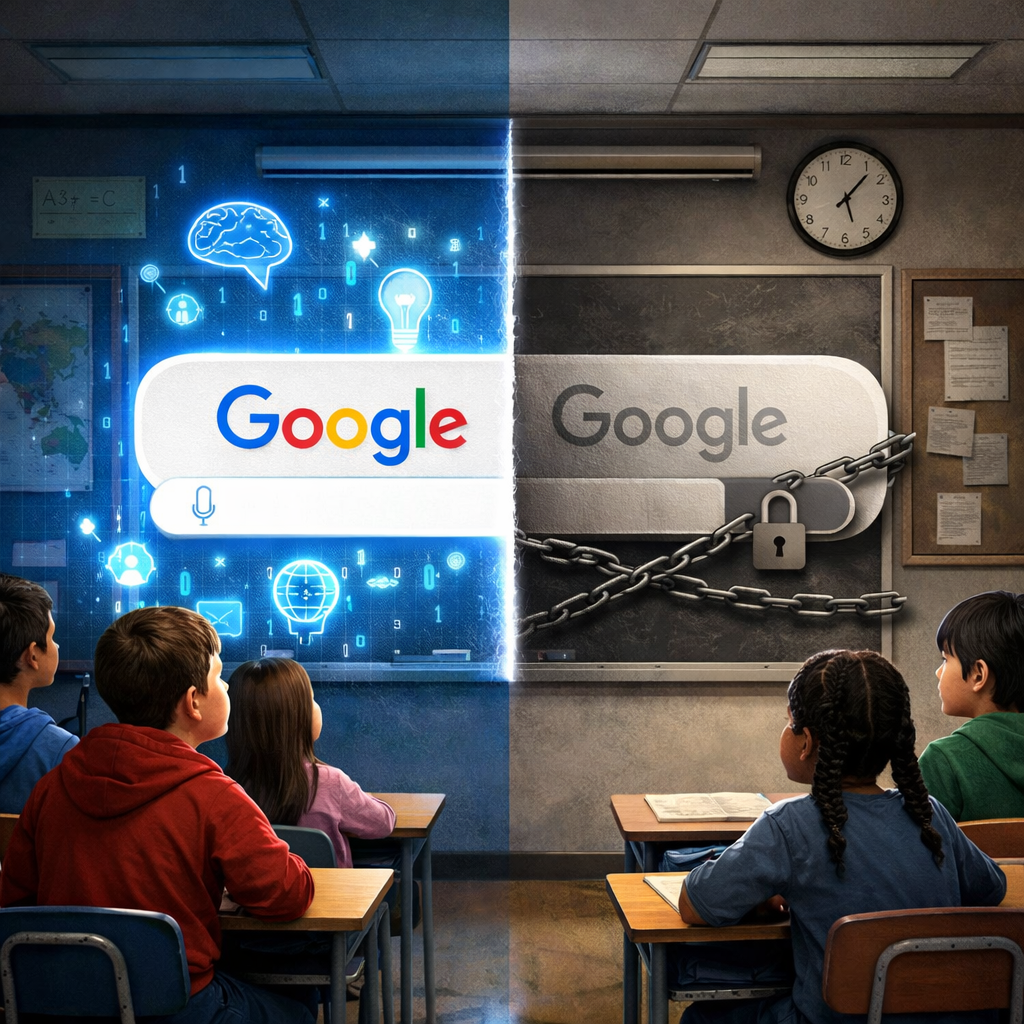
Starting next year, Google will allow K-12 schools to disable AI tools—but not without surrendering access to Google Search entirely. The company says AI features are now baked into Search, so turning them off means losing Search too. This change covers tools like Gemini, Gemini in Classroom, NotebookLM, and Search’s AI enhancements.
Schools Must Opt In to AI or Opt Out of Search
Google’s education leadership emphasized that if a district, school board, or administrator rejects AI across the board, students won’t just lose access to flashy AI tools—they’ll also be blocked from standard Search. Instead of receiving traditional web results, students would see a message from their school explaining that Search is unavailable under their current settings.
Google says this policy shift stems from input gathered from educators, researchers, and policymakers, and is part of broader changes to how they manage tools like Gemini in Classroom and NotebookLM. Administrators will soon get details so they can prepare for the transition.
Why It’s a Big Deal for School Tech Policy
For schools concerned about students using AI Overviews—automatic summaries or insights within Search—this creates a tension. Teachers may want to suppress these summaries to encourage deeper research and critical thinking, but now any such suppression comes at the cost of losing basic Search capabilities.
This comes as Google also introduces Guided Learning, a tool designed to act as an AI tutor. It’s intended to help students develop understanding rather than just getting direct answers—an attempt to address concerns that AI tools can short-circuit learning rather than support it.
Google’s stated goal is to give school leaders “control and confidence to use AI products in classrooms as they see fit.” To do that, the company will roll out more information ahead of the changes to give schools time to adapt.
What Schools Face Going Forward
For schools that value both Search and AI tools, the implication is clear: they must accept Search with AI on. For those wanting to keep Search but without summaries or AI insights, there’s no longer a middle path. The decision effectively forces districts to reexamine their policies around digital learning tools and student outcomes.
Analysis: Google’s new policy underscores its growing belief that AI isn’t an optional add-on—it’s becoming integral to core services. In education especially, where the stakes involve learning methods and equity, decisions like this reshape how schools approach technology. Administrators will need to weigh the trade-offs between preserving Search access and limiting AI exposure. Watch closely for how educators respond—and whether this policy forces the development of alternative tools or impacts procurement strategies in K-12 systems.