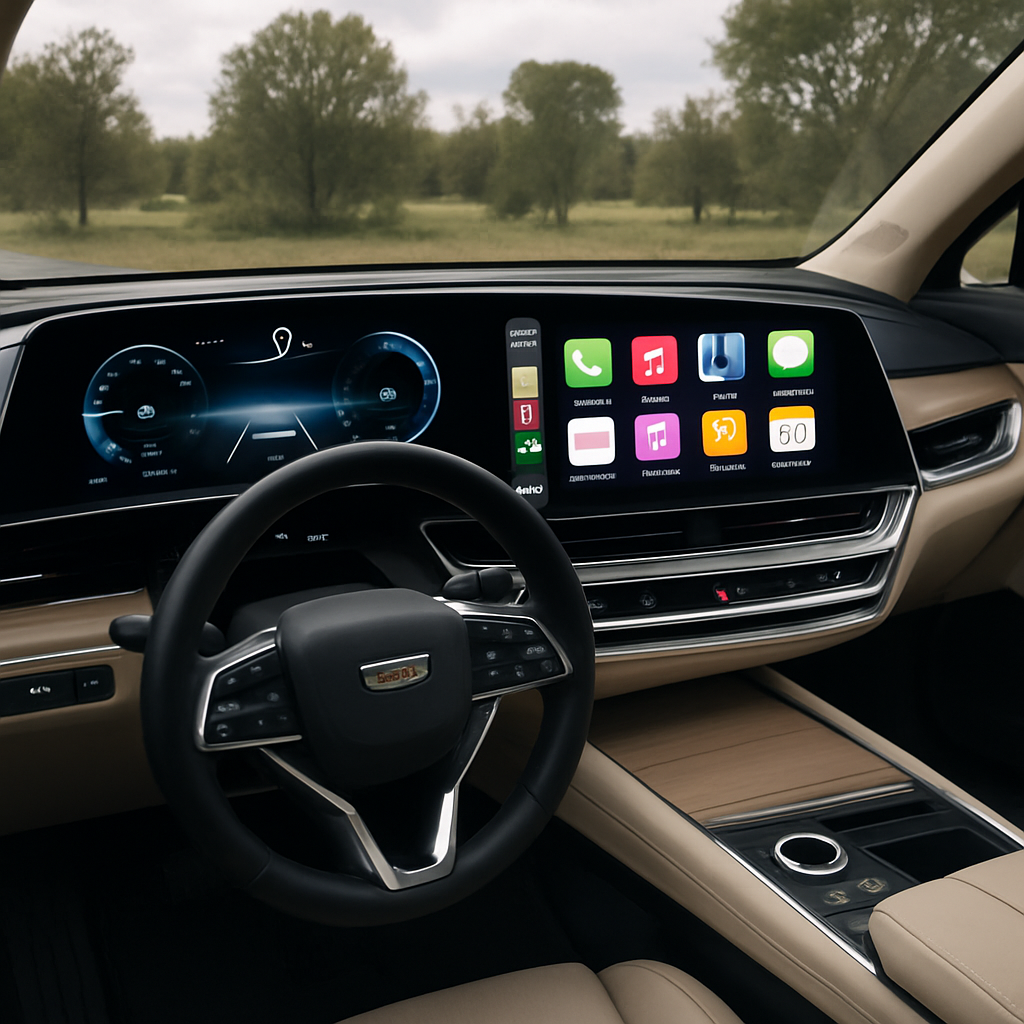
In 2023, General Motors announced it would eliminate Apple CarPlay and Android Auto in all future electric vehicles. That policy appears to be shifting—Cadillac’s Lyriq EV, a flagship model, now lists both CarPlay and Android Auto as standard features for its 2027 version, marking a notable reversal. Previously, GM pushed its own in-vehicle software, citing design philosophy, control, and even invoking a speculative Steve Jobs rationale. The Lyriq’s return to phone mirroring tools signals a crack in GM’s stance.
What the Lyriq EV Configuration Reveals
A recent check of Cadillac’s configurator confirms that the 2027 Lyriq still includes CarPlay and Android Auto as standard equipment. This is especially significant given that the Lyriq is Cadillac’s first all-electric vehicle and has been marketed as a tech-forward luxury EV. The shift aligns with earlier GM comments that customer feedback has played a central role in shaping infotainment strategy.
Cadillac explicitly says it continues to evolve its EV infotainment lineup in response to what buyers want, while also maintaining emphasis on its built-in user experience. That suggests GM might be reconsidering its push away from traditionally popular tools like CarPlay and Auto.
Workarounds for Owners of Other GM EVs
For users of GM EVs still built without CarPlay or Android Auto, alternatives have begun appearing. One third-party tool, EV Play LT, offers wired and wireless phone mirroring that brings CarPlay and Android Auto-style features to these vehicles. At a one-time cost of $199.99 with no subscription required, it’s an option for those who miss the familiar phone integration.
The Lyriq’s inclusion of CarPlay and Auto may represent the beginning of the end for GM’s attempt to steer users toward its native infotainment platform exclusively. It may also signal a broader recognition that consumers expect seamless phone integration in their vehicles, especially luxury EV models.
This development matters beyond just one model. It could mark a turning point for GM’s strategy, suggesting that policies shaped in 2023 may be modified in light of market demand and user experience. Going forward, it’ll be worth watching whether GM’s other upcoming EVs follow Cadillac’s lead—and whether the company rolls back its earlier justifications for removing CarPlay and Android Auto.