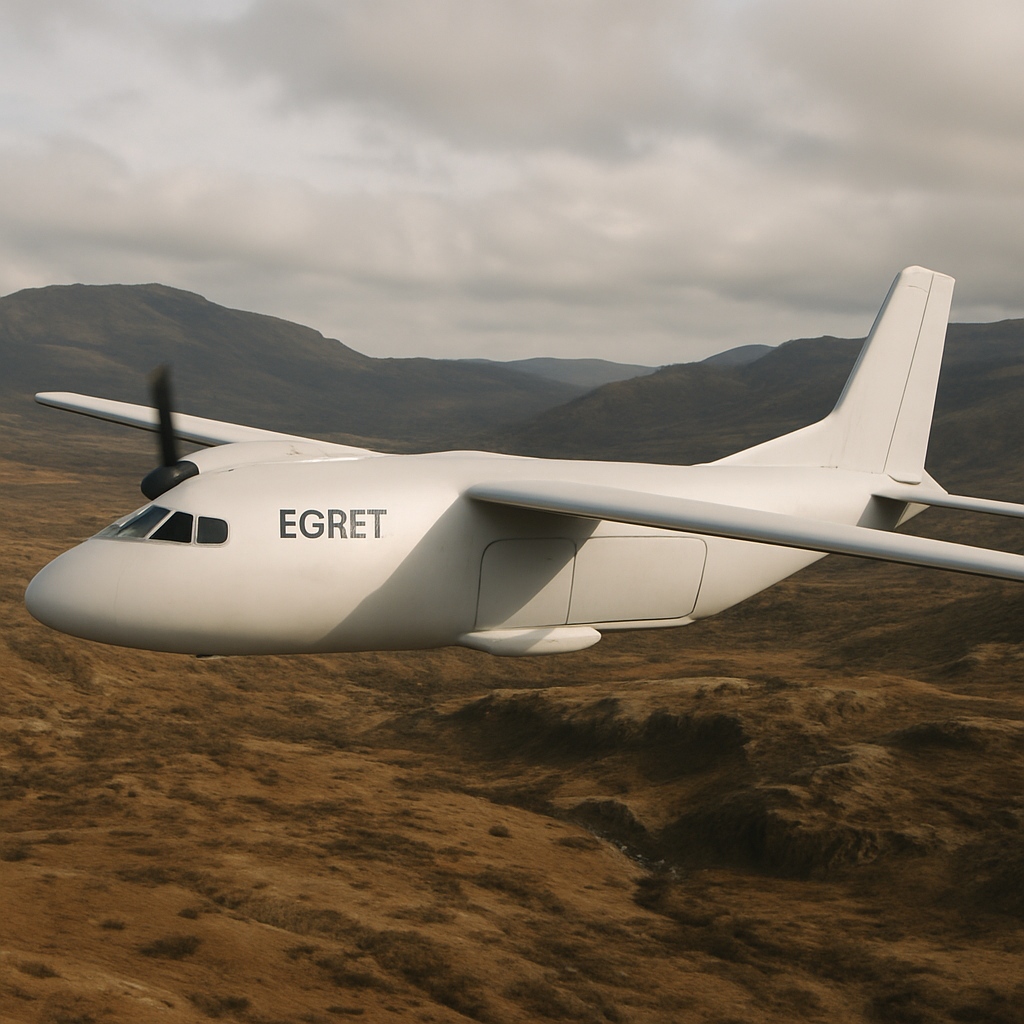
Poseidon Aerospace has just secured $60 million in a Series A round as it gears up for the maiden test flight of its pilotless cargo aircraft, Egret, slated for later in 2026. The funding boost follows an $11 million seed round last year and precedes what the company calls its first crew-free flight test. The new investors include TQ Ventures, Hanwha Asset Management, G Squared, and JAWS, as well as returning backers Starship Ventures, Draper Associates, and Drover Ventures.
Building for Cargo Over Tech Gimmicks
Poseidon’s leadership, including CEO David Zagaynov, is explicitly rejecting many of the current aerospace fads: autonomous vertical takeoff and landing (VTOL), electric powertrains, or hydrogen fuel. Instead, the startup is focused on deploying tried-and-true fixed-wing aircraft powered by conventional combustion engines. Its goal is to maximize payload efficiency while keeping operational and infrastructure costs low.
The company’s strategy hinges on removing the pilot from the equation. Without a cockpit or life support systems, and with no need for human crews, Poseidon aims to significantly reduce aircraft dry weight, improve fuel efficiency, and lower overall cost-per-flight. Egret and its amphibious sibling, Heron, are being designed to fly routes that are underserved or difficult to penetrate due to limited infrastructure—places where air cargo is currently expensive, unreliable, or simply inaccessible.
Dual Markets: Defense and Regional Cargo
Poseidon is targeting two main segments. First, defense: delivering to remote or infrastructure-poor locations that are vulnerable to disruption or adversarial threats. Second, commercial regional cargo, where the firm wants to compete with carriers like FedEx and UPS—not by selling aircraft, but by operating its own regional logistics network. The absence of onboard pilots also allows for more flexible route planning and quicker responses to changing demand, since Poseidon won’t be constrained by legally required rest periods or housing logistics for human crews.
As part of its preparation, the company has moved into a former Navy hangar in Alameda, California, to build its full-scale airframe (50-foot wingspan), after previously flying a smaller, quarter-scale proof-of-concept called Seagull. Zagaynov points out that although Poseidon isn’t developing VTOL aircraft, it still benefits from a regulatory environment that is slowly opening up pathways for new aviation technologies.
Operating the planes themselves rather than selling them is central to the business model. Poseidon wants to become a carrier—servicing regional air routes with unmanned fixed-wing aircraft. The plan is to leverage autonomy to drive down costs and bypass many of the limitations—both regulatory and operational—that impact traditional air cargo carriers.
Analyst Insight: Poseidon’s push to launch Egret—a non-VTOL, non-electric, conventional-fuel aircraft without pilots—is both refreshingly straightforward and potentially disruptive. In an industry enamored with electric propulsion, hydrogen, and vertical flight, this is a bold bet on simplicity. The success of Egret and Heron could force incumbents to rethink the balance between high-concept designs and reliable, cost-efficient operations. What to watch for: whether the FAA grants sufficient permissions, how costs stack up once scaled, and how quickly the market trusts fully autonomous cargo service on critical supply chains.