Security operations centers (SOCs) and managed security service providers (MSSPs) can no longer rely on ticking boxes with log collection and static indicators alone. In today’s landscape of fast-moving phishing waves and new malware strains, monitoring must be driven by real threat intelligence to cut response times, spotlight real risk, and build true resilience.
Here’s a fresh, actionable framework security leaders can adopt to fuse threat monitoring and detection engineering into a continuous, intelligence-led loop. Organizations using platforms like ANY.RUN show how this model works in practice—feeding validated threat data directly into defense, hunting threats, and tuning detections rapidly. The payoff includes faster detection, fewer false positives, and better visibility for CISOs.
From Monitoring + Detection Engineering to a Unified Loop
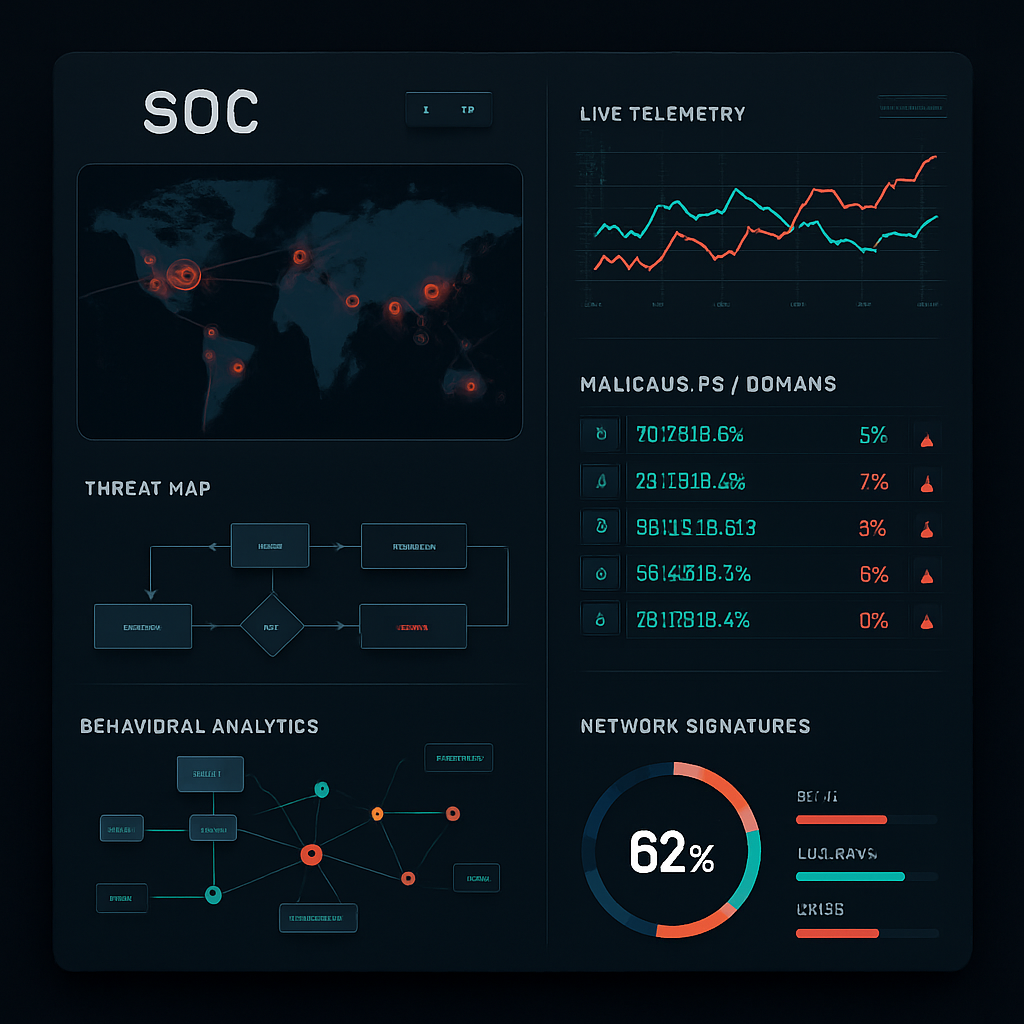
Monitoring involves gathering and analyzing real-time telemetry to spot malicious behavior as it unfolds. Detection engineering is how you define what’s malicious—through rule sets (YARA, Sigma, etc.) that describe adversary behavior. The magic happens when those two disciplines feed each other: detection rules are informed by intelligence, monitoring reveals rule failures or gaps, and that feeds back into refining detection logic. The result? SOCs shift from reactive firefighting to proactively blocking threats before they spread.
The Five Layers of Intelligence-Led Monitoring
Layer 1: Live, Validated Intelligence Feeds
Start by injecting high-confidence threat data—malicious IPs, domains, URLs—straight into existing stack components like SIEM, EDR, SOAR. Intelligence platforms fed by sandbox environments used by hundreds of thousands of analysts help generate indicators that tie back to concrete threat behavior. Instead of manually reviewing every alert, teams get enriched context automatically.
Layer 2: Behavioral Search
Beyond matching raw indicators, behavioral hunting lets analysts explore Indicators of Behavior (IOBs), Indicators of Attack (IOAs), and Tactics, Techniques, and Procedures (TTPs)—for example registry changes, execution chains, network fingerprints (like JA3/JA3S). By doing so, you can trace whether a signal is an isolated event or part of a coordinated campaign.
Layer 3: Fast-Track Detection Rule Creation & Validation
Using tools for pattern matching and signature writing (think YARA), teams can test rules in real time. Analysts spotting suspicious behavior in Layer 2 convert those into detection logic and run them against millions of real threat samples. Validating signature effectiveness—and tuning them down to reduce false alerts—can happen in minutes.
Layer 4: Expert Context on Emerging Threats
Automation speeds up operations, but expert analysis adds strategic value. Reports from threat intelligence units should cover adversary goals, origins, first appearance, and relevant industry or regional implications. This layer helps security leaders prioritize which threats really matter to their organization.
Layer 5: An Integrated Ecosystem
No single tool solves everything. The most potent approach combines sandbox-based intelligence generation, automated feeds, behavioral lookup, detection engineering, and expert reports. Each component reinforces the others: feeds handle known threats, investigations uncover new ones, and everything updates detection logic to stay ahead of attacker tactics.
Making the Business Case
Intelligence-led monitoring is not just technical—it delivers hard financial and strategic value. Shorter dwell times cut costs of breach recovery and regulatory fines. Analysts waste less time chasing false positives and manual alerts, freeing them for proactive work. Demonstrating that the security team flagged threats weeks before public disclosure gives CISOs solid proof of a forward-leaning posture. For MSSPs, this can be a differentiator in client SLAs and competitive positioning.
What to Watch For:
- Tools that enable integrating live intelligence feeds across your stack (SIEM, EDR, etc.).
- Solutions offering behavioral search tied to large sandbox datasets.
- Environments where detection rules can be authored, tested, debugged quickly.
- Threat reports with contextual analysis relevant to your region/industry.
- End-to-end visibility: from raw telemetry, through detection logic, to strategic decision making.
Building intelligence-led threat monitoring isn’t a one-off project—it’s a continuous capability. Monitoring, detection engineering, hunting, and reporting must be tightly woven into daily SOC operations. As threats evolve, so must defensive loops. For any organization serious about stopping attacks before damage, embedding real-world intelligence at every layer, and maintaining that cycle of improvement, will be the edge between reacting and preventing.