Global Crackdown Dismantles 53 DDoS-for-Hire Services, Unveiling 3 Million Criminal Accounts
In a significant international law enforcement operation named Operation PowerOFF, authorities have successfully seized 53 domains associated with distributed denial-of-service (DDoS) for-hire services, leading to the arrest of four individuals and the exposure of over 3 million criminal user accounts. This coordinated effort underscores the global commitment to combating cybercrime and disrupting illicit online activities.
The Scope of Operation PowerOFF
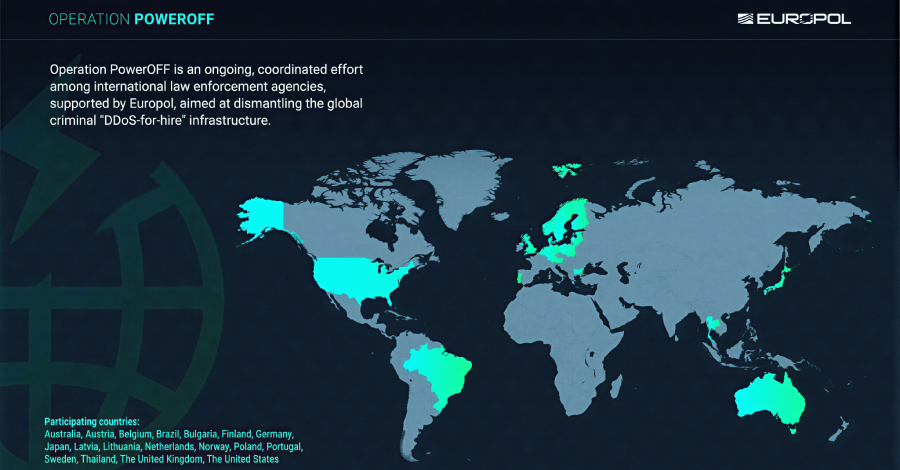
Operation PowerOFF represents a concerted effort by law enforcement agencies from 21 countries, including Australia, Austria, Belgium, Brazil, Bulgaria, Denmark, Estonia, Finland, Germany, Japan, Latvia, Lithuania, Luxembourg, the Netherlands, Poland, Portugal, Sweden, Thailand, the United Kingdom, and the United States. The operation targeted booter or stresser services—platforms that enable users to launch DDoS attacks against targeted websites, servers, or networks.
These services have been exploited by over 75,000 cybercriminals to execute attacks that overwhelm online services with excessive traffic, rendering them inaccessible to legitimate users. The disruption caused by such attacks can have severe consequences for businesses, government agencies, and individuals alike.
Unveiling the Criminal Infrastructure
The takedown of these 53 domains not only disrupted access to the DDoS-for-hire services but also led to the dismantling of the technical infrastructure supporting them. Authorities gained access to databases containing over 3 million user accounts associated with these illicit activities. This access has enabled law enforcement to identify and issue warnings to the individuals involved, with 25 search warrants executed as part of the operation.
Europol highlighted the significance of this action, stating, Booter services allow users to launch DDoS attacks against targeted websites, servers, or networks. Their infrastructure is made up of servers, databases, and other technical components that make DDoS-for-hire activities possible. By seizing these infrastructures, authorities were able to hinder these criminal operations and prevent further damage to victims.
The Proliferation of DDoS-for-Hire Services
DDoS-for-hire services have become a prevalent and easily accessible tool for cybercriminals. These platforms allow individuals with minimal technical expertise to execute large-scale attacks, causing significant disruption and damage. The motivations behind such attacks vary widely, ranging from financial gain through extortion to ideological hacktivism and competitive sabotage.
Some operators of these services have attempted to mask their true intentions by presenting their platforms as legitimate stress-testing tools. However, the primary function of these services remains the facilitation of illegal DDoS attacks.
U.S. Authorities’ Parallel Actions
In conjunction with Operation PowerOFF, the U.S. Department of Justice (DoJ) announced court-authorized actions to disrupt some of the world’s leading DDoS Internet of Things (IoT) botnet services. This initiative is part of the ongoing commitment to hold DDoS botnet administrators accountable and to seize websites that enable paying users to launch potent DDoS attacks.
The DoJ reported the seizure of services associated with eight DDoS-for-hire domains, including Vac Stresser and Mythical Stress, both of which claimed to launch thousands of DDoS attacks per day. Additionally, an advertising campaign has been launched to deter potential cybercriminals searching for DDoS services in the U.S. and to educate the public about the illegality of DDoS attacks.
The Impact of DDoS Attacks
DDoS attacks are designed to inundate websites, servers, and networks with junk traffic, degrading access to legitimate services, causing performance bottlenecks, and, in some cases, rendering them completely offline. The consequences of such attacks can be far-reaching, affecting not only the targeted entities but also the broader internet infrastructure and user experience.
A Coordinated Global Effort
The success of Operation PowerOFF and related actions demonstrates the effectiveness of international collaboration in addressing cyber threats. By pooling resources, intelligence, and expertise, law enforcement agencies worldwide can more effectively disrupt and dismantle criminal networks operating in the digital realm.
Looking Ahead
While the takedown of these 53 domains and the exposure of 3 million criminal accounts represent significant progress, the fight against cybercrime is ongoing. Authorities continue to monitor and target emerging threats, emphasizing the importance of vigilance, cooperation, and proactive measures to safeguard the digital landscape.