Hardware manufacturers know how expensive recalls can be. Take the Chevy Bolt case, for example: all Bolts made between 2017 and 2022 were pulled back due to faulty battery parts from an LG plant, costing LG roughly $1.9 billion. This kind of quality mishap hits hard, and catching them earlier could save billions in liability, brand damage, and waste.
The Problem with Traditional CT Inspection
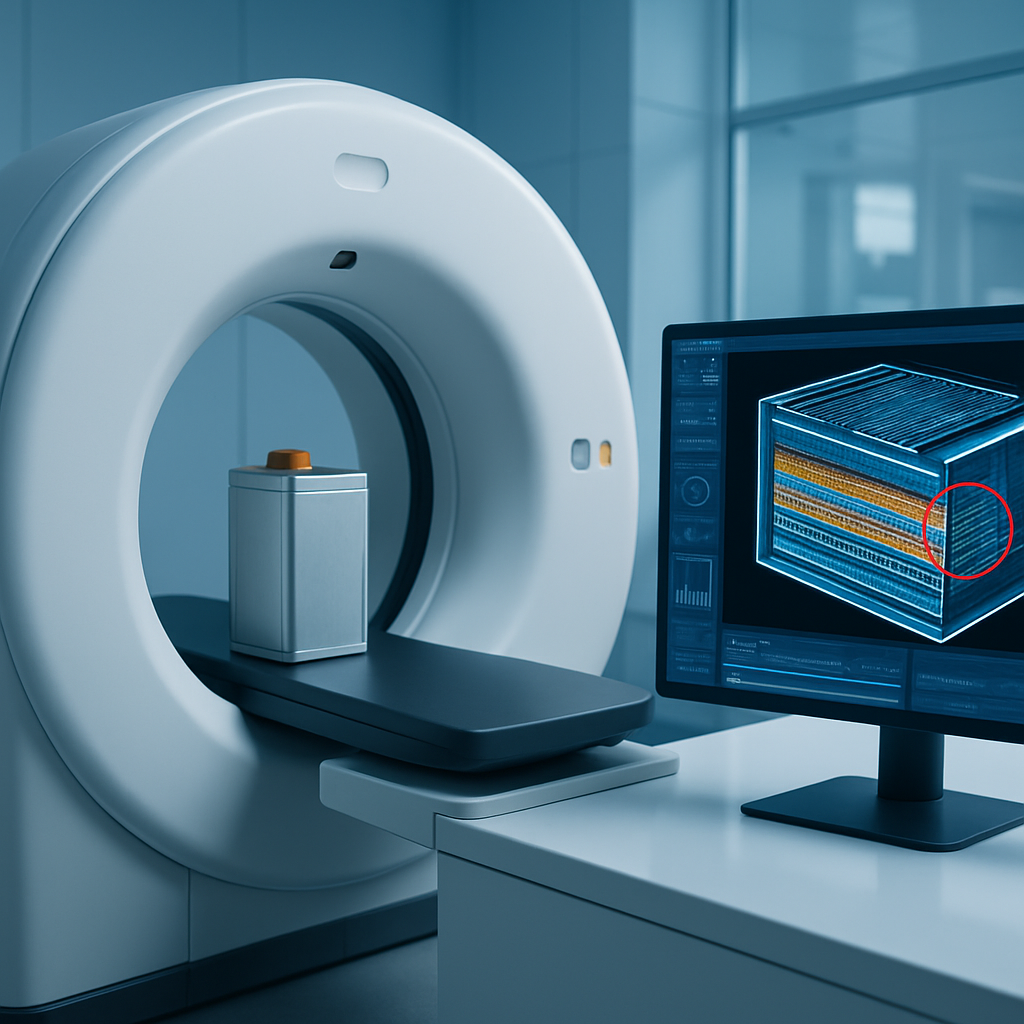
Many manufacturers—especially in automotive, EV, or medical sectors—rely on CT (computed tomography) scanning to inspect internal components like battery cells. CT scans can reveal layer misplacements, foreign material inclusions, or structural defects that aren’t visible externally. But current processes are painfully slow and bottlenecked: labs may only scan a small fraction of parts, meaning many defects slip through until they become crisis-level.
How Glimpse Changes the Game
Glimpse is launching a software platform called Explore that supercharges CT inspection. Using a revamped image processing pipeline powered by deep learning, the system compresses and cleans up scans—much of this work happens locally (on the customer’s edge computer), reducing dependence on cloud computing. The aim is to produce high-quality, ready-to-use scans fast enough that labs can review them in seconds rather than waiting minutes or hours.
The software doesn’t just display images. It also automates measurement of parts or features that matter—distance between battery cell layers, for instance. When metrics deviate from expected norms, Glimpse flags them and highlights the defect in the scan. The system learns over time with user feedback, improving detection accuracy with ongoing retraining.
New Business Model & Market Reach
Glimpse already serves over 100 customers—companies ranging from battery makers to aerospace and medical device firms, including Anker, Lucid, even the U.S. Navy. Revenue is in the “mid-seven-figure” range. In most cases, customers own their own CT scanners but augment them with Glimpse’s enhanced software. For those without scanners, the company offers Scan On Demand centers: one in Boston already operational, and a second slated for the San Francisco Bay Area. Customers can send in parts for scanning (at lower cost than purchasing a scanner) until they’re ready to invest in equipment themselves.
A next-generation “super scanner” is also under development, aiming to scan individual parts in one to two seconds. That would represent an order-of-magnitude jump in throughput—moving from scanning just a few dozen cells per day to tens of thousands.
Taken together, Glimpse’s hardware-agnostic platform, edge/cloud hybrid pipeline, and flexible service model allow significantly more frequent and earlier detection of issues in manufacturing. That promises lower recall risk, improved safety, and lower waste.
Why It Matters: As industries like electric vehicles, aerospace, medical devices, and consumer electronics become more complex and regulated, the rate and cost of defects has been rising. Improved inspection tools could fundamentally reduce unplanned downtime, product failures, and the environmental and financial fallout from recalls. Companies that tap into this kind of enhanced CT scanning capability may gain a competitive edge in both reliability and compliance.