Focused Energy Secures $240 Million Series A to Advance Laser-Powered Fusion Technology
Focused Energy, a Germany-based fusion power startup, has successfully closed an oversubscribed $240 million Series A funding round, marking one of the largest early-stage investments in the fusion energy sector. This substantial infusion of capital elevates the company’s total private funding to $300 million, complemented by an additional $200 million in grants, positioning Focused Energy among the most well-funded entities in the fusion industry.
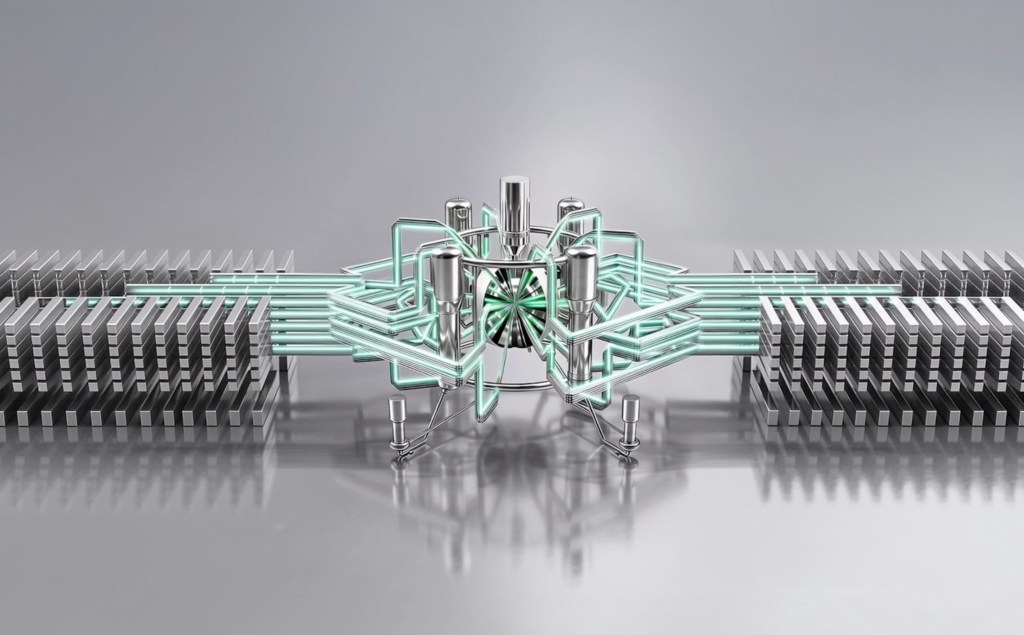
The company’s innovative approach centers on developing a reactor that employs lasers to compress fusion fuel—a method known as inertial confinement fusion. In this process, high-powered lasers target a fuel pellet, compressing it to conditions conducive to nuclear fusion. When the atomic nuclei within the fuel merge, they release a significant amount of energy, potentially providing a sustainable and virtually limitless power source.
Focused Energy’s design draws inspiration from the National Ignition Facility (NIF) at the Lawrence Livermore National Laboratory in California. Notably, NIF achieved the first controlled nuclear fusion reaction that produced more energy than was required to initiate it. Strengthening this connection, Debbie Callahan, a key contributor to NIF’s fuel target design, joined Focused Energy in December as Chief Strategy Officer. Callahan’s expertise is instrumental in simplifying the fuel target design, a critical step toward making fusion energy commercially viable.
The NIF’s fuel target is intricate and challenging to manufacture, with the facility conducting approximately 400 shots per year. In contrast, Focused Energy aims to achieve a firing rate of 10 shots per second, totaling about 864,000 shots daily. To meet this ambitious goal, the company plans to eliminate the hohlraum—a precision-engineered gold cylinder used at NIF to convert laser energy into X-rays for compressing the fuel pellet. Instead, Focused Energy’s direct drive laser system will directly compress the fuel pellet, enhancing reactor efficiency and simplifying the manufacturing process.
The company plans to construct its first demonstration system, named Lighthouse, at the site of a decommissioned nuclear fission power plant in Germany, previously operated by the utility RWE. RWE led the Series A funding round, underscoring its commitment to advancing fusion technology. Other participants in the round include the German Federal Agency for Breakthrough Innovation (SPRIND), Prime Movers Lab, and the European Innovation Council Fund.
This significant investment in Focused Energy reflects a broader trend of robust funding within the fusion industry. For instance, Thea Energy recently secured $100 million to develop its pixel-inspired fusion reactor, while Inertia Enterprises raised $450 million in a Series A round to advance its own reactor design. Additionally, Type One Energy announced raising nearly $90 million toward a $250 million Series B funding round.
These substantial investments highlight the growing confidence in fusion energy’s potential to revolutionize the global energy landscape. Fusion power offers the promise of a clean, abundant, and sustainable energy source, addressing many challenges associated with traditional energy production methods. As companies like Focused Energy continue to innovate and attract significant funding, the realization of practical fusion energy applications appears increasingly attainable.