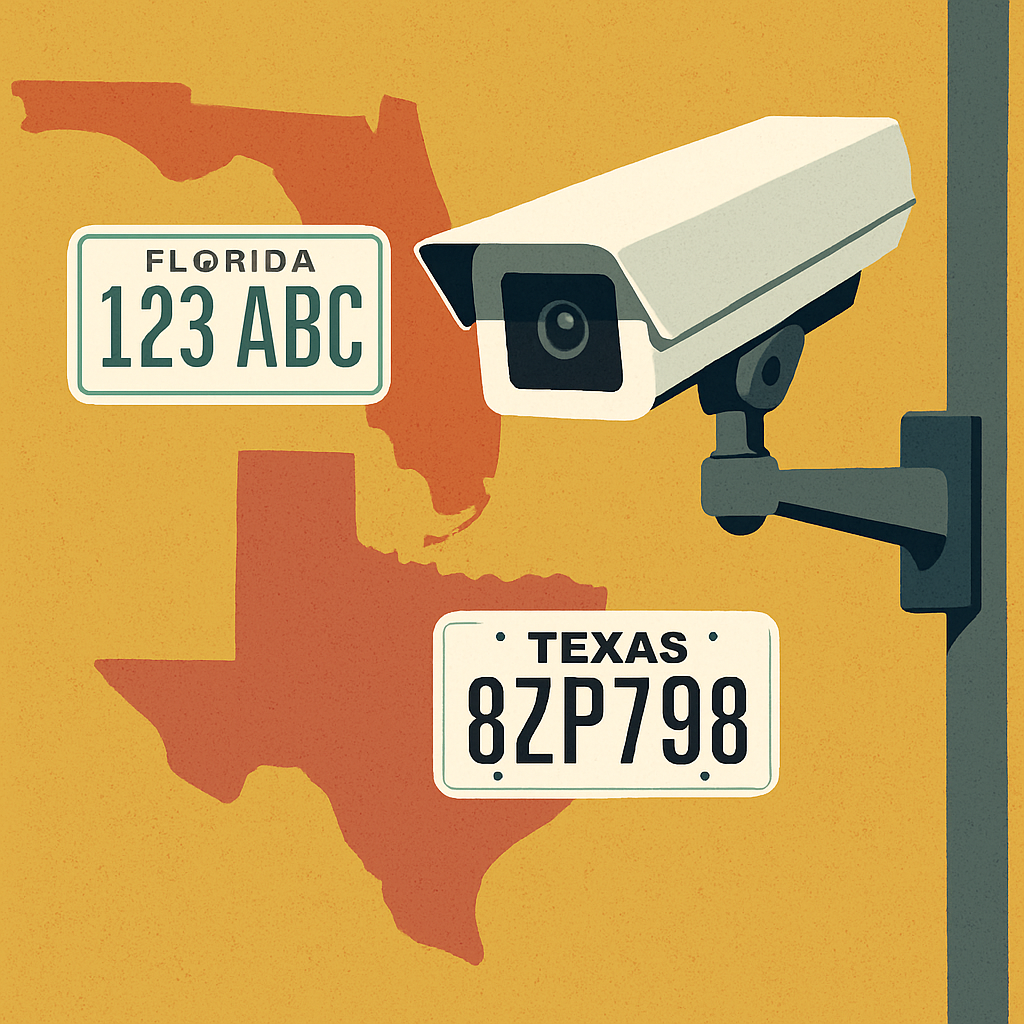
Florida and Texas are taking steps to dismantle their partnerships with Flock’s surveillance camera network amid mounting concerns about data misuse, privacy violations, and civil liberties risks. The license plate recognition cameras, operated by Flock, are facing backlash from state leaders who argue the technology has been overused, mismanaged, or abused.
What’s Driving the Crackdown
In Florida, the Department of Transportation has ordered the removal of Flock’s cameras from state highways within 30 days. The decision was prompted by a memo citing troubling reports of misuse, surveillance overreach, and data privacy issues tied to Flock’s devices. This comes shortly after Governor Ron DeSantis publicly criticized the tech as being “out of control” during a recent press event.
Meanwhile, Governor Greg Abbott of Texas has directed state agencies to cease funding Flock’s cameras. Abbott’s office pointed to a recent incident involving a Lufkin, Texas police officer who was indicted on 100 felony charges for allegedly using Flock’s database to track individuals without authorization. Details on which agencies will be affected remain vague, though local reports indicate that major cities like Dallas—with hundreds of Flock cameras—could see significant changes.
What’s at Stake
The scrutiny comes amid broader bipartisan concern over how surveillance tools are used. Critics argue that Flock’s license plate readers and associated camera systems have enabled misuse by law enforcement—such as monitoring ex-partners without warrants—sparked wrongful arrests, and initiated stops based on misidentification or database errors. Concerns have also expanded into issues like cybersecurity risks and the system’s evolving ability to identify and track people beyond just their license plates.
Currently, Flock operates around 130,000 license plate reader cameras across the U.S. Several communities—including in Illinois, Massachusetts, and Oregon—have previously terminated contracts with Flock, only to find the cameras reactivated or reinstalled without local approval.
Flock has not publicly commented on whether it will comply with the removal orders from Florida and Texas or whether it plans to re-enable cameras after they are taken down.
Why this matters: The decisions out of Florida and Texas mark a stark shift in how states regulate surveillance technology. As privacy, civil liberties, and government accountability dominate headlines, the backlash suggests that unchecked deployment of recognition systems—whether for license plates or facial features—may no longer be politically or legally tenable. Going forward, expect scrutiny of contracts, data usage policies, and oversight for surveillance tools to intensify—especially in states facing vocal public resistance.