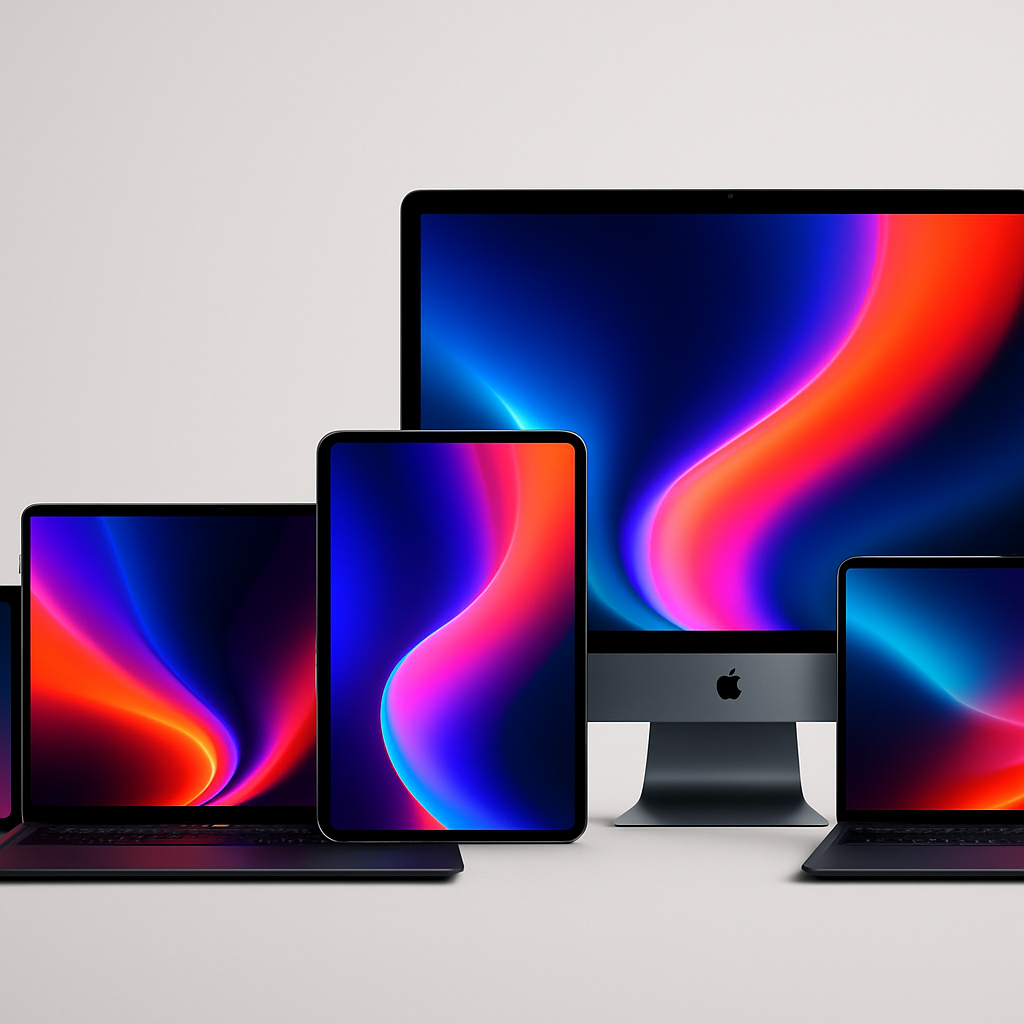
Apple is reportedly preparing to widen the use of OLED displays across its product lineup, upgrading several iPads and Macs over the next few years. Industry sources suggest five key devices will shift from LCD or mini-LED panels to OLED between 2026 and 2029. This would bring richer colors, deeper blacks, and improved contrast ratios—hallmarks of OLED tech—into more affordable and mid-range devices. ([macrumors.com](https://www.macrumors.com/2026/08/20/five-apple-products-to-get-oled-displays/))
Which Devices Are Set for OLED Upgrades
The report identifies five Apple models that are expected to receive OLED displays:
- iPad mini — slated for OLED in 2026. ([macrumors.com](https://www.macrumors.com/2026/08/20/five-apple-products-to-get-oled-displays/))
- MacBook Pro — likely to get OLED either in late 2026 or early 2027. ([macrumors.com](https://www.macrumors.com/2026/08/20/five-apple-products-to-get-oled-displays/))
- iPad Air — targeted for 2027. ([macrumors.com](https://www.macrumors.com/2026/08/20/five-apple-products-to-get-oled-displays/))
- iMac — expected in 2028 or 2029. ([macrumors.com](https://www.macrumors.com/2026/08/20/five-apple-products-to-get-oled-displays/))
- MacBook Air — also aimed for OLED in 2028 or 2029. ([macrumors.com](https://www.macrumors.com/2026/08/20/five-apple-products-to-get-oled-displays/))
Display Technology Differences and Trade-Offs
While some current Apple devices already use OLED panels—such as iPhones, Apple Watches, and iPad Pro models—there are differences in how the technology is implemented. The iPad Pro features “tandem OLED,” which layers two OLED panels to increase brightness, and supports a 120Hz refresh rate via ProMotion. ([macrumors.com](https://www.macrumors.com/2026/08/20/five-apple-products-to-get-oled-displays/))
The iPad Air upgrade, however, appears less ambitious: it is expected to feature a single-stack OLED panel with an LTPS backplane, likely limiting it to 60Hz and lower brightness compared to the Pro model. This seems to align with positioning the Air as a more affordable alternative to the Pro line. ([macrumors.com](https://www.macrumors.com/2026/08/20/five-apple-products-to-get-oled-displays/))
As for Apple’s monitors, the Studio Display XDR currently relies on mini-LED backlighting and it’s not yet known whether it will be upgraded to OLED in the foreseeable future. Similarly, entry-level models like the basic iPad and the MacBook Neo are expected to stick with LCD panels for now. ([macrumors.com](https://www.macrumors.com/2026/08/20/five-apple-products-to-get-oled-displays/))
Why This Matters
Switching more of its lineup to OLED signals Apple’s push to standardize on the technology’s superior visual performance across its devices. OLEDs offer high contrast, deeper blacks, and potentially thinner and more energy-efficient displays—especially if paired with efficient backplanes like LTPS. But the trade-offs—particularly around brightness, refresh rates, and cost—may mean some models don’t get the full suite of OLED benefits. The staggered timeline also gives Apple room to manage supply chain demands and component costs. ([macrumors.com](https://www.macrumors.com/2026/08/20/five-apple-products-to-get-oled-displays/))
In broader context, this move follows a pattern: Apple has gradually shifted its high-end gear, like iPhones, Apple Watches, and iPad Pro models, to OLED and cutting-edge display tech. Expanding that to mid-tier and baseline devices would close the gap in visual experience. ([macrumors.com](https://www.macrumors.com/2026/08/20/five-apple-products-to-get-oled-displays/))
WATCH THIS SPACE: as Apple rolls out OLED across more devices, differences in refresh rate, brightness, and pricing will decide whether consumers perceive real upgrades or just marketing. Observing how supply chain constraints play out over 2026-2029 will be key to judging how smoothly this transition happens.