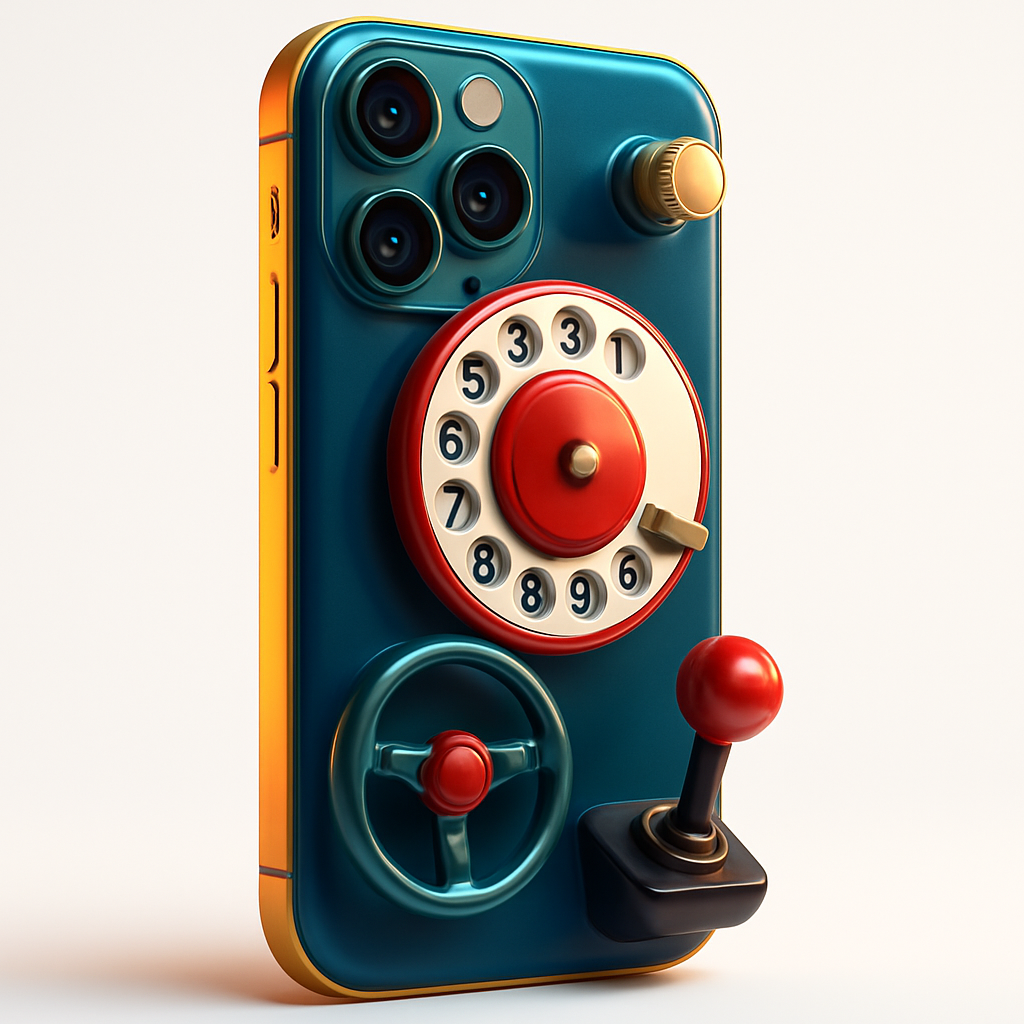
A playful interactive project called “Design the Next iPhone”, created by developer Neal Agarwal, gives anyone the chance to build a virtual iPhone from scratch—and maybe break a few design rules along the way. Starting with a blank 3D iPhone model, users can rotate it, drag-and-drop parts like cameras, ports, and buttons anywhere they like, even adding unconventional extras for fun. The result is a wildly customizable mock-up complete with a made-up price and presentation.
Normal components include typical elements like volume buttons, a Lightning connector, the Home button, cameras, and the Apple logo. But the fun really ramps up with nonstandard options: there’s a headphone jack, a hinge, even a Digital Crown modeled after Apple’s smartwatch. Want a rotary dial, an antenna, or a click wheel? You got it. The site also includes whimsical items like a steering wheel, a joystick, and a Mac Pro–style “Pro Wheel” to give creations extra flair.
Features That Go Beyond Reality
Not only does the tool let you play with hardware, you can also pick the device’s color, switch out its wallpaper, and give it a name. Once your masterpiece is finished, hitting “Present” turns it into a mock product reveal—complete with a fictional pricing based on the sum of your components. For a comedic touch, the finish includes a scenario where former Apple CEO Tim Cook praises the design. Users can even download a rotating video of their concept for showing off every angle.
Why This Matters (and What It Reveals)
This isn’t just toyware. Projects like this highlight how much Apple fans care about design, even when the ideas are zany. It offers insight into what kinds of features people actually want—and what playful extremes they’re willing to imagine. We’ve seen crowd input shape tech before; this could serve as informal voice for preferences on phone features, size, or layout.
The tool plays into a larger trend of interactive fan tech and creative expression. We’re seeing more applications that let users mock up ideas, give feedback, remix design elements, or just imagine alternatives to current devices. It adds to conversations about hardware flexibility, modularity, and whether users want features like ports, physical buttons, and different form factors.
Final Word: This virtual iPhone designer is more than a game—it’s kind of a mirror. For Apple, designers, and tech watchers, it’s a chance to see what resonates (and amuses) among users. As the hardware landscape evolves—think ports, foldables, modular phones—seeing what people build when they’re free to invent may hint at future real devices.