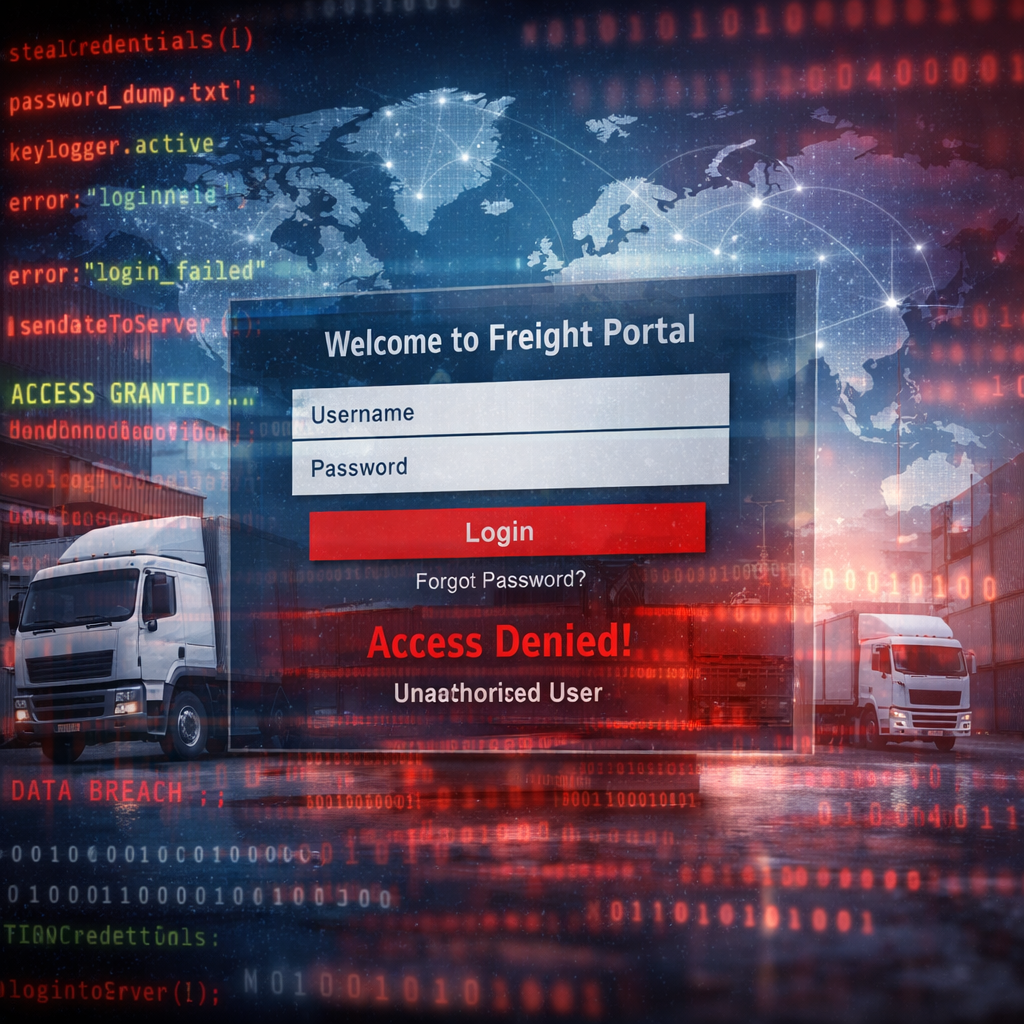
A rising wave of attacks is hitting U.S. trucking and freight companies through convincing fake load boards and bogus compliance portals—scams designed to steal credentials and deploy malware. These campaigns are increasingly targeting everyone from carrier owners and dispatchers to drivers and load bookers, using fraudulent emails, download traps, and lookalike websites. Recent findings from cybersecurity analysts show this is far from a minor nuisance—it’s becoming a full-blown malware and credential theft crisis.
The Gangs Behind the Fraud
Several operations are in motion, each with a different angle but a shared goal: infiltrate freight workflows to steal sensitive data, hijack systems, and gain persistent access. Three major campaigns are in focus:
- HelloFriends focuses on siphoning off fuel account credentials, personal data, and business tax or identity information. Attackers have been impersonating official government and safety compliance portals, demanding extra fees and requesting personal identifiers through cloned pages.
- NodeRemote lures dispatch staff and brokers by posing as legitimate pages for bills of lading, insurance claims, or onboarding. Once trust is established, it slips in backdoors or scheduled tasks to secure ongoing access.
- Fake Freight Portals impersonates load board services—mimicking industrial players—to push rogue terms updates or load confirmations. These lead to malware installs like remote administration tools and, in some cases, the CastleRAT trojan.
Tactics, Malware & Attack Vectors
Activity in these campaigns has been observed since at least late 2025, escalating through 2026. The Fake Freight Portals group has used fake PDFs, Windows shortcuts, and even WebDAV shares to drop legitimate admin tools (e.g. NetSupport Manager, MeshCentral) while disguising malicious functionality. Attackers then move to extract credentials, disable defenses, and install trojans like CastleRAT. It’s not just taking place in obscure corners—fake fuel provider login sites are asking for one-time codes and account passwords, while cloned portals demand sensitive IDs and fees for nonexistent administrative tasks.
Signs & Mitigations for Freight Ops
Experts recommend that teams verify the authenticity of any unexpected notices or document links—especially for load confirmation, terms updates, or compliance reminders. Always check using known or bookmarked URLs rather than opening links in emails or messages. Watch for these warning signs:
- Unusual remote access agents or unfamiliar scheduled tasks running
- Windows shortcuts posing as documents or updates
- Requests for Social Security numbers, USDOT numbers, or tax IDs via unusual channels
- Unexpected prompts for one-time codes or snapshot login info
- Changes to system defenses or exclusions in security tools
Security teams should be especially alert for proof of unauthorized access—such as BitLocker recovery prompts or software being excluded from antivirus scans. Enforce strict restrictions on remote management tools and stick to approved software only.
Indicators of Compromise & Infrastructure Activity
Monitoring groups have cataloged numerous domains, IPs, and file signatures tied to these threats. For example, Fake Freight Portals have used sites mimicking DAT portals, items pretending to be updated terms in PDF form, and servers hosting the CastleRAT C2 endpoint. HelloFriends has deployed fake compliance or verification clones. NodeRemote has been active with fake onboarding services and backdoor installers posing as scripts or official tools.
In addition to technical defenses, freight operators should verify changed paperwork or requests by calling brokers via known contacts. Bookmark legitimate sites. And detect and review any unexpected system changes.
Cyber risks within freight & logistics have long been underestimated—but this series of campaigns shows just how exposed key operations are. Attacks now exploit not just external portals, but deep internal workflows—dispatch, compliance, fuel payments, safety certifications. What makes this particularly dangerous is that several phases of the attacks use legitimate remote admin tools, making detection harder. What’s next will likely focus on stronger identity-based defenses—multi-factor secrets, identity verification, and anomaly detection—and tighter oversight of imports from potentially unsafe vendors or downloads. Freight firms that build awareness now will be the ones best positioned to stop the next wave of Fake Freight Portals and credential-harvesting attacks.