U.S. trucking and logistics companies are currently being targeted by a trio of sophisticated cybercrime campaigns that use deceptive versions of carrier-verification, broker-onboarding, and load-board platforms to extract sensitive data, install malware, and seize control of dispatch systems.
Three Threats in Play: HelloFriends, NodeRemote, and Fake Freight Portals
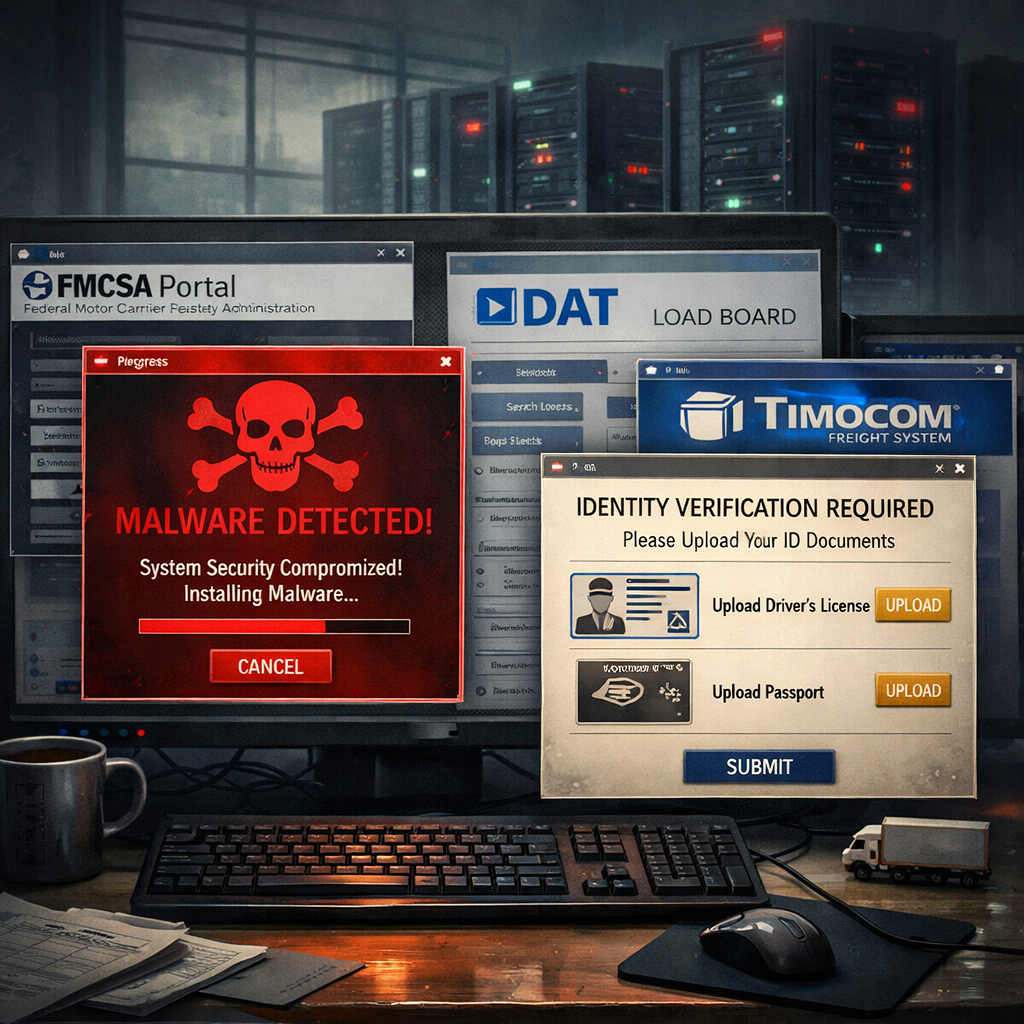
The first campaign, known as HelloFriends, poses as the Federal Motor Carrier Safety Administration (FMCSA). In 2026, researchers uncovered over 1,400 malicious domains connected with this operation. Attackers send tailored phishing emails referencing real carrier names and USDOT numbers—helping these emails pass email authentication checks like SPF, DKIM, and DMARC. Targets are redirected to convincing replicas of the SAFER and Motus portals, where they’re prompted for personal identifiers (SSN, EIN, date of birth), asked to pay a bogus $300 “administrative fee,” and urged to connect their fuel card—making them enter their login details, sometimes twice, followed by a one-time password (OTP). Once collected, this data is sent off via Telegram for malicious use.
The second campaign, called NodeRemote, zeroes in on dispatch teams and brokers. Its lures include phony broker onboarding pages, insurance claims, and rate confirmations. One deceptive tactic involves a fake reCAPTCHA that copies a PowerShell command to the clipboard and instructs victims to run it manually—classic social-engineering attack. Another variant delivers scripts disguised as documents. In October through early November 2026, an MSI installer was introduced via a load tracker, which installs a Node.js runtime and a persistent backdoor, complete with scheduled tasks and console relays. The infrastructure supporting NodeRemote is notably resilient: its command-and-control relays are retrieved from multiple sources—BNB Smart Chain contracts, encrypted DNS TXT records over DoH, and GitHub gists. It even uses executables with elevated permissions and advanced bypass techniques to maintain access.
The third campaign, Fake Freight Portals, mimics established load-board platforms like TIMOCOM and DAT. In these attacks, users are asked to review updated terms or download booking documents. A disguised “PDF” file via WebDAV is actually a Windows shortcut (.lnk) that triggers an executable from a remote server. Once installed, it brings in a remote administration tool (the legitimate MeshCentral) to deploy additional malware. The operators retrieved BitLocker recovery keys, disabled defenses by tweaking Microsoft Defender and elevated their tools via UAC bypasses. Their ultimate payload in many cases is CastleRAT (also called NightshadeC2), which leverages a Steam Community profile as its command resolver. Earlier versions used NetSupport Manager instead. Although no data encryption was observed, the combination of persistent remote control, access to recovery keys, and weakened defenses makes this campaign especially dangerous.
How to Detect & Defend Against These Threats
Defenders should prioritize to:
- Verify any FMCSA, broker, or load-board request through official contact channels—never via unsolicited email links.
- Train staff handling dispatch and onboarding to flag red flags like document shortcuts masquerading as PDFs, unusual prompts involving the Run dialog, or abnormal authentication flow.
- Monitor for WebDAV-based execution—e.g., rundll32.exe invoking davclnt.dll—or executables running from external shares.
- Watch for unexpected remote admin tools, especially accompanied by actions such as retrieving BitLocker keys or disabling Defender settings.
- Track scheduled tasks with names like “NodeRemote*” or suspicious outbound network behavior targeting paths like /internal/clients/telemeter.
- Use sandbox environments to detonate suspicious files or URLs, to see full attack chains before they touch production systems.
These campaigns exploit the routine digital workflows logistics companies rely on. Because they closely mirror real freight interactions, they can evade both technological filters and human scrutiny.
Analytical Note: The rise of these campaigns signals a major escalation in how cybercriminals are attacking the logistics sector. It’s no longer enough to patch software—companies must actively train employees, build visibility into their digital footprint, and proactively hunt for infrastructure abuse. As digital freight platforms grow in importance, the attack surface grows with them. What’s essential now is not just reacting after breaches, but anticipating them before attackers clone that next portal.