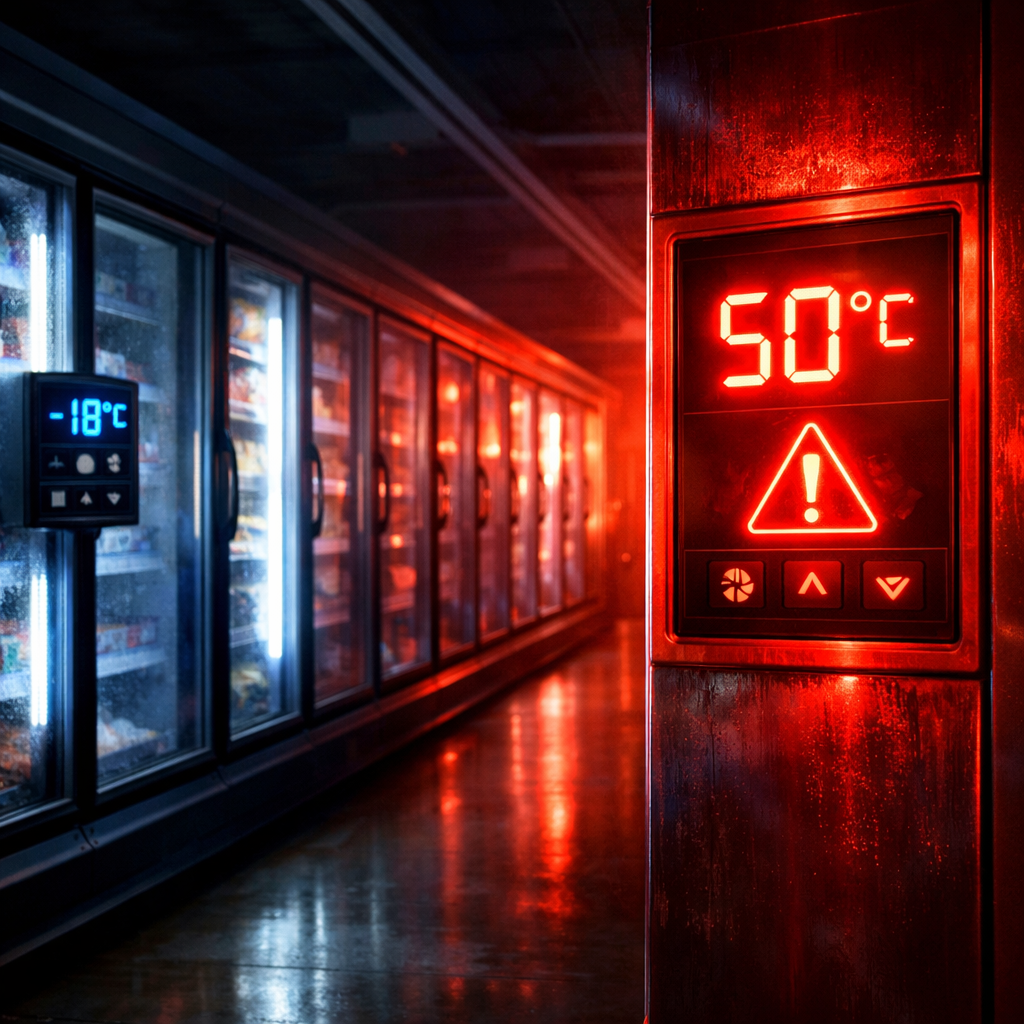
Across at least ten European nations, connected refrigeration systems in supermarkets have come under malicious attack, forcing retailers to pull frozen and chilled food off shelves after settings were manipulated to reach as hot as 50°C (122°F). The incidents, reported on November 2, 2026, have raised urgent alarms over the vulnerability of refrigeration technology in the food supply chain.
Scope of the Disruption
Countries hit include Belgium, Estonia, Finland, Ireland, Italy, Luxembourg, the Netherlands, Portugal, Germany, and Sweden. In Ireland, the Musgrave Group confirmed that 13 SuperValu stores were affected, with impacted products removed from sale while restocking efforts began. Portugal saw similar interference at seven Intermarché locations, reportedly through a refrigeration service provider third-party breach. Sweden’s ICA and Coop chains also suffered disruptions. In Belgium, the federal prosecutor opened an investigation, and in Estonia, a contractor said hackers accessed a client’s control system to raise temperatures to the dangerous level. Even butcher shops and smaller grocers were affected, showing the issue goes past major chains.
How the Attacks Work
These targeted attacks compromise operational technology—devices and software that govern physical infrastructure such as refrigeration units. Many supermarkets employ connected refrigeration controllers that enable remote monitoring and maintenance. While these systems aid service technicians, lax security on such connections also allows threat actors to tamper with settings that maintain safe cold temperatures. Reports link the Danish manufacturer Danfoss to many of the incidents; products from its AK-SM, AK-SC series, along with Copeland and Dixell XWEB controllers, are noted. However, investigators say there’s no confirmed single point of failure across all cases.
Aftermath and Impact
Previous attacks in France, about three weeks before the latest wave, reportedly affected around 700 stores, causing large-scale food spoilage. In the current round, damage estimates reach tens of millions of euros. Business losses are compounded by safety risks and the logistical fallout of removing compromised food items. In many locations, the incident did not necessarily drive food to 50°C, even if settings were changed to that mark.
Response & Mitigation Efforts
EU agriculture officials have signaled concern these attacks may be intentional attempts to disrupt essential services. While no group has claimed responsibility, European Commission and government bodies have described them as serious warnings about how cyber threats intersect with public welfare. Among mitigation recommendations are disconnecting controller management interfaces from the public internet, enforcing firmware updates, changing default passwords, using secure remote access, and regularly reviewing temperature and defrosting schedules. Older, obsolete devices especially lack regular security updates and represent a major exposure. The UK’s National Cyber Security Center has joined in urging retailers to update their controls and audit refrigerated assets across supply chains.
These attacks underscore a growing pattern where convenience features—like remote control—introduce pathways for severe disruption in critical infrastructure. As supermarket refrigeration systems become increasingly networked, the imperative tightens for preventive cybersecurity. Retailers must treat remote access as an operational risk, not a perk, and prioritize securing every link in their system. Policy makers and industry leaders will need to push for tighter standards, better oversight, and faster incident response mechanisms. What happens next could set the standard for the cyber-secure management of essential utilities built around our food systems.