Emergent’s Wingman: Revolutionizing AI Agents in Messaging Platforms
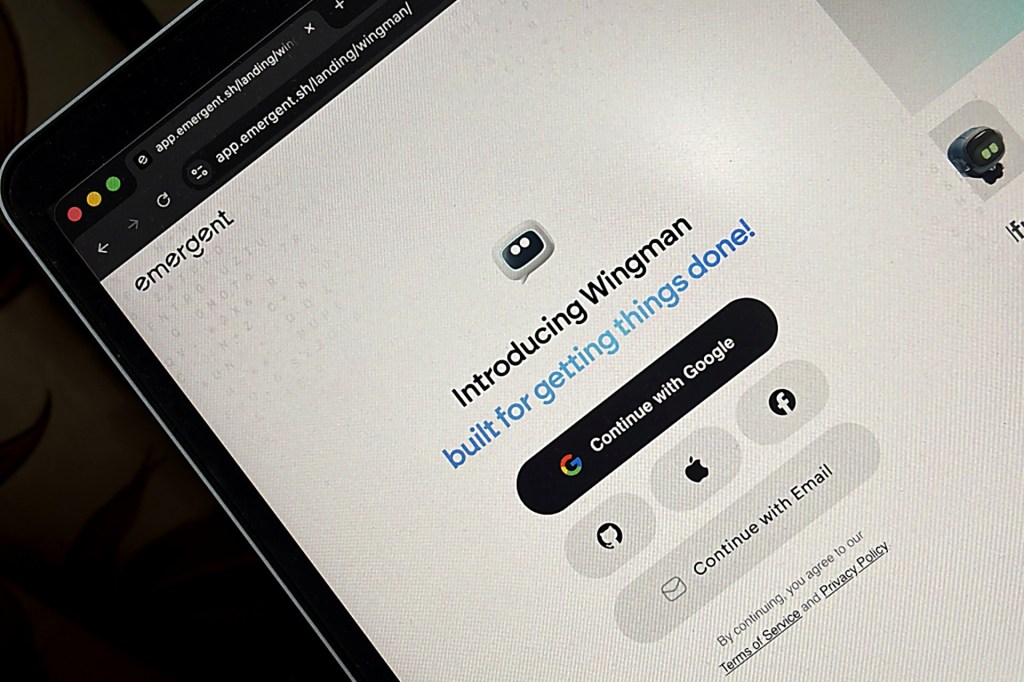
Emergent, a Bengaluru-based startup renowned for its innovative vibe-coding platform, has unveiled Wingman, a cutting-edge, messaging-centric autonomous AI agent. This strategic move propels Emergent into the burgeoning domain of AI agents that operate seamlessly in the background to execute tasks—a space popularized by tools like OpenClaw and Anthropic’s Claude.
Initially, Emergent garnered attention with its vibe-coding platform, enabling individuals without technical expertise to develop full-stack applications using natural language prompts. This platform competes with notable tools such as Cursor and Replit. With the introduction of Wingman, Emergent transitions from merely facilitating software creation to empowering AI agents to autonomously manage routine tasks across various tools and workflows.
Mukund Jha, co-founder and CEO of Emergent, articulated this evolution:
The obvious next step for us was, can we help them not just build the software, but actually operate more autonomously through it? You move from software that supports the business to software that can actively help run it.
Since its inception in 2025, Emergent has experienced remarkable growth. Over 8 million builders have utilized its vibe-coding platform to create and deploy software, with more than 1.5 million monthly active users. In January 2026, the startup secured $70 million in funding, elevating its valuation to $300 million. This funding round attracted prominent investors, including SoftBank, Khosla Ventures, and Lightspeed Venture Partners.
Wingman is ingeniously designed to integrate with popular messaging platforms like WhatsApp and Telegram. This integration allows users to assign and monitor tasks through chat interfaces. Simultaneously, Wingman operates in the background, interfacing with connected tools such as email, calendars, and workplace software. It autonomously performs routine actions while seeking user approval for more significant steps, ensuring a balance between automation and user control.
The launch of Wingman coincides with a pivotal moment in the tech industry, where autonomous AI agents are becoming a focal point. Companies are increasingly developing tools capable of executing tasks on behalf of users. Projects like OpenClaw—formerly known as Clawdbot and Moltbot—have gained traction among early adopters. Simultaneously, industry giants such as Anthropic and Microsoft are advancing their own agent-based systems to cater to this growing demand.
Emergent distinguishes Wingman by embedding it directly into messaging platforms, including WhatsApp, Telegram, and Apple’s iMessage. This approach enables users to interact with the AI agent through familiar chat interfaces, eliminating the need to adopt new platforms. Additionally, Emergent has introduced trust boundaries within Wingman. This feature allows the agent to autonomously handle routine tasks while requiring user approval for more consequential actions, addressing concerns associated with fully autonomous systems.
Mukund Jha elaborated on this design choice:
A lot of real work already happens through chat, voice, and email—asking for something, following up, sharing context, making a decision. Increasingly, they’ll be the main ways we work with agents too.
Despite its innovative capabilities, Wingman, like many emerging AI agents, faces certain limitations. Jha acknowledged that the system encounters challenges in situations involving ambiguity, complex edge cases, unclear goals, or workflows that necessitate significant human judgment.
Wingman is currently available with a limited free trial. Following the trial period, access will transition to a paid model. Existing Emergent users can seamlessly integrate Wingman into their accounts, enhancing their workflow efficiency.
Emergent’s foray into the AI agent space with Wingman signifies a significant advancement in the integration of AI into daily business operations. By leveraging familiar messaging platforms and implementing thoughtful user control mechanisms, Emergent aims to redefine how businesses and individuals interact with AI, making it a more intuitive and integral part of their workflows.