A Russia-aligned cyberespionage group known as Earth Sirrush has developed increasingly stealthy malware delivery techniques targeting Ukrainian government agencies, border guards, defense organizations, and logistics operators. Active since at least 2022, the group has cycled through a range of tools to maintain long-term access to critical wartime networks. The latest campaign blends steganography—hiding payloads within seemingly innocent files—with malicious Notepad++ plugins that execute code when users think they’re simply editing text. These tactics mark a sharp sophistication leap in persistent threat operations.
Steganography & Plugin Abuse: How the Infection Chain Works
Phishing serves as the entry point: victims receive emails impersonating trusted institutions or companies. Earlier Earth Sirrush campaigns exploited a WinRAR vulnerability (CVE-2023-38831), but recent efforts rely more on believable download portals and weaponized ZIP archives masked behind professional branding.
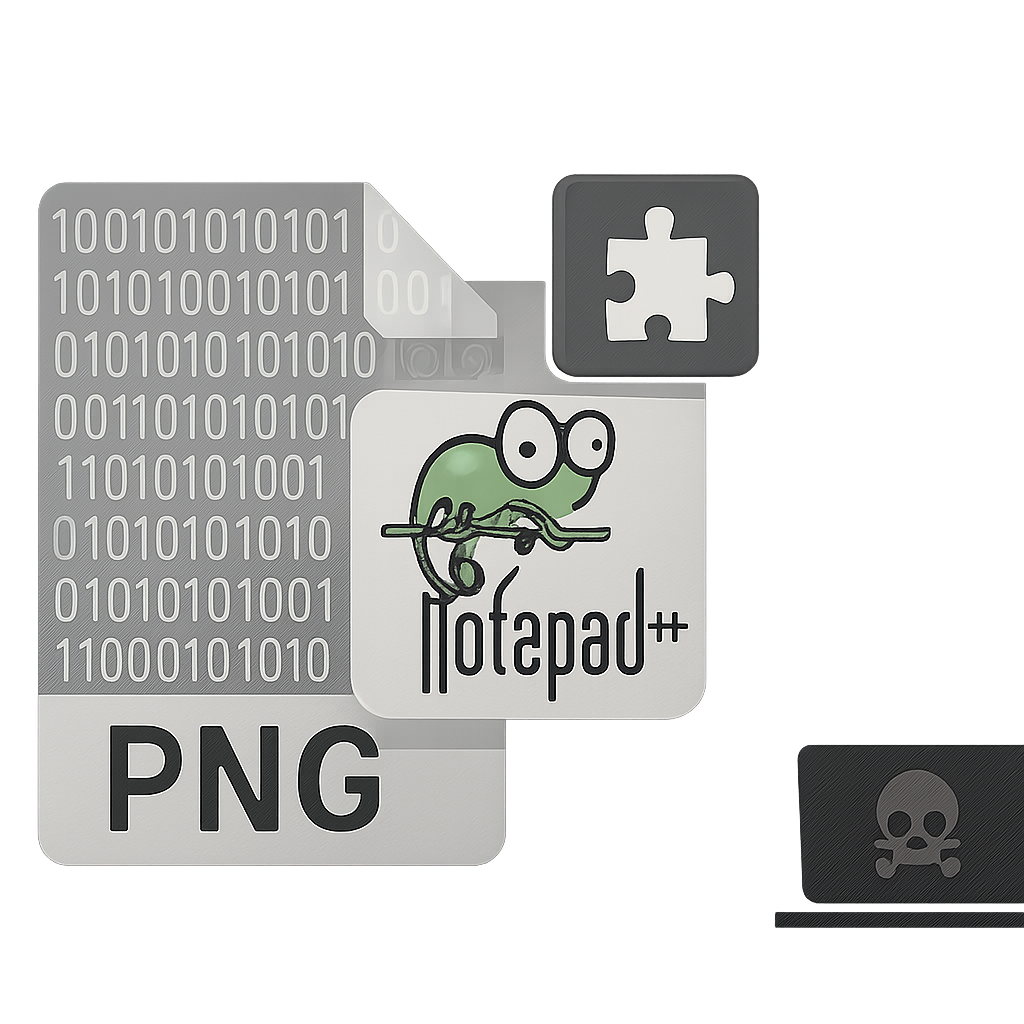
One campaign, dubbed CINDERBLOT (also known as BadPaw), used messages purporting to be from Ukraine’s State Border Guard Service. Another impersonated a drone parts supplier to trick victims into downloading malicious content. PNG images, usually innocuous, now carry concealed payloads: either through appended executable data or by embedding code in image pixels, then unlocked via PowerShell. Meanwhile, malicious Notepad++ plugins like “LUNCHPOKE” serve as loaders—when the editor starts, internal DLL proxying runs attacker code. These loading tools—BURNYBEAR and MATCHBOIL.V2—are hardened with improved encryption and obfuscation.
Espionage Tools, Objectives & Defenses
At the core of these operations lies a tool named ASHVEIN, a .NET-based remote access trojan and data stealer equipped to harvest browser credentials, capture screenshots, retrieve files, execute remote PowerShell commands, and profile infected computers. It encrypts its command channels, hides instructions in invisible webpage elements, and some versions use GitHub as fallback infrastructure.
Earth Sirrush reuses technical artifacts—signatures, encryption routines, development traces, infrastructure registrations—and maintains persistence through renamed Windows scheduling utilities and startup elements. One sample remained dormant for over a month without communication to servers yet still remained resident. The group’s domains often use shared hosting and Cloudflare fronting to obscure control servers. Indicators of compromise include a PNG file named “KittyCat.png,” renamed copies of “schtasks.exe,” malware components with names like MATCHBOIL.V2, and staging or writable directories in public library paths.
Defense recommendations include strict permissions on PowerShell usage, improved monitoring of browser-based credential access, auditing of scheduling and plugin loading, and fostering awareness of impersonation tactics—like fake invoices, branding, and email domains that mimic legitimate entities. Organizations in Ukraine—and globally—are warned to vet file signatures, verify download sources, and be wary of hidden file extensions and EXEs buried in compressed files.
What makes this evolution dangerous is its blend of subtle concealment and familiar tools. As traditional detection gaps widen, Earth Sirrush’s steganographic image tricks and abuse of trusted editors like Notepad++ complicate conventional defenses. Organizations dealing with defense, governance, and logistics must assume that what appears benign might carry a hidden threat. Moving forward, resilience will depend as much on user suspicion and process discipline as on technological countermeasures.