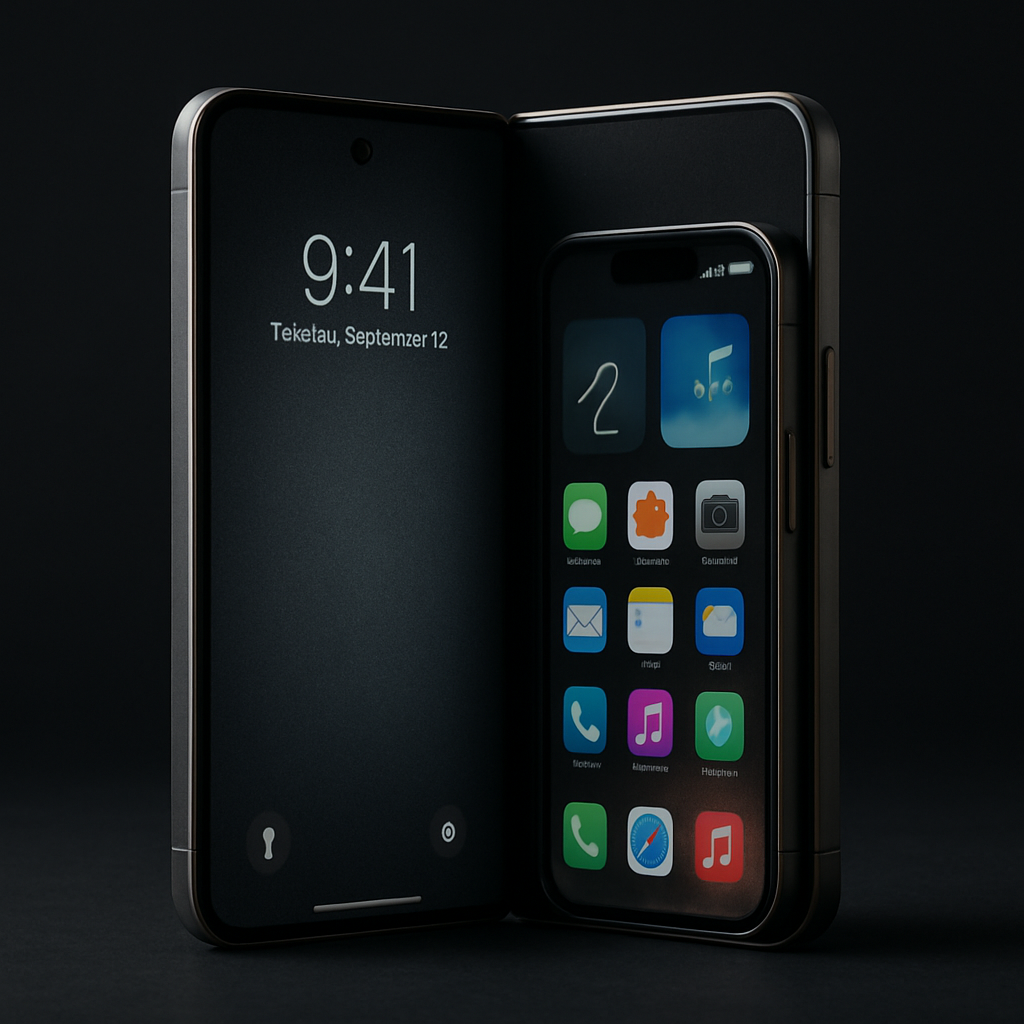
The iPhone Duo, Apple’s first foldable, delivers a unique experience—with standout moments and clear compromises. After 24 hours of hands-on use, here’s what’s working, what isn’t, and whether it lives up to the hype.
Where it Shines
The Duo stacks up well against expectations. Its dual-display setup—5.4-inch for closed use, 7.6-inch when open—offers seamless transitions. The inner screen’s nano-texture polymer minimizes glare and makes the crease nearly invisible. The outer display matches past sizes of smaller iPhones, maintaining familiarity when folded. Durability is strong: Apple’s materials like grade-5 titanium, ceramic shield, carbon fiber supports, and a hinge cover built with internal reinforcement leave the device feeling solid. It’s premium, both in feel and construction. The Duo is thick and heavy (around 254 grams), but its design balances weight so well the heft isn’t glaring—though one-handed or left-handed users will notice the compromise. Display clarity and matte finish are praised; fingerprints show up, but hardly dominate the experience. Apps built or updated for the Duo’s form factor wow when they make use of both screens properly—for example, Netflix’s half-fold mode and side-by‐side multitasking with split view let you browse while watching a video.
Notable Drawbacks
The Duo also makes trade-offs. Its camera system is good, but not exceptional. It avoids using Face ID in favor of side-button Touch ID, a change from recent iPhones that many find jarring. Reviewers point out that unlocking via Touch ID feels slower than Face ID—there’s a deliberate pause built in—and that Apple Watch unlock helps but isn’t quite the same. The under-display front camera handles FaceTime okay, but results lag behind what you’d expect from a flagship selfie setup. Rear camera performance stays close to iPhone 17 levels, but misses on features like a telephoto lens that higher-end models offer.
Perhaps the biggest software compromise so far: app optimization. Many existing apps haven’t been updated for the Duo’s screen setup. Some display thick black bars or awkward letterboxing, especially apps built using older SDKs. Others work better under iOS 27, which introduces tools and layouts adapted for the Duo. As of now, a mix of optimized and unoptimized apps makes for a fragmented interface. With more weeks to go before full launch, though, updates are coming fast.
Price, Presence & Final Thoughts
At a $1,999 starting price for 256GB, the Duo positions itself as a luxury device. Others feel some specs are modest for the cost—for example, the lack of a telephoto lens, or Touch ID in place of Face ID. It’s often described as “expensive, with compromises,” yet many agree that the overall first impression leans favorable. Battery life is sufficient, displays impress, and multitasking gets real points. It’s compelling—if you can live with what’s missing.
Analytically, the Duo represents a bold move for Apple. It’s staking out space in foldables with its own spin—premium materials, strong build, screen quality. But its compromises are steep: replacing Face ID, settling without a telephoto lens, and accepting that the software landscape isn’t fully there yet. What to watch now: how quickly major apps update, whether users accept the Touch ID trade-off, and if the price feels worth it once the full ecosystem steps in. For early adopters who prioritize design and novelty, the Duo delivers. For others, patience may be smart.