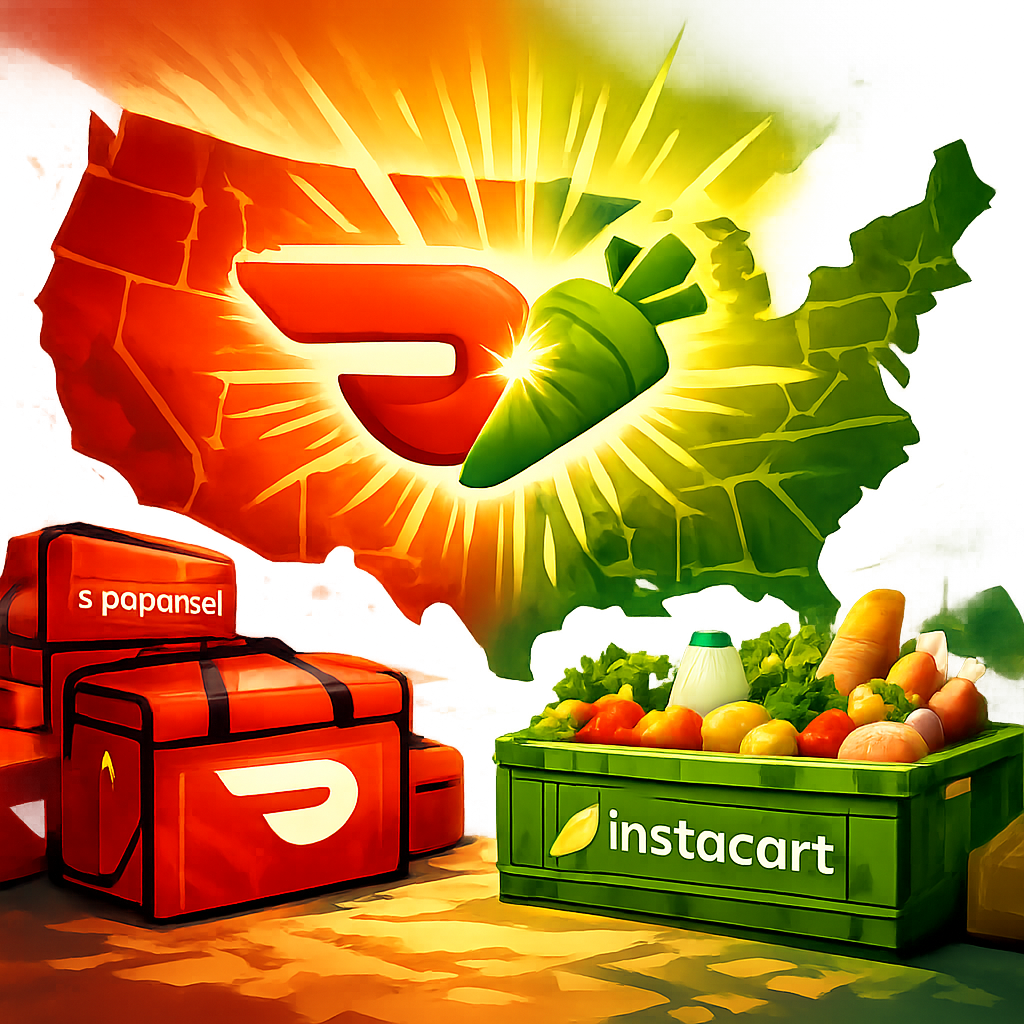
DoorDash has officially reached an agreement to purchase Instacart in a deal worth $17 billion, consolidating two major players in food and grocery delivery. This acquisition, which values Instacart at $65 per share, includes a 26% premium over its October 22, 2026 closing price. The payment structure will consist of at least 75% cash, while shareholders can opt for cash or DoorDash equity. The transaction is expected to complete by the end of 2027, subject to regulatory approval and other closing conditions. If either company backs out, termination fees will apply: Instacart stands to pay $650 million, while DoorDash would owe $1.25 billion.
Why DoorDash Is Making This Move
For DoorDash, traditionally strongest in restaurant delivery, this acquisition represents a strategic move to gain a stronger foothold in the grocery delivery market. Instacart’s infrastructure, partnerships, and existing grocery delivery customer base give DoorDash instant access to a market where Walmart currently dominates. Combined, DoorDash and Instacart are estimated to control about 60% of the grocery delivery sector, positioning the merged entity as a formidable rival to other players.
What Users and Workers Should Expect
On the surface, DoorDash insists that users will benefit through more choices, better pricing, and expanded offerings. However, critics warn that reducing the number of competing services could backfire: fewer options often mean higher prices, reduced service quality, or worse conditions for delivery workers. If there’s less rivalry, companies may have less incentive to offer promotions or work harder for better satisfaction.
Delivery and grocery workers also have reason to be cautious. With fewer competitors in the market, there’s a risk that wage or tip structures could shift, potentially reducing bargaining power or pushing down compensation. DoorDash claims this deal will actually increase earning opportunities, but that remains to be seen once the consolidation plays out.
Regulatory Hurdles and TimelineThe deal is expected to close by the end of 2027 at the soonest. In the meantime, it’s facing scrutiny in the U.S.—antitrust regulators are almost certainly going to investigate whether this level of consolidation stifles competition. Legal reviews often focus on whether such a merger unfairly disadvantages consumers or workers. Though current regulatory sentiment in the U.S. appears relatively permissive toward mergers like this, that could shift rapidly depending on political pressure or public backlash.
Additional risks lie in the termination fees: the required payments from both parties indicate how confident—or concerned—they are about the deal failing. Until all regulatory and contractual approvals are met, there’s room for this acquisition to be delayed or even blocked.
In short: while the DoorDash–Instacart merger could reshape the grocery delivery landscape, the payoff for consumers, workers, and the industry at large hinges on how it’s executed and regulated.
What This Means Going Forward
This deal underscores a broader trend in the delivery space: major platforms consolidating to stay competitive. As Amazon, Walmart, and others build or expand delivery and fulfillment networks, acquiring established players becomes a way to scale fast. For consumers, the tradeoff may be fewer apps to order from under one hood—simplifying, perhaps, but also concentrating power. We’ll be watching closely: how regulators respond, whether competitors emerge, and how pricing, service, and worker treatment evolve as the market recalibrates.