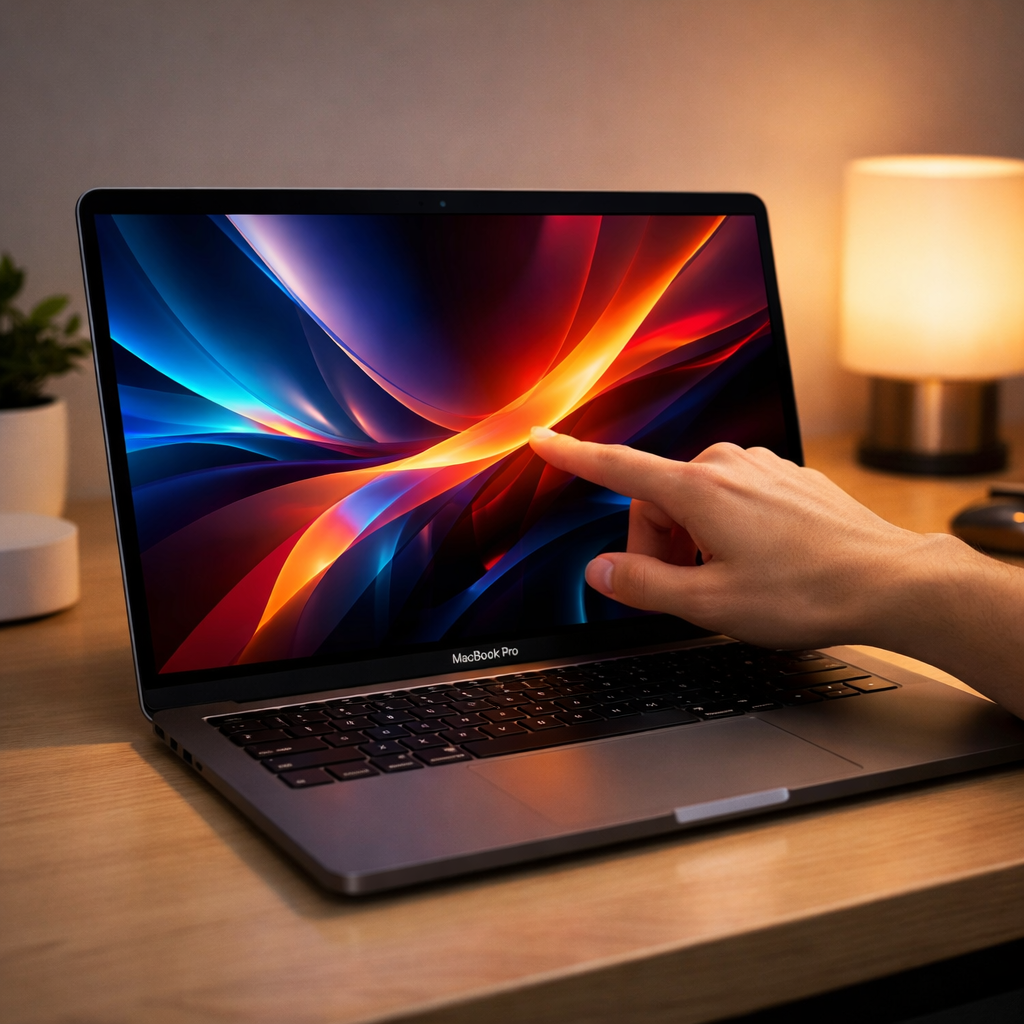
Apple is signaling that its journey toward touchscreen Macs has just begun. The newly unveiled MacBook Pro models with PROLED XDR displays will arrive running macOS 27.2, which brings touch-focused improvements specifically tuned for PROLED XDR hardware. The gesture, tap, and UI tweaks included in this release are a first step — but far from the final form of Apple’s touchscreen plans.
Touch Input Meets macOS: Early Impressions & Strategy
Critics and tech reviewers have generally praised the experience of using touch on these latest PROLED XDR machines. Early feedback suggests that Apple has taken care to avoid disrupting the familiar macOS design while layering in touch responsiveness where it makes sense. Internal concerns about input lag or cluttered interfaces appear to have been eased — at least for now.
During Apple’s recent event, a company representative confirmed that what users are seeing in macOS 27.2 is only the beginning. More expansive touch optimizations are expected to arrive with macOS 28, currently under development and due next year. The aim is to iterate widely, responding to real-world usage rather than rushing untested changes.
Balance Between Tradition and Innovation
Apple’s approach appears cautious. The design philosophy behind macOS has long revolved around precision inputs — keyboard, trackpad, and mouse. Adding fingers to that mix brings opportunities but also risks: mis-taps, screen clutter, and inconsistent behavior. By rolling out touch optimizations first to the PROLED XDR display line, Apple is limiting exposure to edge cases while gathering feedback.
Historically, macOS has avoided touch, unlike iPadOS which was built from the ground up for fingers. For many years, users wondered whether Macs would ever support touchscreen interaction. With the PROLED XDR launch and macOS 27.2, those questions are finally getting answered — but not with sweeping overhauls just yet.
Why all the caution? In part because changing the input model of macOS is risky for long-standing workflows. Professionals expect stability and precision. Any misstep could introduce frustration for power users. Apple seems aware that touch must feel like an enhancement rather than a forced direction.
What to Watch in Upcoming Releases
macOS 28 is shaping up as the next testing ground for Apple’s touchscreen ambitions. Expect larger updates in gestures, sidebar behavior, UI element spacing, and adaptive layouts that shift between touch and pointer modes more gracefully. Feedback from PROLED XDR device owners will likely play a huge role in shaping these features.
If executed well, this could mark a turning point. Apple typically moves slowly when it comes to reimagining core system interactions — think back to transitions like from PowerPC to Intel, or non-Retina to Retina displays. Those shifts were gradual but permanent. Touch may follow a similar trajectory.
The Bottom Line: What’s shipping in macOS 27.2 is a preview, not a destination. Apple appears to be taking a deliberate path toward touch: launching limited optimizations first, gathering feedback, and building toward a more fully touch-aware macOS. For users who’ve long wanted Mac touch, this is a promising but still early chapter in a larger story.