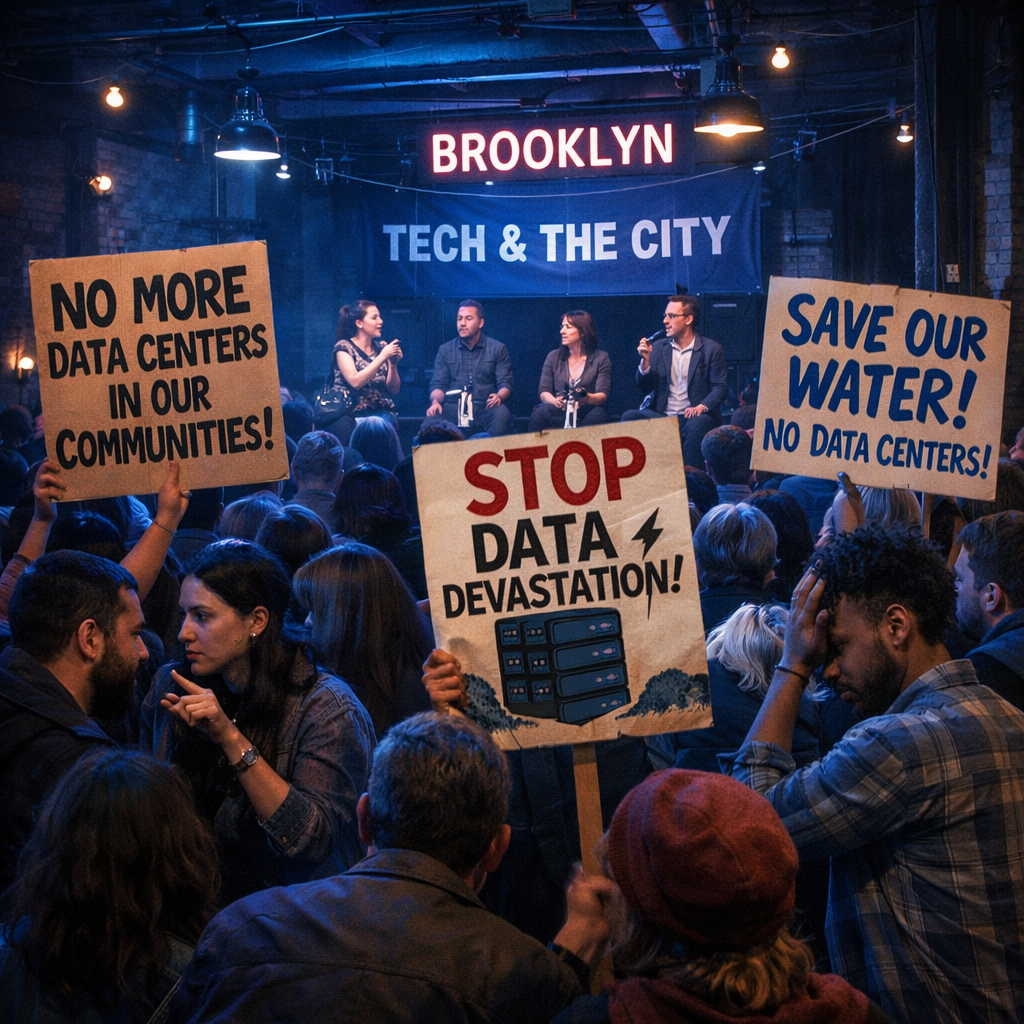
As the November 2026 midterms draw near, data centers and AI have surged from industry talking points to frontline political issues—even in neighborhoods like Brooklyn where the infrastructure is far less visible. At a recent election event hosted in a Brooklyn warehouse by Newsreel, what was supposed to be a night focused on attention spans, campaign strategy, and AI turned into a broader debate over tech, power, and community control.
What sparked the backlash
Speakers and attendees alike voiced growing concern that rapid data center expansion is happening without sufficient transparency or oversight. Instances were shared where local zoning laws were opaque, with mega-sized tech firms making deals with officials behind closed doors—coming as a shock when plans are only made public well after construction begins. Environmental and health risks are also front of mind for worried residents, who express frustration that their wellbeing is being traded for short-lived economic incentives.
Politics, perception, and promises
Though cities such as New York don’t yet host many visible data center campuses, concern over them has still taken root. In states like Texas, Virginia, Pennsylvania, Georgia, and New York, legislative efforts are underway to impose guardrails and demand more transparency around proposed data center projects. A report released in mid–2026 documents nearly $200 billion worth of such projects nationwide being delayed or blocked by community and political pushback. In Virginia alone, the sheer number of planned centers reinforces its reputation as a growing haven for data infrastructure.
The discussions aren’t purely environmental. Labor groups have been split. Some welcome the jobs that center construction brings, while others point out that once the build ends, that employment disappears. For many residents, the crux of the matter isn’t just whether data centers are ugly or loud—it’s whether the economic benefits are fleeting, whether local people are involved, and whether their concerns even speak to the decision-makers.
From the Rust Belt to Brooklyn—shared frustrations
Whether in a postindustrial Midwestern town or a dense borough in New York City, people express a common grievance: powerlessness. In Ohio, Vivek Ramaswamy was booed after claiming data centers could revitalize struggling communities. In Brooklyn, the resentment is less about decline and more about suspicion—who profits, who pays, and who decides. Sticky notes on event walls asked hard questions like “Will we ever get Big Money out of politics?”—a clear indicator of where popular attention lies.
Public anger stems from a sense that technology executives are unaccountable, that wealth and influence accrue out of view, and that promises of prosperity mask deeper inequalities. For many, data centers have become symbols—of secrecy, distortion, and decisions made without consent.
During the Brooklyn event, participants were polled: when asked who supports AI data centers, a notable boo came from the audience; when asked who opposes them, the reaction was overwhelming. Even for those not directly affected, these developments trigger broader anxieties about work, ownership, and a future controlled by a small elite.
By election day, data centers may be the kind of issue that voters remember—and that candidates must have clear positions on.
Why it matters: The sudden rise of data centers as a campaign issue shows just how tangible the public sees outcomes around tech infrastructure. Beyond jobs and hyper-scale promises, voters are demanding that local voice, environmental integrity, and economic fairness shape what gets built in their backyards. As policymakers respond—by clarifying zoning laws, mandating local input, or rethinking tax incentives—they’ll reveal whether data centers become a meaningful check on tech’s power or just another symbol of its excess.